 Sign In



 International
News release
From:
Your fridge uses tech from the 50’s, but scientists have an update
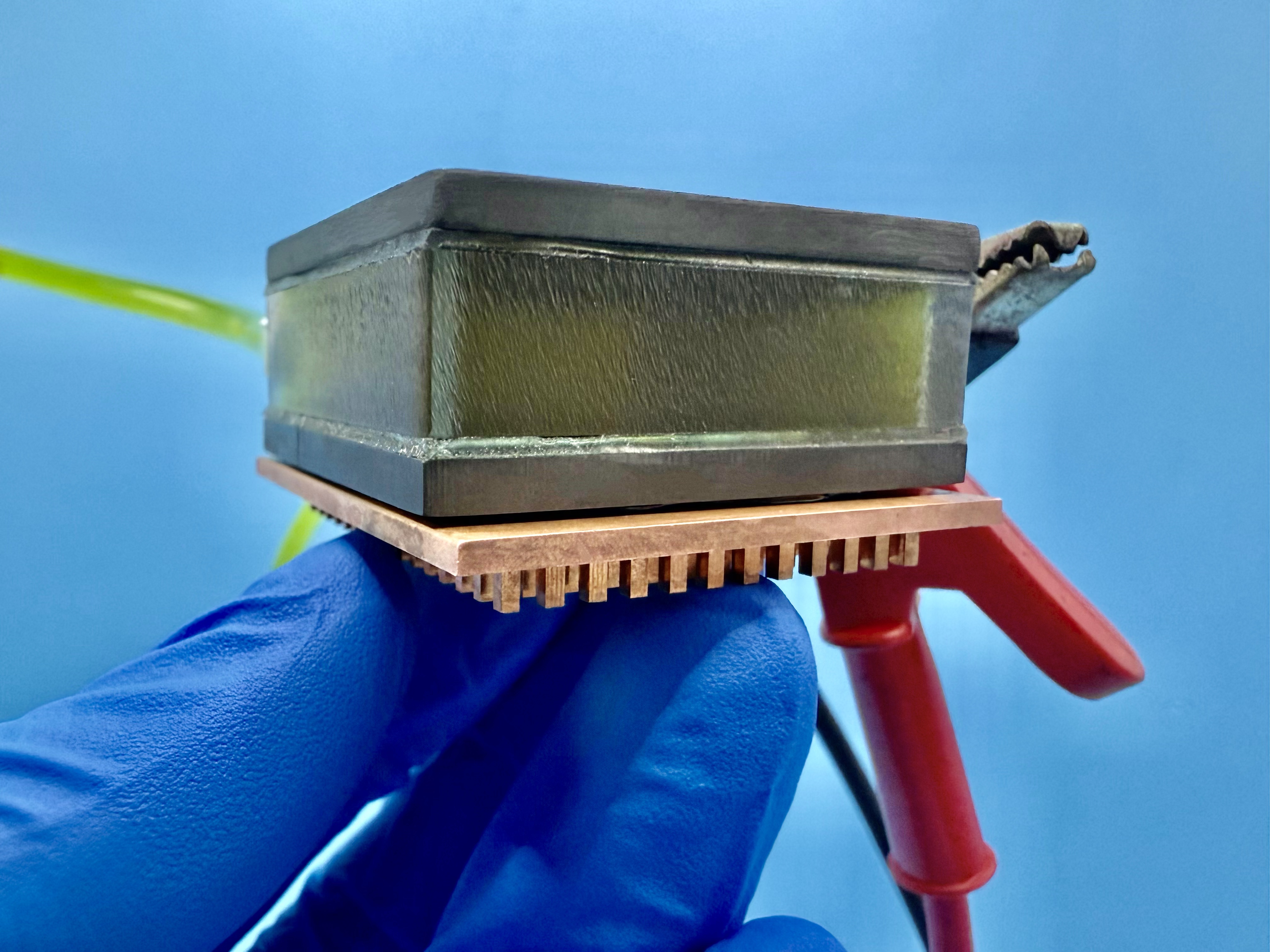
Researchers report January 30 in the Cell Press journal Joule that a more efficient and environmentally friendly form of refrigeration might be on the horizon. The new technology is based on thermogalvanic cells that produce a cooling effect by way of a reversible electrochemical reaction. Thermogalvanic refrigeration is cheaper and more environmentally friendly than other cooling methods because it requires a far lower energy input, and its scalability means that it could be used for various applications—from wearable cooling devices to industrial-grade scenarios.
“Thermogalvanic technology is on its way to our lives, either in the form of clean electricity or low-power cooling, and both research and commercial communities should be paying attention,” says senior author Jiangjiang Duan of Huazhong University of Science and Technology in Wuhan, China.
Thermogalvanic cells use the heat produced by reversible electrochemical reactions to create electrical power. In theory, reversing this process—applying an external electrical current to drive electrochemical reactions—enables cooling power to be generated. Previous studies have shown that thermogalvanic cells have a limited potential to produce cooling power, but Duan’s team was able to dramatically increase this potential by optimizing the chemicals used in the technology.
“While previous studies mostly focus on original system design and numerical simulation, we report a rational and universal design strategy of thermogalvanic electrolytes, enabling a record-high cooling performance that is potentially available for practical application,” says Duan.
The cooling thermodynamic cells are based on electrochemical redox reactions involving dissolved iron ions. In one phase of the reaction, iron ions lose an electron and absorb heat (Fe3+ → Fe2+), and in the other phase, they gain an electron and release heat (Fe2+ → Fe3+). The power produced by the first reaction cools the surrounding electrolyte solution, and the heat produced by the first reaction is removed by a heat sink.
By tweaking the solutes and solvents used in the electrolyte solution, the researchers were able to improve the hydrogalvanic cell’s cooling power. They used a hydrated iron salt containing perchlorate, which helped the iron ions dissolve and dissociate more freely compared to other previously tested iron-containing salts such as ferricyanide. By dissolving the iron salts in a solvent containing nitriles rather than pure water, the researchers were able to improve the hydrogalvanic cell’s cooling power by 70%.
The optimized system was able to cool the surrounding electrolyte by 1.42 K, which is a big improvement compared to the 0.1 K cooling capacity reported by previously published thermogalvanic systems.
Looking ahead, the team plans to continue optimizing their system’s design and is also investigating potential commercial applications.
“Though our advanced electrolyte is commercially viable, further efforts in the system-level design, scalability, and stability are required to promote the practical application of this technology,” says Duan. “In the future, we aim to continuously improve the thermogalvanic cooling performance by exploring novel mechanisms and advanced materials. We are also attempting to develop diverse refrigerator prototypes towards potential application scenarios and are seeking to collaborate with innovation companies to promote commercialization of thermogalvanic technologies.”

