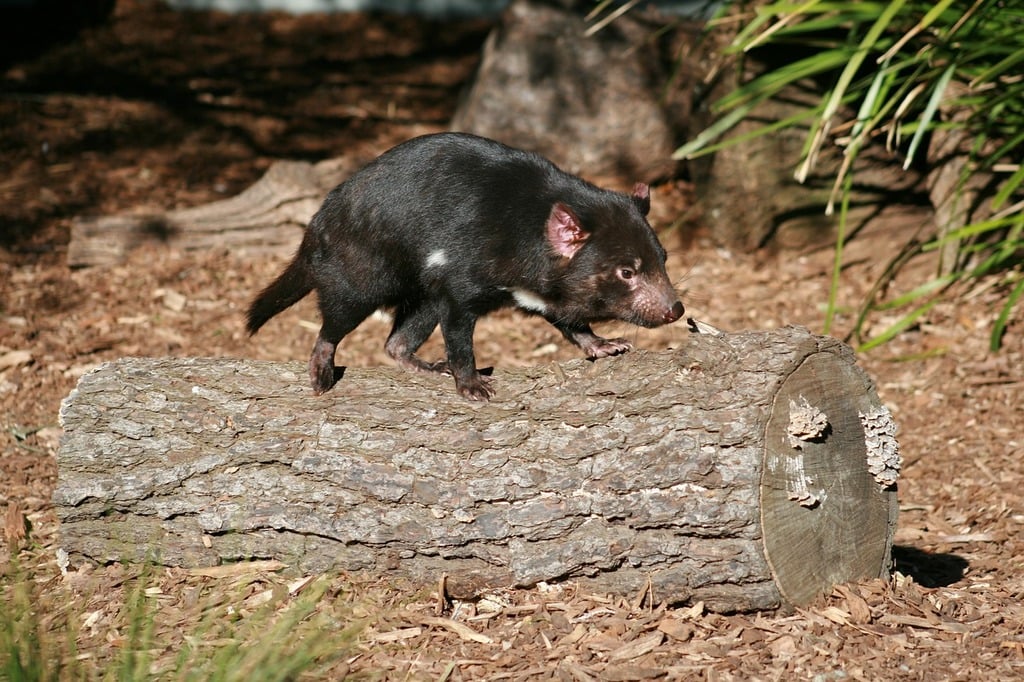
No evidence that Tassie devil facial cancer threat has eased, scientists argue

Publicly released:
Australia; International; TAS
CC-0. https://picryl.com/media/tasmanian-devil-australian-wildlife-b89e28

In 2020, an international study was published that claimed devil facial tumour 1 (DFT1) - a transmissible cancer that has proved devastating for the charismatic critters - had shifted from being an emerging condition to an endemic disease, reducing the threat to devils, but now UK scientists argue there's no evidence to support that claim. They say the study was "flawed" and its conclusions "cannot be substantiated", and the threat to Tasmanian devils remains serious. 

Media release

From: The Royal Society

No evidence that a transmissible cancer has shifted from emergence to endemism in Tasmanian devils

Tasmanian devils, marsupial carnivores endemic to the Australian island of Tasmania, are endangered by a transmissible cancer known as devil facial tumour 1 (DFT1). This cancer is spread by the transfer of living cancer cells during biting, and manifests as disfiguring fatal facial tumours. A study published in 2020 by Patton et al. (doi:10.1126/science.abb9772) reported that the rate of DFT1 transmission was slowing, heralding optimism for Tasmanian devil survival. In our paper we show that the study by Patton et al. was both conceptually and technically flawed, and that its conclusions cannot be substantiated. Our work underlines the ongoing threat that DFT1 poses to Tasmanian devils. 

Attachments

Note: Not all attachments are visible to the general public. Research URLs will go live after the embargo ends.

Research The Royal Society, Web page The URL will go live at some point after the embargo ends
Journal/
conference:
Royal Society Open Science
Research:Paper
Organisation/s: University of Cambridge, UK
Funder: This work was supported by a grant from Wellcome (102942/Z/13), as well as Eric Guiler Tasmanian Devil Research Grants from the University of Tasmania Foundation. M.R.S. was supported by a Gates Cambridge Trust Scholarship.
Media Contact/s
Contact details are only visible to registered journalists.