 Sign In



 International
News release
From:
Global changes in human-made light emission
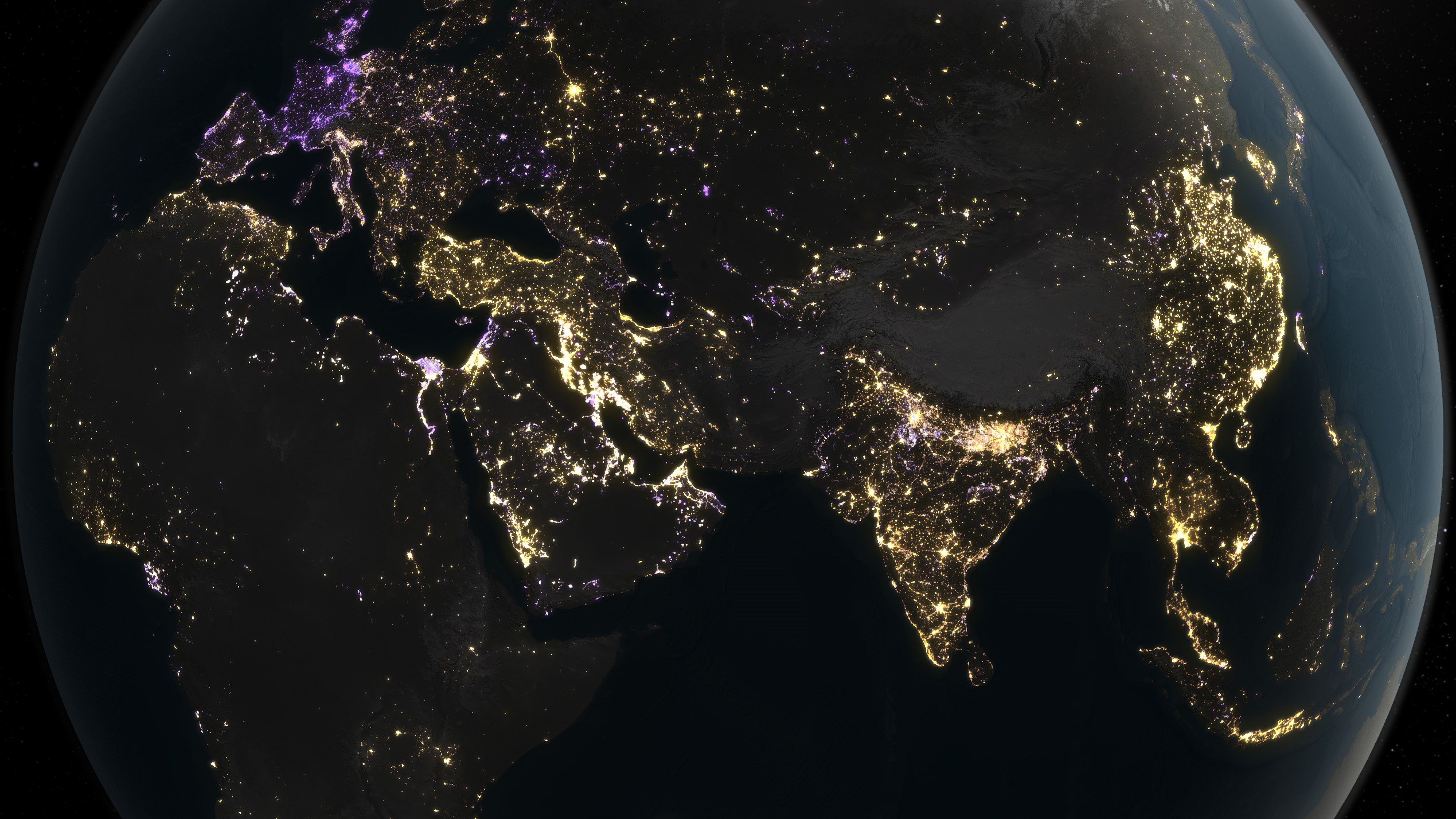
Artificial light emissions at night increased by around 16% globally between 2014 and 2022, according to research published in Nature. The study presents maps of night-time light changes, which help to reveal the intricacies in human light footprint across the globe and provide insights into the factors that influence changes in light emissions.
Measuring human activity via nighttime light emissions is a powerful tool in assessing human infrastructure changes and the transitions from certain energy sources. Previous observations of artificial lights at night have focused on satellites recording long-term trends, which fail to capture localised events, such as power outages and construction, and gradual shifts, like urbanisation and shifts to LEDs.
Tian Li, Zhe Zhu, and colleagues assessed artificial light at night using 1.16 million daily satellite images across the Earth's inhabited landmasses (between latitudes 70° N and 60° S) from 2014 to 2022. They found that 3.51 million square kilometres of the analysed area experienced at least one change in artificial light at night, which includes both brightening and dimming. More specifically, 51% of that area saw gradual changes, 14% experienced abrupt changes, and 35% experienced both. The authors also found a 16% net increase (34% brightening offset by 18% dimming) in brightness worldwide during the nine-year study period due to artificial light at night, which they note has outpaced population growth.
A total of 20% of the 3.51 million square kilometre area experienced an abrupt change in lighting more than once, indicating periods of construction and demolition, energy instability (such as grid failures in Venezuela), fossil fuel production, or societal disruptions (such as conflicts in the Middle East). The authors found highly dynamic, bidirectional volatility in artificial light at night across much of the world, with relatively more stable conditions in areas with limited inhabitants or development, such as nature reserves and remote deserts.
The authors note that the findings reinforce the view that human light emissions cannot be characterized as a single entity but are instead made up of pockets of brightening and dimming occurring at various timescales. Further research could explore socioeconomic responses to changes in artificial light at night.
Multimedia

Attachments
Note: Not all attachments are visible to the general public. Research URLs will go live after the embargo ends.


