 Sign In



 Australia; New Zealand; Pacific; International
News release
From:
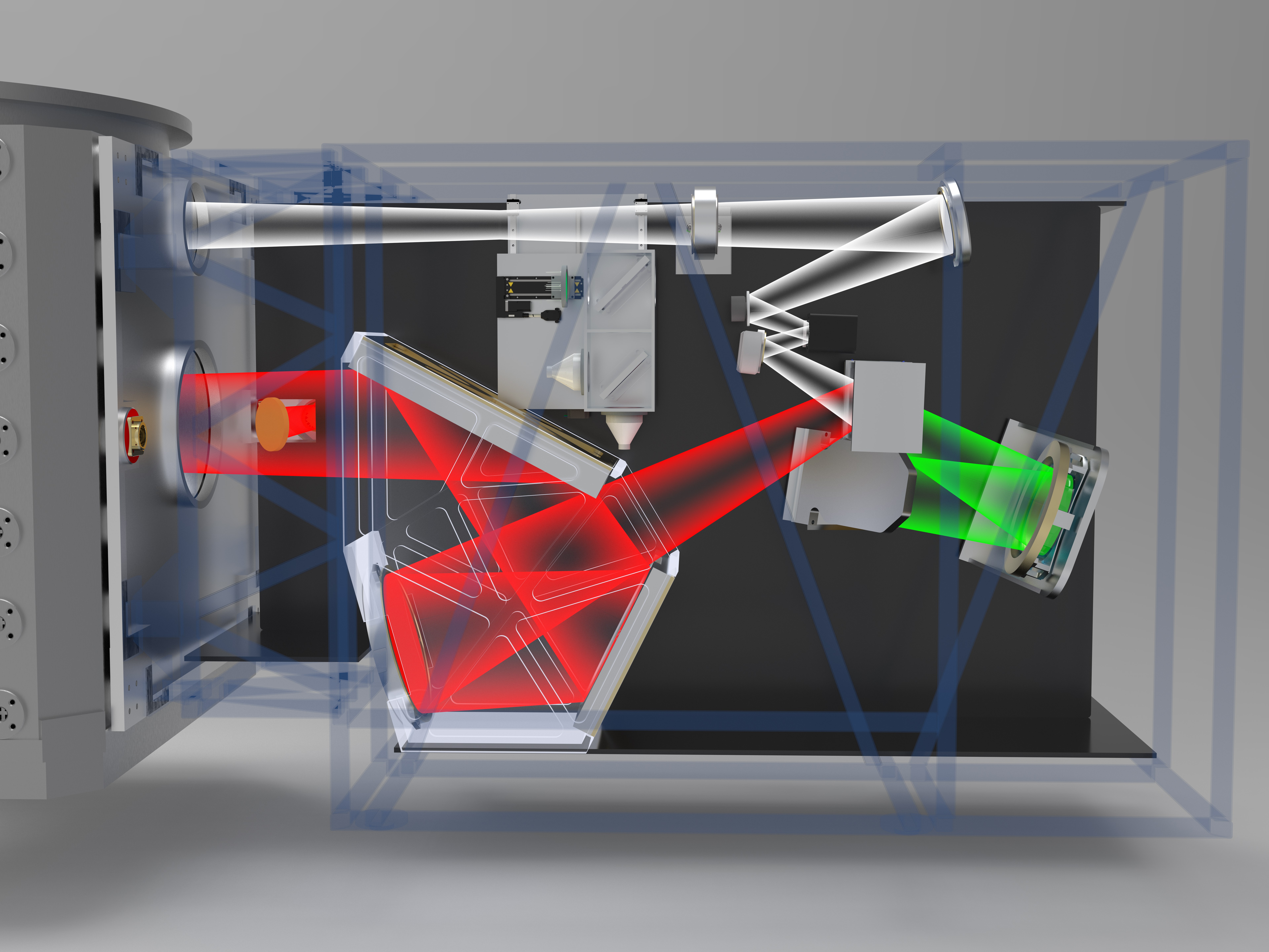
An international consortium headed by Macquarie University has won a Au $15 million competitive international tender process to lead the design and construction of adaptive optics for the Gemini North Telescope in Hawaii, one of the world’s largest and most advanced optical telescopes.
The Adaptive Optics Bench (AOB) project is led by Macquarie University's Australian Astronomical Optics (AAO) team, in collaboration with the Advanced Instrumentation and Technology Centre (AITC) from the Australian National University, the French Aerospace Laboratory (Office National d'Études et de Recherches Aérospatiales, or ONERA), Marseille Astrophysics Laboratory (Laboratoire d’Astrophysique de Marseille, or LAM) the OHP (Observatoire de Haute Provence), and French specialist optical manufacturer ALPAO. The partnership also includes consulting firms Space ODT (Portugal), Mersenne Optical Consulting (New Zealand), and Wakea Consulting (France).
“This is a significant achievement for the University and for Australian astronomy,” says Macquarie University’s Distinguished Professor Jon Lawrence, Principal Investigator for the AOB project.
“The adaptive optics technology we are developing will remove the blur from turbulence in our atmosphere, so astronomers can see sharper, cleaner images through the 8.1-metre Gemini Telescope, opening up new possibilities for scientific discovery.
“The Gemini Telescope is one of the world's most advanced optical telescopes, and this project will make it even more powerful.”
The project will also provide hundreds of hours of guaranteed observing time on the Gemini Telescope for Australian astronomers, significantly expanding our research capabilities.
The decision to award the bid came after a 12-month competitive Phase A study that saw three international teams develop a proposed design, detailed build schedule and costing.
The project will be funded by the US National Science Foundation via the Association of Universities for Research in Astronomy, or AURA.
“We assembled a team of world-leading experts, and our design was chosen for its innovative approach and efficient techniques to enable high throughput of light,” says Professor Lawrence.
Macquarie University Vice-Chancellor Professor S Bruce Dowton says the project highlights the importance of Australian expertise in achieving international goals.
“Macquarie University is proud to be leading this project and contributing to the global effort to advance our understanding of the universe,” he says.
Multimedia

Attachments
Note: Not all attachments are visible to the general public. Research URLs will go live after the embargo ends.


