 Sign In



 International
News release
From:
A robotic sensory system that CAN touch this
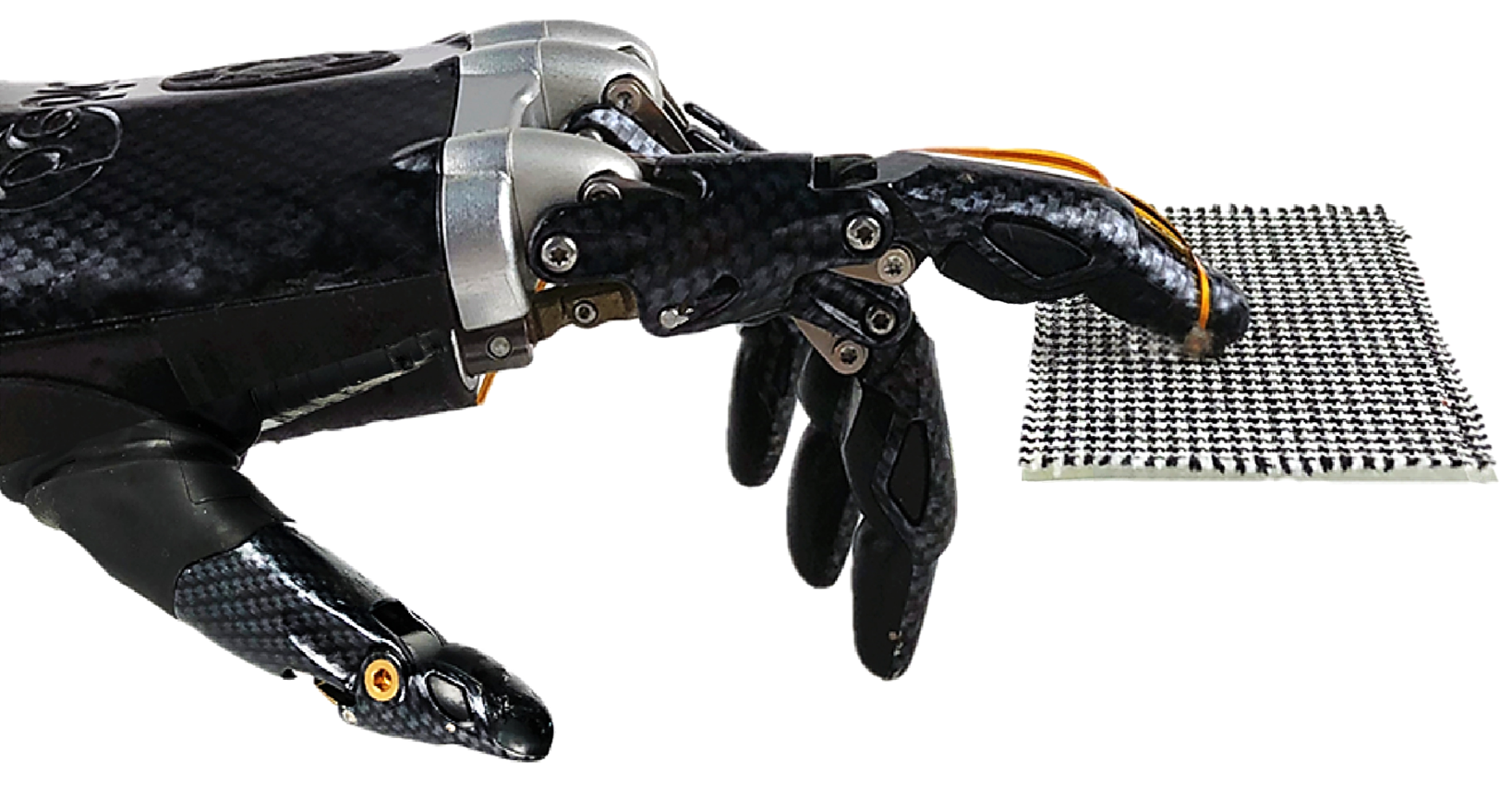
An artificial sensory system, which is able to recognise fine textures — such as twill, corduroy and wool — with a high resolution, similar to a human finger, is reported in a Nature Communications paper. The findings may help improve the subtle tactile sensation abilities of robots and human limb prosthetics, and could be applied to virtual reality in the future, the authors suggest.
Humans can gently slide a finger on the surface of an object and identify it by capturing both static pressure and high-frequency vibrations. Previous approaches to create artificial tactile sensors for sensing physical stimuli, such as pressure, have been limited in their ability to identify real-world objects upon touch, or rely on multiple sensors. Creating a real-time artificial sensory system with high spatiotemporal resolution and sensitivity has been challenging.
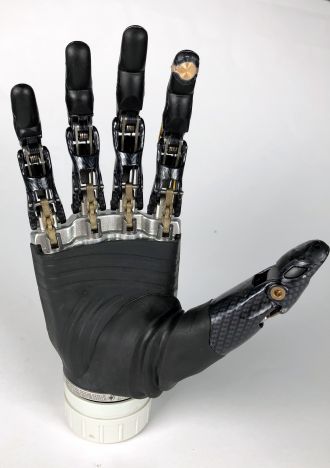
Chuan Fei Guo and colleagues present a flexible slip sensor that mimics the features of a human fingerprint to enable the system to recognise small features on surface textures when touching or sliding the sensor across the surface. Combined with the use of machine learning, the authors integrated the sensor onto a prosthetic human hand. They found that the sensor was capable of capturing subtle tactile signals and identifying 20 different textiles — including linen, nylon, polyester and seersucker — with up to 100% accuracy.
Future research could help improve the sensing abilities of robots, the sensory recovery of patients wearing artificial prostheses, tactile-based virtual reality, and consumer electronics, the authors suggest.
Multimedia

Attachments
Note: Not all attachments are visible to the general public. Research URLs will go live after the embargo ends.


