News release
From:
The Royal Society
Evidence for vocal signatures and voice-prints in a wild parrot
Royal Society Open Science
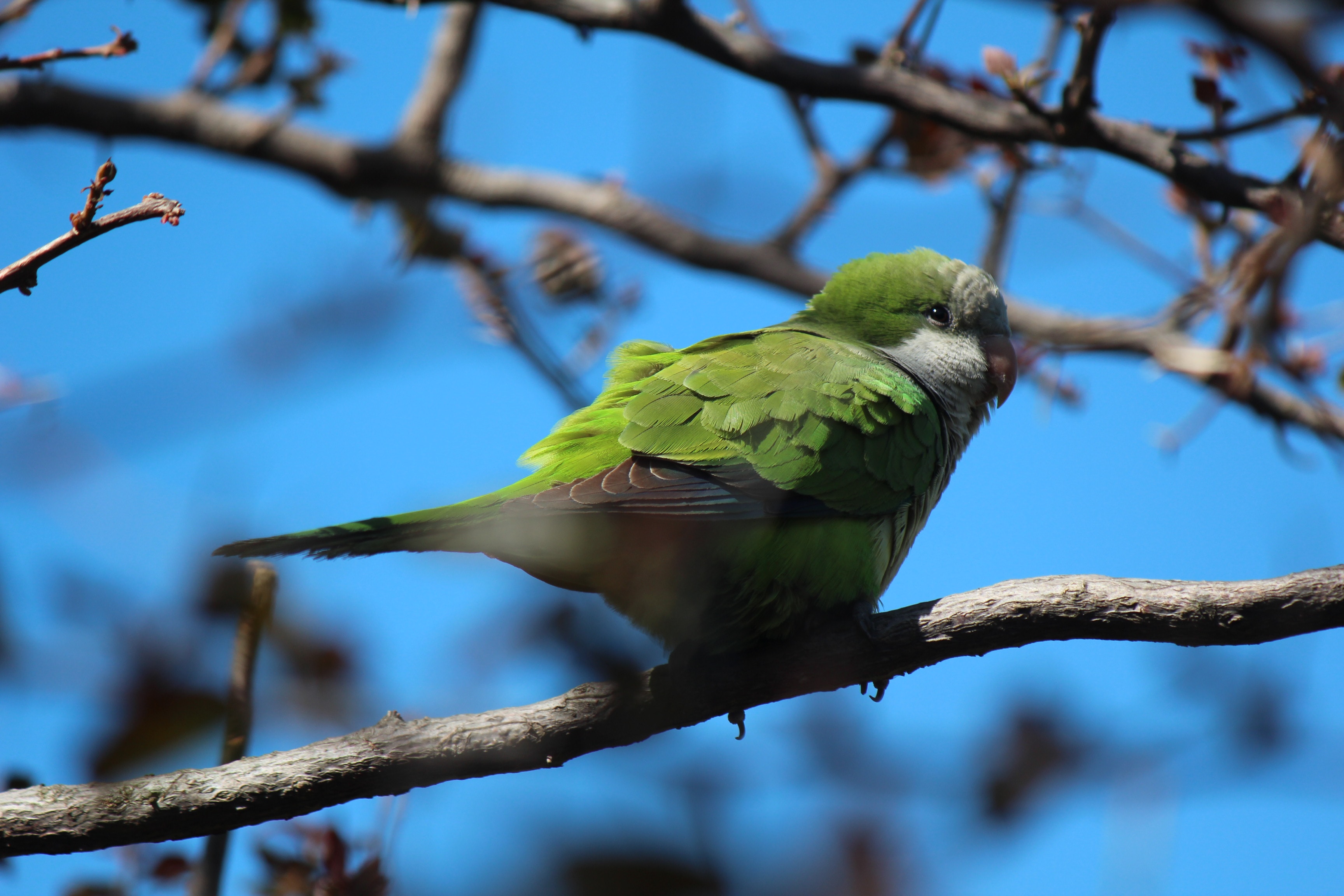
While we know humans recognize each other based on so-called voice-prints across, we don’t know if other species can also do this. We recorded 5599 vocalizations from 229 marked monk parakeets over two years, studying five call types. We found individual signatures in three call types. Contact calls were surprisingly variable, challenging previous assumptions about stable individual signatures. We also discovered voice-prints across call types. This suggests monk parakeets recognize each other using vocal cues, transcending vocalization types and explains how they can stay recognisable while imitating others.
Attachments
Note: Not all attachments are visible to the general public.
Research URLs will go live after the embargo ends.

Research
The Royal Society, Web page
The URL will go live after the embargo ends
Journal/
conference:
Royal Society Open Science
Organisation/s:
The Australian National University, Max Planck Institute of Animal Behavior, Germany
Funder:
S.Q.S. received funding from the International Max Planck Research School for Quantitative Behaviour,
Ecology and Evolution. L.M.A. was funded by a Max Planck Research Group Leader Fellowship, and is currently
supported by the Swiss State Secretariat for Education, Research and Innovation (SERI) under contract number
MB22.00056. Research funding was provided to S.Q.S. and L.M.A. by the Centre for the Advanced Study of
Collective Behaviour (CASCB), funded by the Deutsche Forschungsgemeinschaft (DFG) under Germany’s
Excellence Strategy (EXC 2117-422037984). J.C.S. was supported by a research project from the Ministry of Science
and Innovation (CGL-2020 PID2020-114907GB-C21).
 Sign In



 Australia; International; ACT