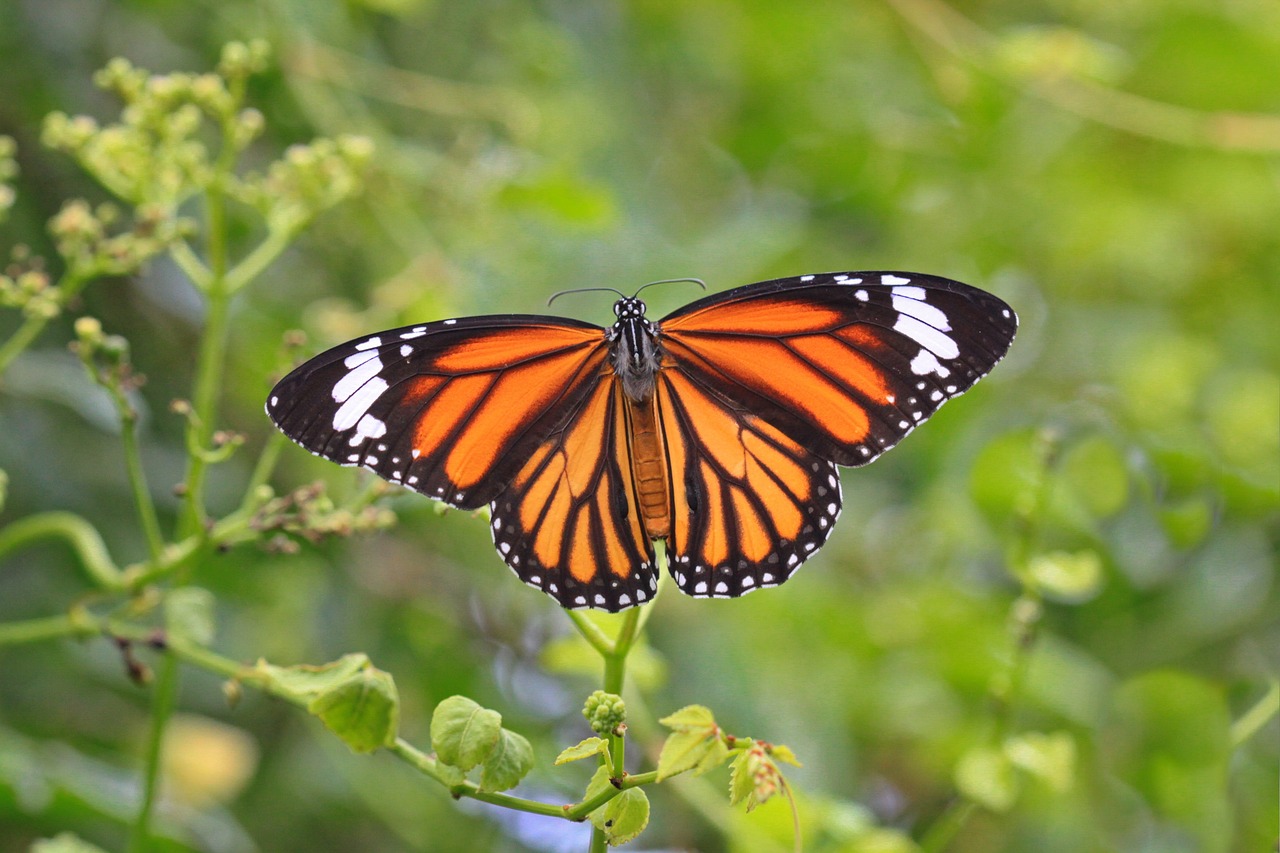
Monarch butterflies use landmarks to find their favourite foods

Publicly released:
International
Image by gyulche1 from Pixabay

Monarch butterflies use landmarks to remember the location of food, according to international researchers, who say that this level of spatial memory has been observed in bees and ants but this is the first time it has been shown in butterflies. The experiment involved several identical feeders placed inside a flight cage, with only one feeder actually providing food. Across multiple days the butterflies learned the location of the feeder with food in relation to an artificial tree landmark, after which the researchers moved the tree in the cage from its usual position, as well as the food-filled feeder. The butterflies were able to learn that the feeder was always placed to the right of the tree, regardless of its position in the cage.

Media release

From: The Royal Society

Monarch butterflies memorize the spatial location of a food source

Proceedings of the Royal Society B: Biological Sciences

Summary: To successfully navigate in a familiar habitat, many species use a spatial memory. To this end, visual landmarks in the goal's vicinity are often memorized. While insect spatial memory has been studied extensively in ants and bees, it is poorly understood in butterflies. Here, we report that foraging Monarch butterflies use visual spatial information of landmarks to relocate a profitable food source.

Attachments

Note: Not all attachments are visible to the general public. Research URLs will go live after the embargo ends.

Research The Royal Society, Web page URL will go live after the embargo lifts
Journal/
conference:
Proceedings of the Royal Society B: Biological Sciences
Research:Paper
Organisation/s: University of Würzburg, Germany
Funder: M.J.B. was supported by funds of the Bavarian State Ministry of Science and the Arts and the University of Würzburg to the Graduate School of Life Sciences (GSLS), University of Würzburg. B.e.J was supported by the Emmy Noether programm of the German Research Council (GZ: EL784/1-1).
Media Contact/s
Contact details are only visible to registered journalists.