 Sign In



 International
News release
From:
Airborne microplastics may contribute to atmospheric warming
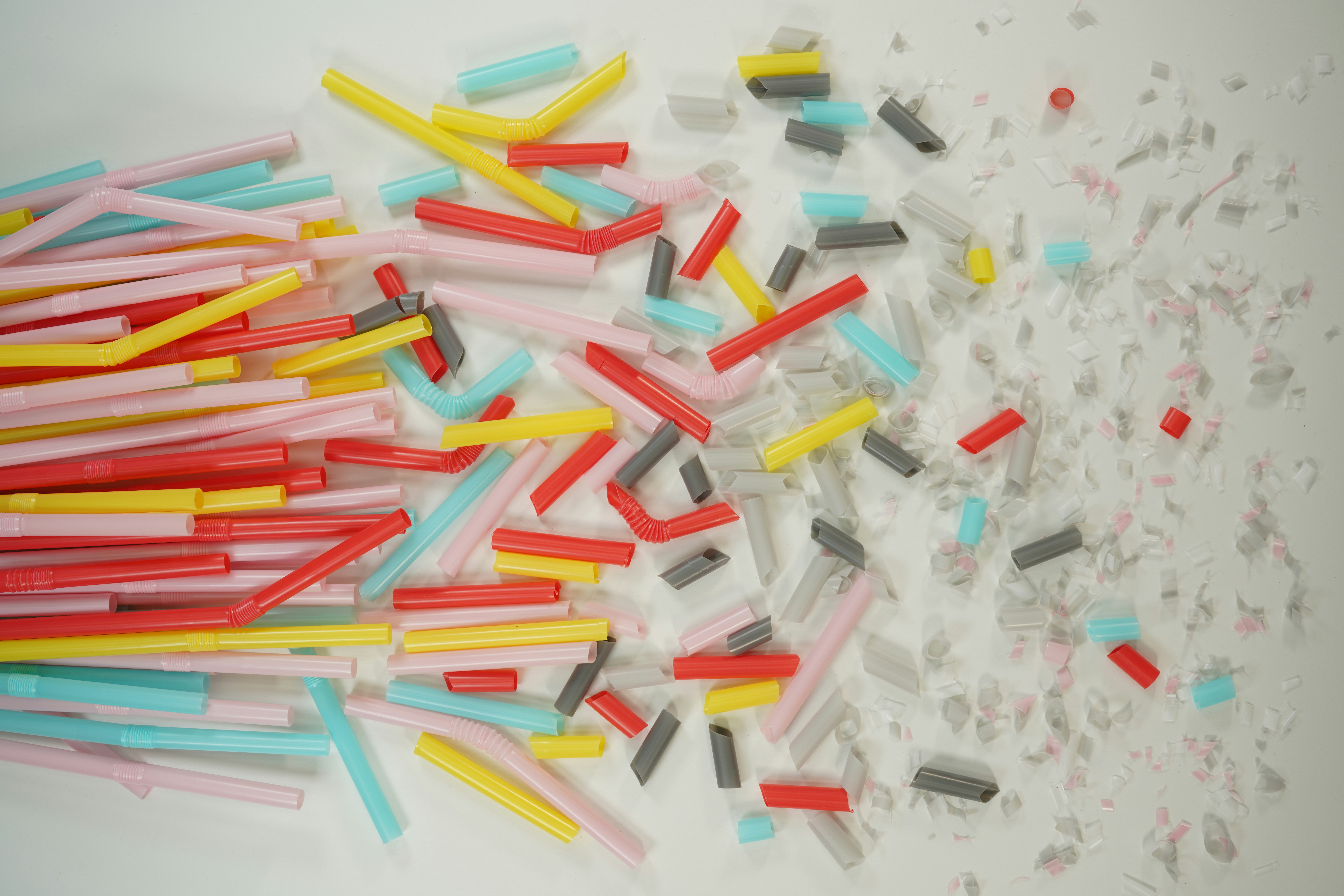
Coloured micro- and nanoplastics suspended in the atmosphere may contribute to global warming at a level equivalent to 16.2% of that caused by black carbon, also known as soot, with higher values seen over oceanic garbage patches. The findings, published in Nature Climate Change, suggest that these particles could be previously unrecognised contributors to climate warming, and that their role should be considered in future climate assessments.
Microplastics and nanoplastics originate from the fragmentation of larger plastic waste and range in size from 1 nanometre (one billionth of a metre) to up to 500 micrometres (one millionth of a metre) in diameter. They have been detected in various environments worldwide, from cities to remote regions, carried by atmospheric processes. Previous research has suggested that the contribution of airborne plastics to atmospheric warming was minimal, but such analyses often assumed that they were uncoloured, despite real-world plastics commonly containing pigments.
Hongbo Fu and colleagues examined the behaviour of individual micro- and nanoplastic particles using high‑resolution electron spectroscopy and combined these measurements with atmospheric transport simulations. They find that black and coloured particles strongly absorb sunlight compared to white particles. Assuming realistic global atmospheric concentrations of these particles, they report an effective radiative forcing — the balance of solar radiation absorbed and released by a planet’s atmosphere — of 0.033 ± 0.019 watts per square metre for nanoplastic particles and 0.006 ± 0.003 watts per square metre for microplastic particles. This radiative forcing is equivalent to 16.2% of that from black carbon emissions, a well-known air pollutant that contributes to warming. Although this warming effect is small at the global level, it can exceed that of black carbon by up to a factor of 4.7, especially over ocean regions with high concentrations of plastic, such as the North Pacific Garbage Patch.
The findings indicate that airborne plastic particles, particularly coloured nanoplastics, contribute to atmospheric warming and may influence regional climate patterns. The authors note that the laboratory experiments are a simplified version of atmospheric processes and that the global distribution of micro- and nanoplastic particles needs to be better constrained by observations. Further research is needed to fully determine how micro- and nanoplastics contribute to Earth’s warming and to improve their representation in climate models.
Attachments
Note: Not all attachments are visible to the general public. Research URLs will go live after the embargo ends.


