 Sign In



 New Zealand; International
News release
From:
Two of our researchers have been part of a global genetics project investigating an ancient group of marine invertebrates – byrozoans.
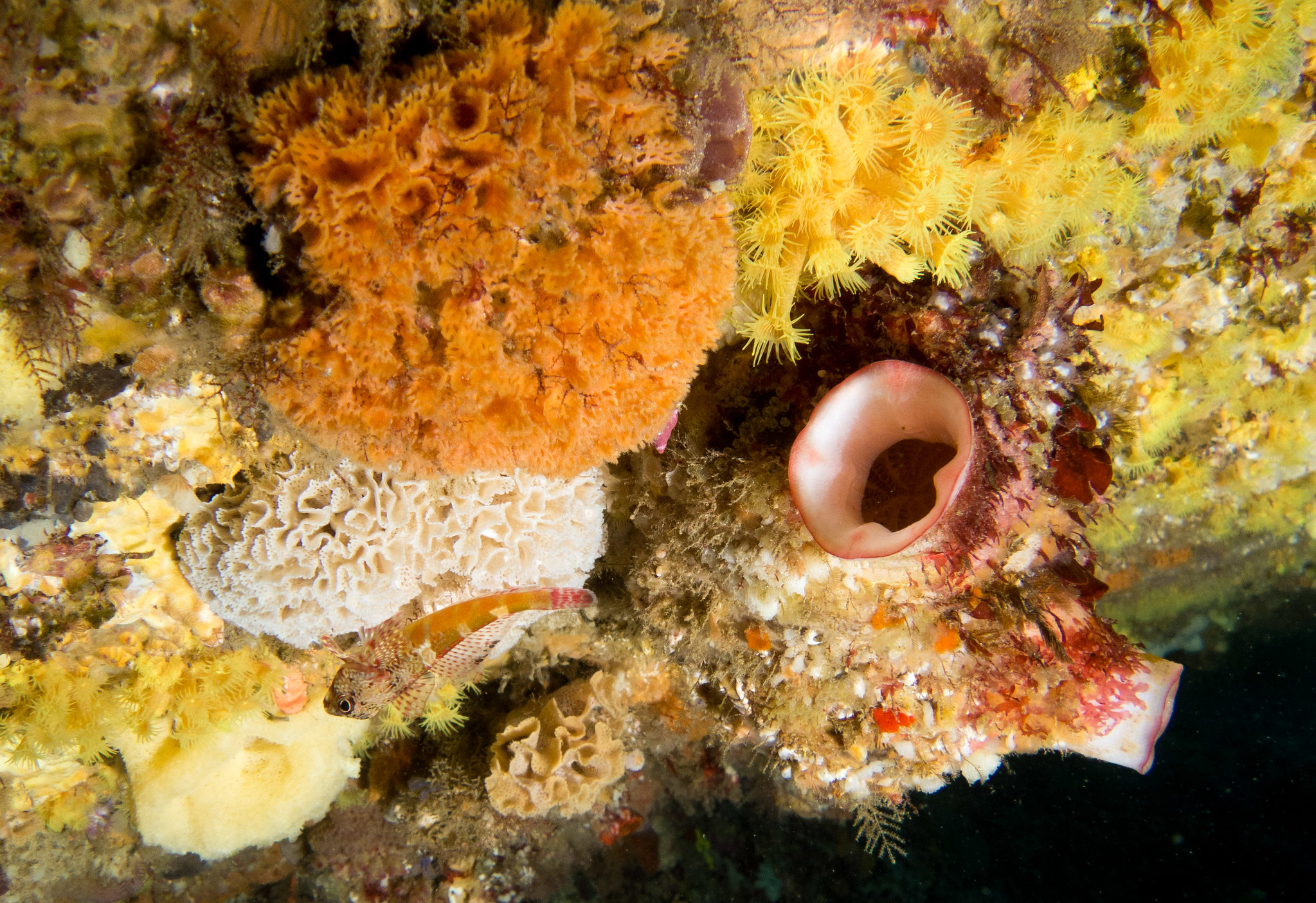
These marine animals resemble moss or lichen and are largely ignored because they are small, inedible, and live in nooks and crevices.
Professor Abby Smith, of Otago’s Department of Marine Science, will admit that, at first glance, these creatures don’t seem very important, but they are, especially in the Southern Hemisphere.
Here, compared to their northern counterparts, they are abundant (over 1000 species), large, and ecologically significant. They provide shelter and habitat for other organisms, often in water depths that otherwise provide very little shelter.
An example of this sits off the coast of Otago – where bryozoans grow in about 60 m deep, forming a complex and biodiverse reef structure, full of both life-long residents and visitors such as hunting seals and penguins. These reefs provide nursery grounds for the fish they, and we, eat.
Bryozoans also act as a fantastic carbon sink and at least one type is part of a system which produces a useful tumouricide which is being explored for cancer medication.
In order to understand more about them, Professor Smith joined 33 other scientists from 16 countries to collect, identify, and genetically sequence more than 500 bryozoan species. They have built the largest and most detailed evolutionary tree for this group, allowing them to lift the lid on evolutionary events that occurred more than 250 million years ago.
A paper on the project is being published tomorrow in the internationally acclaimed journal Science Advances.
Expert Reaction
These comments have been collated by the Science Media Centre to provide a variety of expert perspectives on this issue. Feel free to use these quotes in your stories. Views expressed are the personal opinions of the experts named. They do not represent the views of the SMC or any other organisation unless specifically stated.
Professor Abby Smith, Department of Marine Science, University of Otago
Authors from all over the world have cooperated to provide both samples and data to a huge genetics project based in Oslo, Norway.
In order to understand this ancient group of marine invertebrates, they have managed to sequence more than 500 species, building the largest and most detailed phylogenetic tree for this group. The most exciting part of the paper is that the resulting family tree, when calibrated for timing against known fossils, suggests that the group evolved much earlier than the fossil record suggests. This probably means that the ancestor of this group, unlike modern ones, did not have a heavily calcified skeleton, and thus was not preserved. Here the genes are letting us lift the lid on evolutionary events that occurred more than 250 million years ago.

