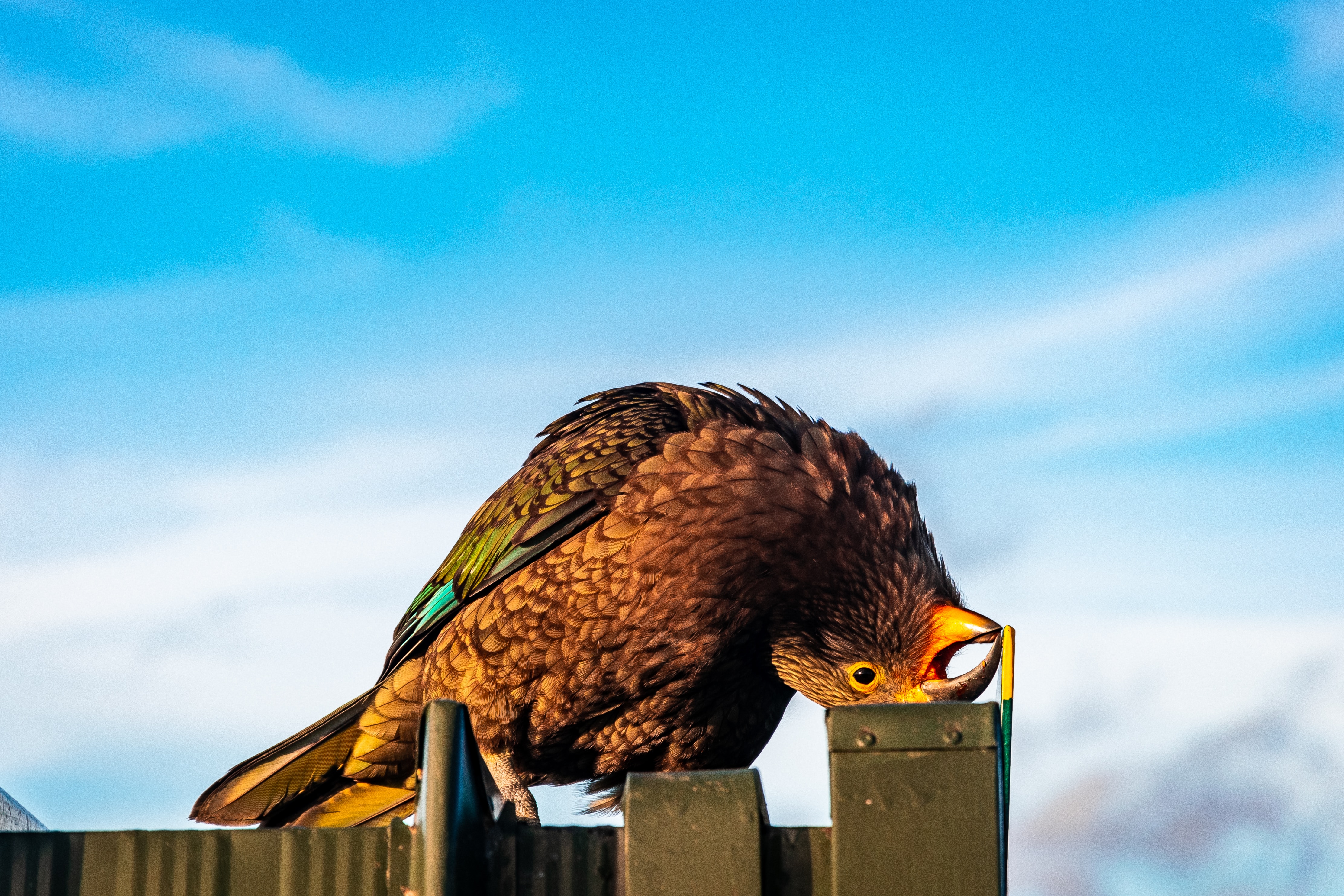
Look but don't touch: training could help kea living near humans to stay away from new objects

Publicly released:
New Zealand
Photo by Sébastien Goldberg on Unsplash

Kea living near humans are more likely to investigate new foods and objects, making them vulnerable to poisoning from lead building materials or baits used to control predators. Researchers waited until kea came close to them, then placed blue plastic blocks on prominent rocks and ridgelines and recorded the birds' responses. They found that younger kea and kea from populations near to humans were quicker to interact with the blocks than kea from remote populations. The authors say that kea are fast learners and can be conditioned to avoid baits, so aversion training targeted at populations near human settlements could be an effective method to trial before future bait drops.

Journal/
conference:
New Zealand Journal of Zoology
Research:Paper
Organisation/s: University of Canterbury, University of Otago
Funder: This work was supported by a University of Canterbury Doctoral Scholarship to LM, and a TWCF (Templeton World Charity Foundation) grant to XN [TWCF0310].
Media Contact/s
Contact details are only visible to registered journalists.