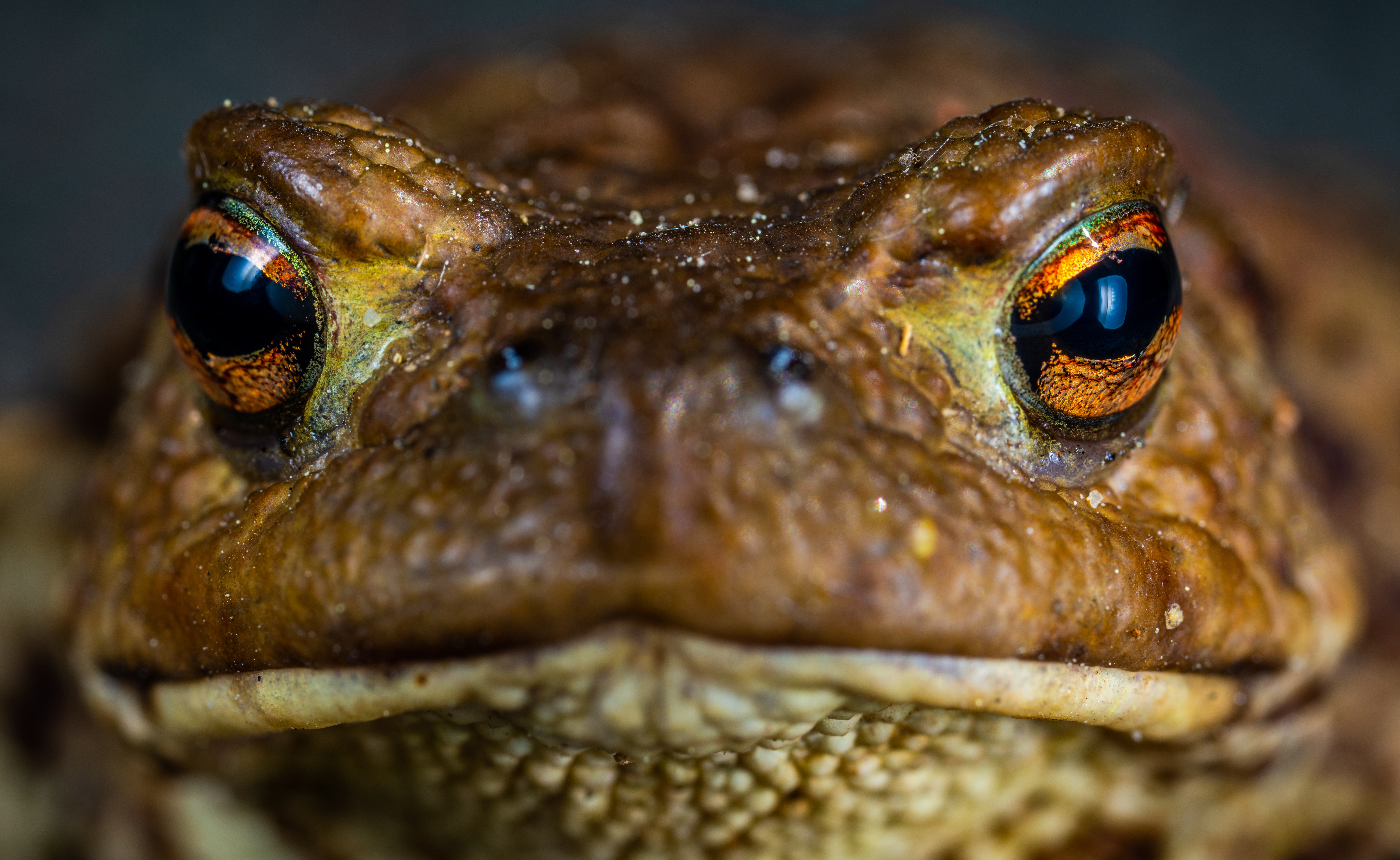
In the battle of cane toads vs lungworms, the winner is the toad who stayed home

Publicly released:
Australia; NSW; QLD; WA; NT

As the cane toad marches across Australia, it is locked in a battle with its arch nemesis, the lungworm parasite, and both are constantly evolving to exploit loopholes in their enemy’s defences - so who is winning? Aussie researchers have found that cane toads from near where the toad invasion began in QLD may be winning for now, as they were far better at resisting infection than toads from the invasion front near Fitzroy Crossing in WA. The authors say this could be because with fewer toads at the front, it is harder for parasites to spread between animals, so the pressure to evolve an immune system that can defeat them may be weaker.

Media release

From: The Royal Society

In an arms race between host and parasite, a lungworm's ability to infect a toad is determined by host susceptibility not parasite preference

Biology Letters

Parasites and their hosts are locked in never-ending “arms races”, with each constantly evolving to exploit loopholes in their enemy’s defences. We might expect parasites to evolve faster, because of their short generation times, and so gain the upper hand. However, a study from Australia shows that sometimes it is the host that wins the battle – at least temporarily. Lungworms collected from several different locations were equally good at finding and penetrating their hosts – invasive cane toads – under controlled conditions. In contrast, cane toads from some areas were far better at resisting infection even if penetrated by the parasite.

Attachments

Note: Not all attachments are visible to the general public. Research URLs will go live after the embargo ends.

Research The Royal Society, Web page Please link to the article in online versions of your report (the URL will go live after the embargo ends).
Journal/
conference:
Biology Letters
Research:Paper
Organisation/s: The University of New South Wales, Macquarie University
Funder: This research was supported by ARC Funding to R.S. and L.R. (grant no. DP160102991). L.R. was supported by the Scientia program at UNSW
Media Contact/s
Contact details are only visible to registered journalists.