Sign In



 New Zealand; Pacific
News release
From:
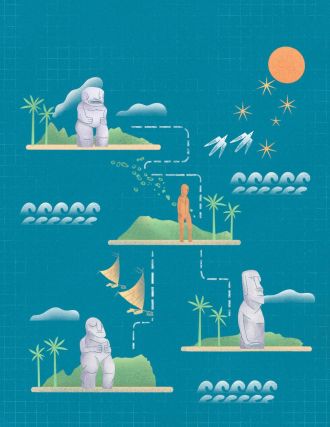
1. Anthropology: Genomes across the Pacific (N&V) *IMAGE*
The dates and voyaging paths of the peopling of Polynesia, inferred from the genomes of 430 contemporary human individuals from 21 Pacific island populations, is revealed in a paper published this week in Nature.
Polynesia includes a host of islands scattered across an ocean that spans one third of the planet. The settlement of this vast region is one of the wonders of human exploration, but the timings and sequences of islands settled in the Polynesian migration are matters of dispute.
Andrés Moreno-Estrada, Alexander Ioannidis and colleagues used a dataset comprising samples from 430 present-day human individuals to unravel the detailed genetic history of the populations of the vast, dispersed Pacific Island network. Historians and Polynesian oral traditions attest that family groups of 30–200 individuals sailed in double-hulled canoes across thousands of kilometres of open ocean to inhabit each new Polynesian island group. These genomic analyses suggest that the migration began in Samoa and spread first through Rarotonga (Cook Islands) in the 9th century ad; the Tōtaiete mā (Society Islands) in the 11th century ad; the western Tuhaʻa Pae (Austral Islands) and Tuāmotu Archipelago in the 12th century ad; and finally to islands that would later become known for the megalithic statues built there: the Te Henua ʻEnana (Marquesas Islands) in the north, Raivavae in the south, and Rapa Nui (Easter Island), the easternmost of the Polynesian islands, settled in approximately ad 1200 via Mangareva. This new evidence reveals that the few widely separated islands with prehistoric remains of megalithic statues are genetically linked despite the thousands of miles of open ocean between them.
Multimedia