 Sign In



 Australia; NSW
News release
From:
Quantum computing engineers at UNSW Sydney have shown they can encode quantum information – the special data in a quantum computer – in four unique ways within a single atom, inside a silicon chip.
The feat could alleviate some of the challenges in operating tens of millions of quantum computing units in just a few square millimetres of a silicon quantum computer chip.
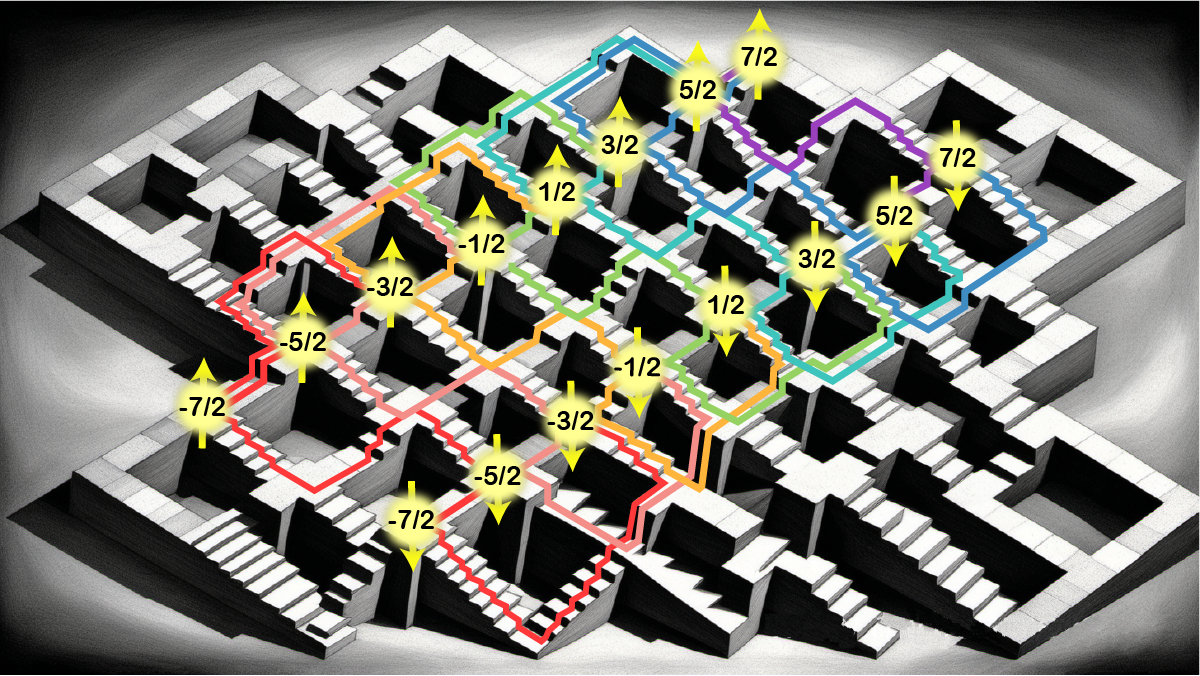
In a paper published recently in Nature Communications the engineers described how they used the sixteen quantum ‘states’ of an antimony atom to encode quantum information. Antimony is a heavy atom that can be implanted in a silicon chip, replacing one of the existing silicon atoms. It was chosen because its nucleus possesses eight distinct quantum states, plus an electron with two quantum states, resulting in a total of 8 x 2 = 16 quantum states, all within just one atom. Reaching the same number of states using simple quantum bits – or qubits, the basic unit of quantum information – would require manufacturing and coupling four of them.
Lead author Irene Fernandez de Fuentes says the team, under the guidance of Scientia Professor Andrea Morello, drew on more than a decade’s work that had established different methods of quantum control to show all were possible within the same atom. The antimony atom was implanted in the chip by colleagues at the University of Melbourne, using facilities of the Heavy Ion Accelerators at the Australian National University.
“First, we showed that we could control the antimony’s electron with an oscillating magnetic field, similar to the breakthrough in 2012 which was the first time a qubit had ever been demonstrated in silicon,” she says.
“Next we showed that we could use a magnetic field to manipulate the spin of the antimony’s nucleus. This is the standard magnetic resonance method, as used for example in MRI machines in hospitals. The third method was to control the nucleus of the antimony atom with an electric field, something that was discovered by lucky accident in 2020.
“And the fourth way was to control both the antimony nucleus and the electron in opposition to each other, using an electric field using so-called flip-flop qubits, which was demonstrated by this team last year.
“This latest experiment shows that all four of these methods can be used in the same silicon chip using the same architecture.”
The advantage of having four different methods is that each method gives computer engineers and physicists more flexibility when designing future quantum computing chips.
For example, magnetic resonance is faster than electric resonance, but the magnetic field spreads widely in space, so it may also affect neighbouring atoms. Electric resonance, while slower, can be applied very locally to select one specific atom without affecting any of its neighbours.
“With this big antimony atom, we have the complete flexibility of how we integrate it with a control structure over a silicon chip,” Prof. Morello says.
Why this matters
The quantum computers of the future will have millions, if not billions of qubits working simultaneously to crunch numbers and simulate models in minutes what would take today’s supercomputers hundreds or even thousands of years to complete. While some teams around the world have made progress with large numbers of qubits, such as Google’s 70 qubit model or IBM’s version which has more than 1000, they require much larger spaces for their qubits to work without interfering with one another.
But the approach that Prof. Morello and other colleagues have taken at UNSW is to design quantum computing using technology already in use to make conventional computers. While progress may be slower in terms of numbers of working qubits, the advantage of using silicon will mean being able to have millions of qubits in a square millimetre of chip.
“We are investing in a technology that is harder, slower, but for very good reasons, one of them being the extreme density of information that it'll be able to handle,” says Prof. Morello.
“It's all very well to have 25 million atoms in a square millimetre, but you have to control them one by one. Having the flexibility to do it with magnetic fields, or electric fields, or any combination of them, will give us lots of options to play with when scaling up the system.”
Back to the lab
Next, the group will use the large computational space of the antimony atom to perform quantum operations that are much more sophisticated than those afforded by plain qubits. They plan to encode a ‘logical’ qubit within the atom – a qubit built upon more than two quantum levels, to get enough redundancy to detect and correct errors as they occur.
“This is the next frontier for practical, useful quantum computer hardware” says Prof. Morello. “Being able to build an error-corrected logical qubit within a single atom will be a tremendous opportunity for scaling up silicon quantum hardware to the point where it becomes commercially useful”.

