 Sign In



 International
News release
From:
Zoology: A deep dive into sperm whale birth
Detailed observations of a wild sperm whale (Physeter macrocephalus) birth off the coast of Dominica in July 2023 are described in a study published in Scientific Reports. The findings represent the most in-depth published observations of a wild cetacean — the group containing whales, dolphins, and porpoises — birth to date, according to the authors.
Observations of wild births are rare in cetaceans and have been recorded in less than 10% of cetacean species.
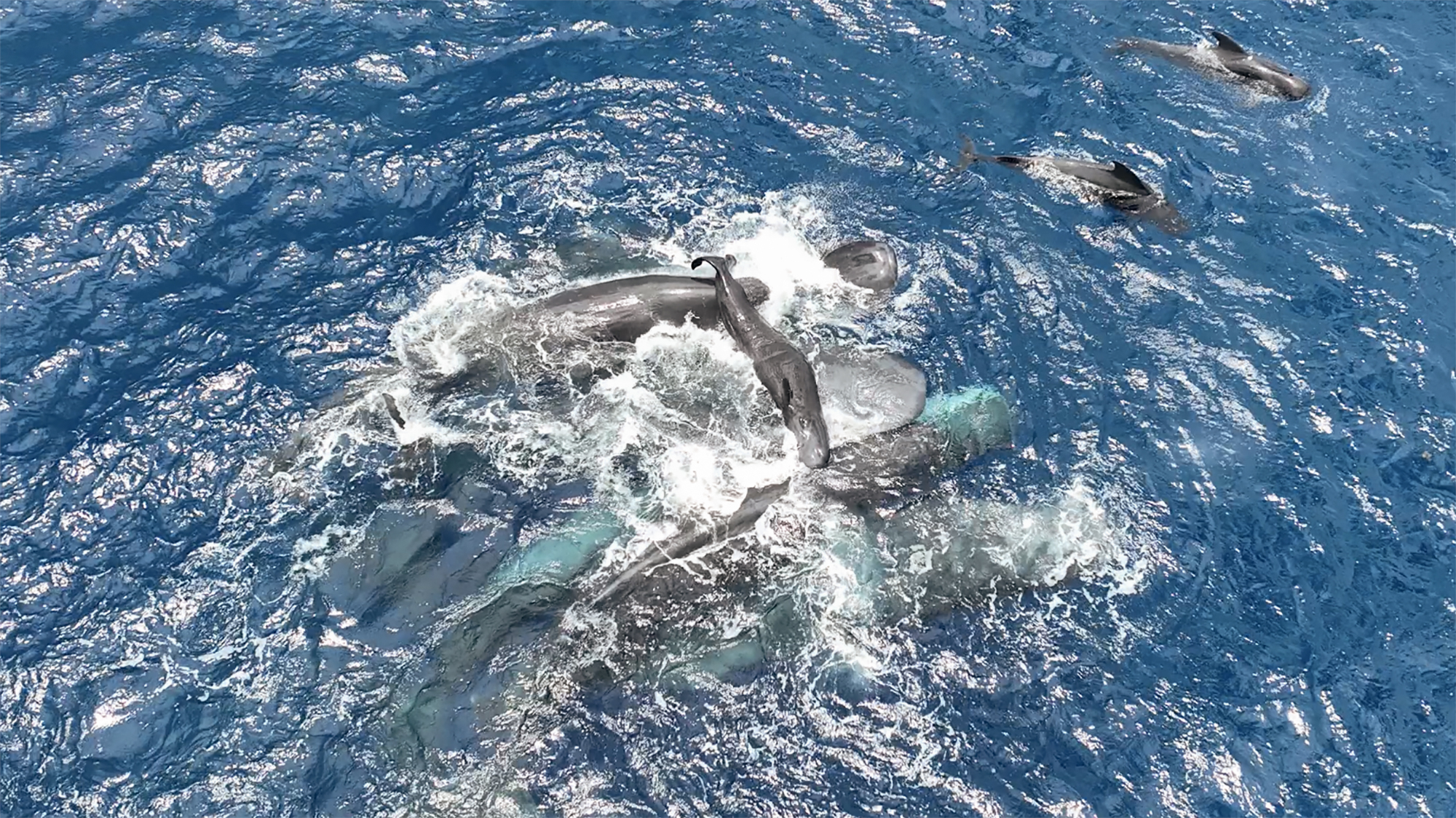
Shane Gero, David Gruber, and colleagues observed the birth within a group of 11 previously studied sperm whales using aerial drones, underwater audio, and shipboard photography. They report that the delivery phase of the birth lasted for 33 minutes and that within a minute of delivery members of the sperm whale unit lifted the newborn calf out of the water onto the heads and backs of the adult females. Around two hours after birth the sperm whale unit began to break up and the newborn remained with its mother (known as Rounder), half-sister (Accra), and aunt (Aurora). The authors note that the newborn was observed with Accra and Aurora a year later and suggest that it will likely live to adulthood after surviving its first year of life.
Throughout the birth the authors recorded vocalisations — known as ‘codas’ — that previous research has proposed relate to the social identity of the wider cultural clan to which these sperm whales belong. These vocalisations may support social bonding during birth. The authors also observed shifts in vocalisations at key events during the birth, which included both slower, longer codas, and novel sounds resembling human ‘a’ and ‘i’' vowels, which are known as coda-vowels. As the vocalisations could be detected over hundreds of metres, the researchers speculate that they may have been heard by groups of short-finned pilot whales (Globicephala macrorhynchus) and Fraser’s dolphins (Lagenodelphis hosei) that were observed in close proximity to, and interacting with, the sperm whale unit.
A review of published accounts of wild births in nine cetacean species indicates that the coordinated lifting observed by the authors has only been documented in three other toothed whale species — false killer whales (Pseudorca crassidens), orcas (Orcinus orca), and beluga whales (Delphinapterus leucas). The authors propose that the behaviour may date to over 34 million years ago to the last common ancestor of these species. They suggest that it may have evolved to reduce the risk of newborns drowning once early cetaceans began giving birth in deeper waters.
Multimedia

Attachments
Note: Not all attachments are visible to the general public. Research URLs will go live after the embargo ends.


