First report of 'sex reversal' in live-bearing lizards

Publicly released:
Australia; TAS; ACT
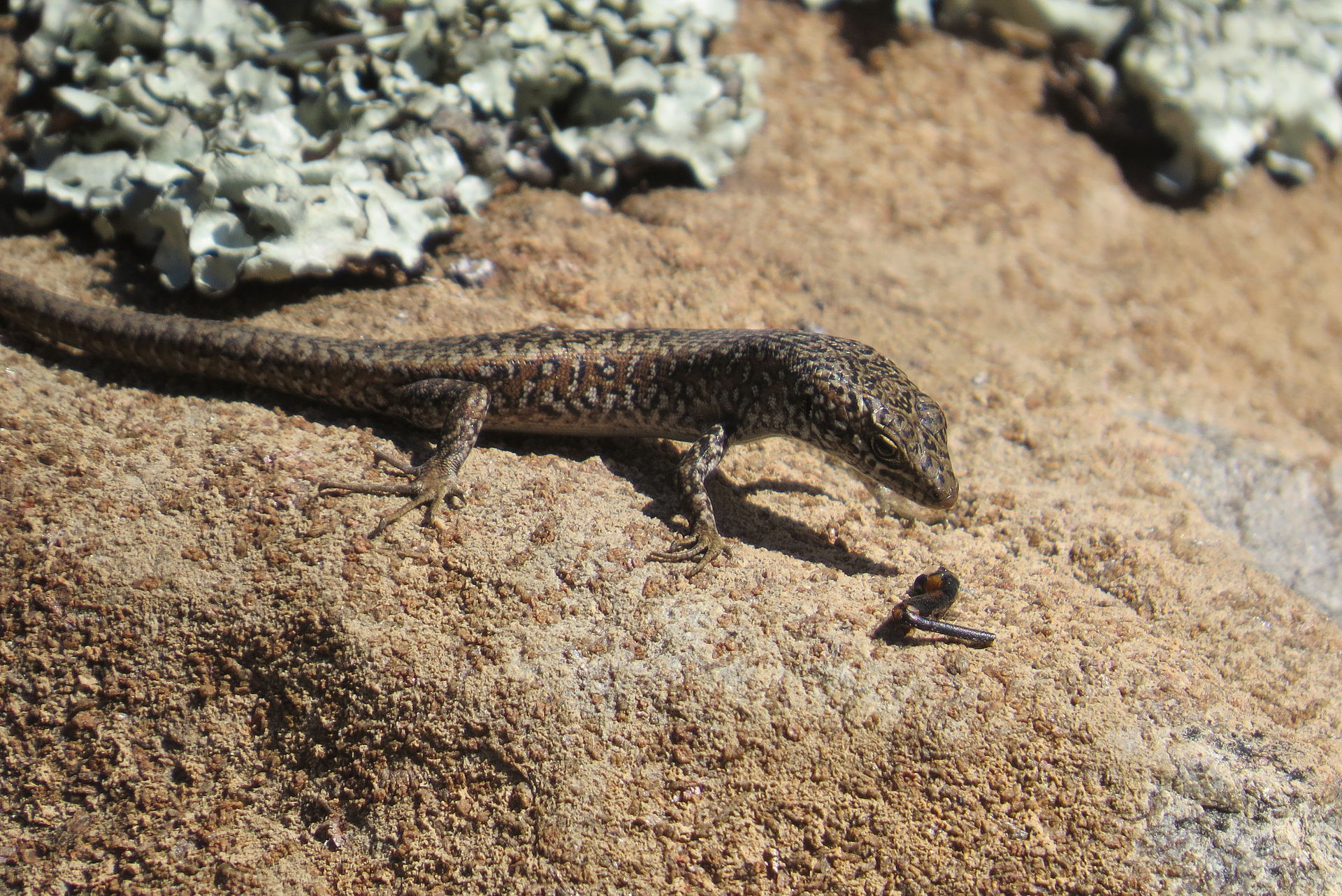
Ocellated Skink at Cataract Gorge in Tasmania, Australia. CREDIT: JMsayers CC0 from Wikipedia

Aussie researchers have described the first report of sex reversal in a live-bearing reptile. A combination of temperature and sex chromosomes can lead to sex reversal in reptiles, where the animal is genetically one sex but physically the other. Previous research had only observed sex reversal in egg-laying reptiles, but the team combined long-term datasets with experimental manipulations and found sex reversal in the Aussie spotted snow skink. These results are key to understanding sex and genetic evolution across vertebrates, the researchers say.

Media release

From: The Royal Society

Sex reversal explains some, but not all, climate mediated sex ratio variation within a viviparous reptile

In reptiles, sex can be determined by temperature, sex chromosomes or a combination of both. When the latter happens individuals can become ‘sex reversed’ (genetically one sex with the morphology of the other sex). Using the spotted snow skink, we combined experimental manipulations with one of the longest running datasets on wild populations in Australia to provide the first report of sex reversal in a live-bearing reptile. At low temperatures, some male skinks are born with female sex chromosomes. These sex reversed males are key to understanding how sex reversals contribute to sex determination and sex chromosome evolution across vertebrates.

Attachments

Note: Not all attachments are visible to the general public. Research URLs will go live after the embargo ends.

Research The Royal Society, Web page The URL will go live after the embargo lifts.
Journal/
conference:
Proceedings of the Royal Society B
Research:Paper
Organisation/s: University of Tasmania, University of Canberra
Funder: This study was funded by Australia and Pacific Science Foundation (grant no. APSF 17/8) and Holsworth Wildlife Research Endowment.
Media Contact/s
Contact details are only visible to registered journalists.