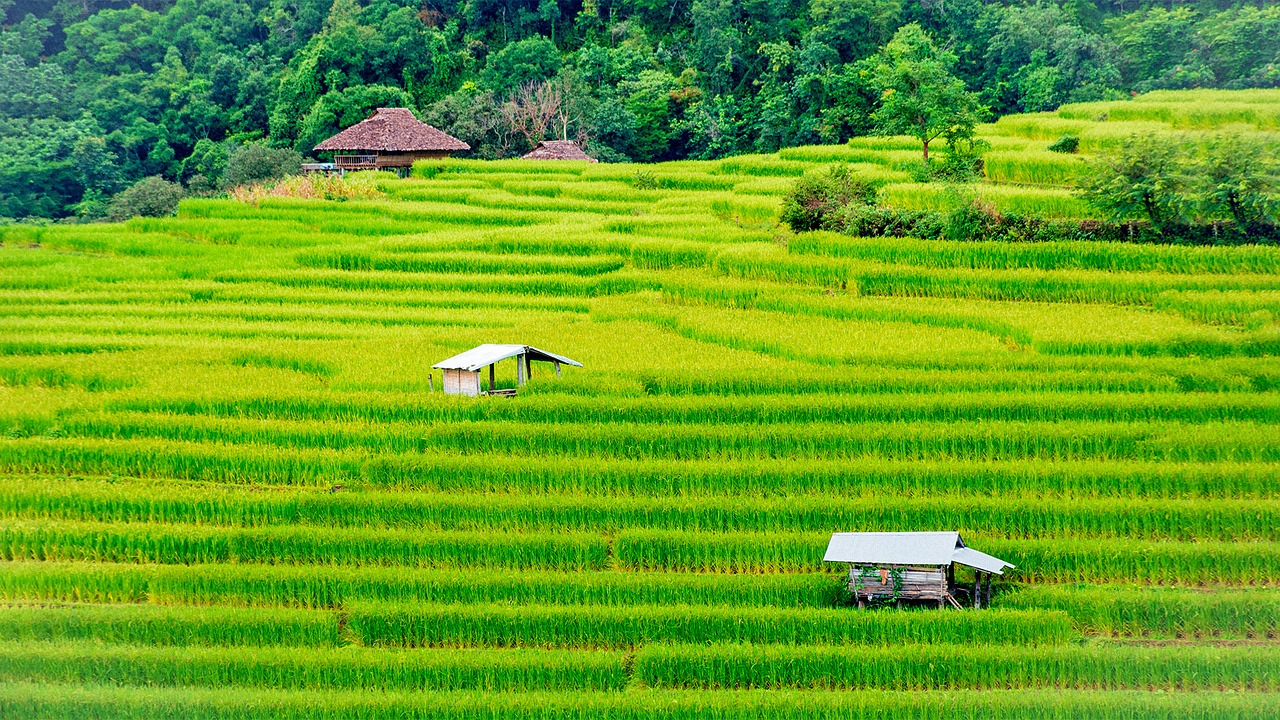
Farming rice may have changed our genes

Publicly released:
International

Farming and growing rice may have shaped humans not only culturally but also genetically, according to Chinese researchers. The team looked at the genetics underlying nine behavioural traits and whether they were linked with rice  cultivation. They found that rice cultivation may have exerted selective pressures in favour of having babies at an earlier age and having a lower alcohol tolerance. The researchers say this may have been because rice farming is labour intensive and children can provide additional labour for farm families. Rice can also be used to make alcohol - suggesting rice farmers may have been exposed to alcohol pressure for longer than other populations.

News release

From: The Royal Society

Relationship Between Rice Farming and Polygenic Scores Potentially Linked to Agriculture in China

Royal Society Open Science

Following domestication in the lower Yangtze River valley 9,400 years ago, rice farming spread throughout China and changed lifestyle patterns among Neolithic populations. Here we report evidence that the advent of rice domestication and cultivation may have shaped humans not only culturally but also genetically. Using a dataset of 4,101 individuals recently collected from China, we test whether polygenic scores (and genotypes) associated with various behavioural traits have been under the selection of the rice cultivation history. Results show that rice cultivation has exerted selective pressures in favour of earlier reproduction and lower alcohol tolerance.

Attachments

Note: Not all attachments are visible to the general public. Research URLs will go live after the embargo ends.

Research The Royal Society, Web page Please link to the article in online versions of your report (the URL will go live after the embargo ends).
Journal/
conference:
Royal Society Open Science
Research:Paper
Organisation/s: China Agricultural University
Funder: This work was supported by the 2115 Talent Development Program of China Agricultural University; the Academy of Global Food Economics and Policy (AGFEP) and the Beijing Food Safety Policy & Strategy Research Base.
Media Contact/s
Contact details are only visible to registered journalists.