 Sign In



 Australia; NSW; VIC
Expert Reaction
These comments have been collated by the Science Media Centre to provide a variety of expert perspectives on this issue. Feel free to use these quotes in your stories. Views expressed are the personal opinions of the experts named. They do not represent the views of the SMC or any other organisation unless specifically stated.
Professor Paul Griffin is the Director of Infectious Diseases at Mater Health Services and the Head of the Mater Clinical Unit for the University of Queensland School of Medicine
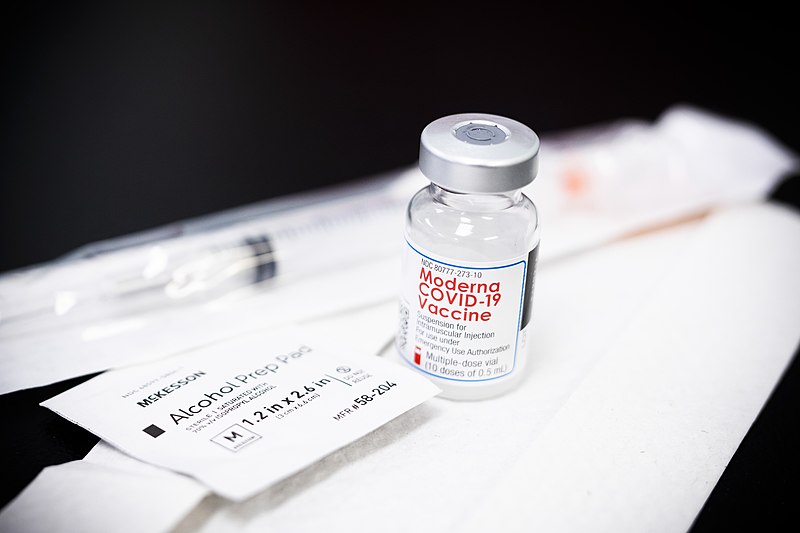
The approval of the Moderna vaccine in younger children aged six months to five years is welcome news. This is based on clinical trial data from over 6,000 children in this age group in the USA and Canada. In this age group the dose is 25 micrograms which is half the dose used in the six to 11 year olds and a quarter of the dose used in people 12 years and older.
Data generated from this trial demonstrated a favourable safety profile and an immune response similar to that seen in young adults.
While rates of more significant disease are fortunately relatively less in this group, having an option to be able to protect those who want to be protected, or perhaps have an increased risk for whatever reason, is another positive step forward in my opinion.
Of course, there are groups at greater risk in whom uptake of third and fourth doses remains below where it needs to be. Hence, this should still be our highest priority, but now fortunately if people desire to be able to protect children this is available to them.

Dr Roger Lord is a senior lecturer (Medical Sciences) with the Faculty of Health Sciences at The Australian Catholic University and Visiting Research Fellow with The Prince Charles Hospital (Brisbane)
I appreciate that the TGA has carefully considered data from the KidCOVE clinical trial that included over 6,000 participants aged six months to six years and demonstrated an immune response to Moderna vaccination (dose 35 micrograms in 0.25ml vial) similar to that seen in young adults.
I am impressed that the pharmaceutical company was able to recruit such a large number given that mothers are usually very protective of their young.
While it is good to know that Moderna has a good safety profile for vaccinating this very young cohort, I am wondering how many could have simply been passively vaccinated by breastfeeding from a vaccinated mother? I appreciate some mothers may not be able to breastfeed their young however Goncalves et al have been able to show that mothers vaccinated with mRNA vaccines do produce a combination of anti-spike secretory IgA antibodies and spike reactive T-cells.
It is questioned whether a sufficient concentration of anti-spike IgA is produced with an effective neutralising capacity in breast milk, however, cumulative transfer might overcome this limitation. If this is the case the trauma associated with vaccination of the very young may be overcome via passive transfer of antibodies in breast milk.
Professor Robert Booy is an infectious diseases and vaccine expert with an honorary professorship at the University of Sydney and is a consultant to vaccine manufacturers.
COVID-19 is rising rapidly yet again and affecting vulnerable groups in the population. It remains the case that the engine of the epidemic is older teenagers and adults. However, children can get infected, and especially children who have multiple disabilities or chronic medical disorders, or immunodeficiency can develop COVID-19 severely.
These are the groups that benefit most from being vaccinated. Having a new, safe product that can be given to children as young as six months is important. Very young children can also transmit infections they catch at daycare, to their vulnerable parents, to teachers, and to vulnerable grandparents.
Children who are otherwise well are unlikely to get severe COVID-19, but with vaccination, the risk goes down even more.
The new vaccine has already been used in hundreds of thousands of children in the United States, and the safety reports from there are reassuring. The immune response from this vaccine in young kids is very similar to the immune response in older children, teenagers and young adults, even though the dose given is lower. The use of the Moderna vaccine for young children is likely to be both safe and effective, and implementation in Australia will contribute to better control of a disease that is proving elusive to manage.
All of the important public health measures which were followed in 2020 and 2021 resulted in a very low rate of death in Australia.
However, Omicron, combined with opening up our borders and our winding back of some safety measures, has resulted in a very rapid increase in deaths in Australia as well as in other island nations such as Japan, Taiwan, and New Zealand. So, we are not alone in facing the big challenges of severe disease from Omicron in the middle of 2022.
Dr Daryl Cheng is a Consultant Paediatrician and Medical Lead of the Melbourne Vaccine Education Centre and Murdoch Children's Research Institute
A COVID-19 vaccine is imminently available for children aged six months to five years old – one of the last remaining groups in our population yet to be eligible for a vaccine. With the TGA approval of the Moderna vaccine for use in this age group, the focus now shifts to the Australian Technical Advisory Group on Immunisation (ATAGI).
In this age group, two doses of the Moderna vaccine are needed to complete the course. The dose is one-quarter of the adult dose (25 micrograms instead of 100 micrograms) and should be given at least four weeks apart. Clinical trials showed a 51% effectiveness against COVID-19 infection in children between six months to two years, and 37% effectiveness in children between two and five years. They also found that the vaccine was generally safe in this age group, with common and expected side effects such as a fever, painful arm, headache and tiredness occurring in the first 24-48 hours. Importantly, there were no serious adverse events detected.
With COVID-19 case numbers still high in our community, and the threat of Omicron sub-variants and other potential variants, expansion of COVID-19 vaccines to young children will be a welcome relief for many concerned parents and families.
Whilst children are less likely to have severe outcomes or complications from COVID-19 compared with adults, they continue to experience high levels of infection, which disrupts their schooling, childcare and other activities. Children are also at risk of a rare but potentially severe COVID-19 complication known as multi-system inflammatory syndrome. This requires admission to hospital and possibly the intensive care unit. We know that vaccination helps to protect children from this life-threatening condition. Severe disease can also happen in previously healthy children, and not just in children at higher risk with underlying medical conditions.
Vaccines remain an important way to protect both young children and those around them. They can help to ensure young children can still go to kindergarten, play with their friends, travel and visit their grandparents.
