News release
From:
Springer Nature
Human evolution: Evidence of an early African rainforest home
Humans were living in the wet tropical forests of Africa as early as 150,000 years ago, a Nature study suggests, representing the earliest known evidence for humans in this habitat type. The finding challenges conventional ideas about the habitability of ancient tropical forests and suggests that West Africa may have been an important centre for early human evolution.
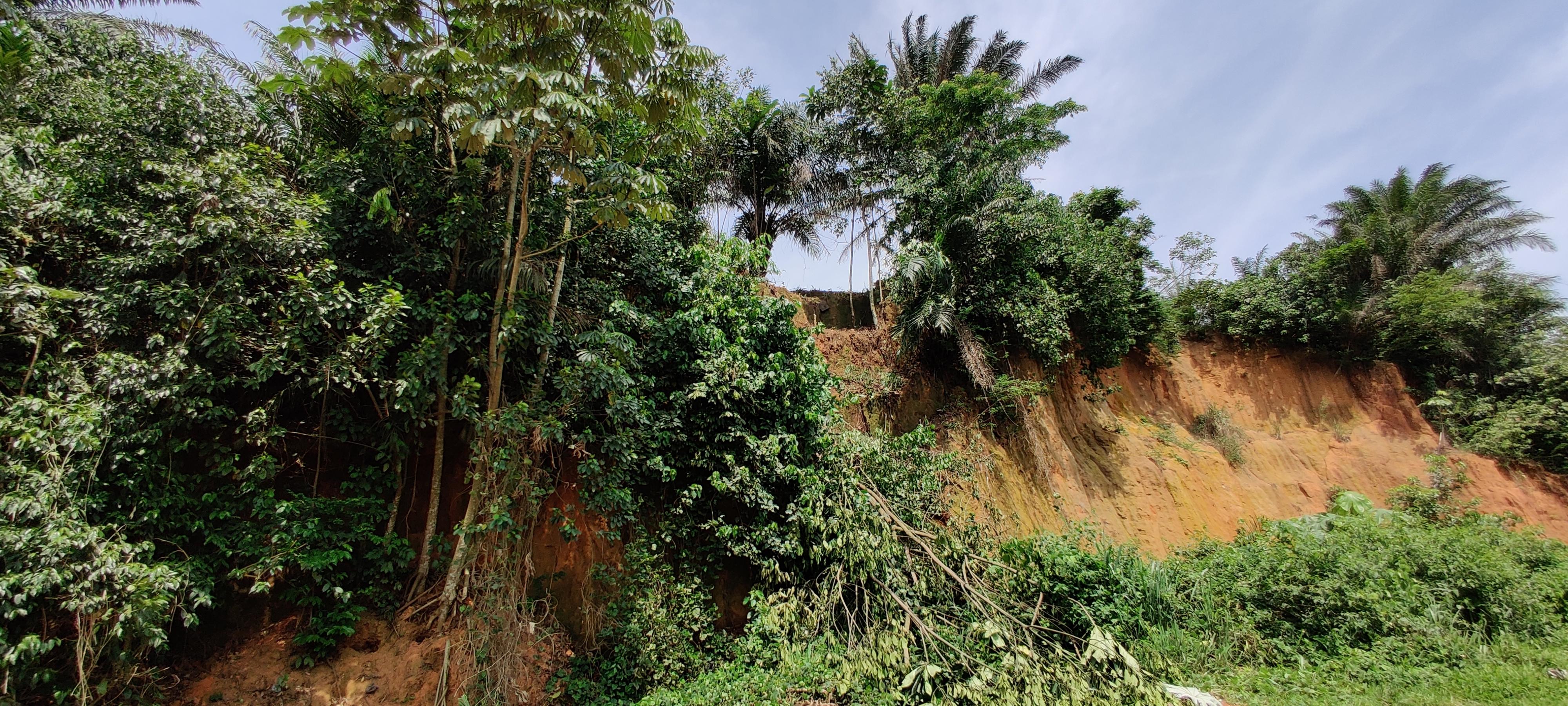
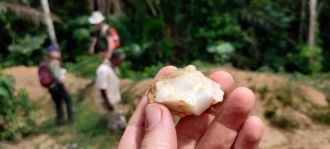
Humans are thought to have emerged in Africa around 300,000 years ago before dispersing all over the world. People were living in rainforests in Asia and Oceania as early as 45,000 years ago, but the earliest evidence linking people to rainforests in Africa dated to around 18,000 years ago. Eslem Ben Arous, Eleanor Scerri, and colleagues push that boundary back in a new paper. They focus on a site called Bété I, in modern Côte d’Ivoire, which contains signs of human occupation, including stone tools such as picks and smaller objects. The site dates to 150,000 years ago, and analyses of its sediments reveal that, when ancient people lived there, it would have been a wet tropical forest, much as it is today.
This is the oldest yet known clear association between humans and this sort of ecosystem. The findings suggest that ancient rainforests were not always as uninhabitable as they were once presumed to be.
Attachments
Note: Not all attachments are visible to the general public.
Research URLs will go live after the embargo ends.

Research
Springer Nature, Web page
The URL will go live after the embargo ends
Journal/
conference:
Nature
Organisation/s:
Griffith University, La Trobe University, Max Planck Institute of Geoanthropology, Germany
Funder:
All authors thank
the Institut d’Histoire, d’Art et d’Archéologie de l’Afrique (IHAAA, Abidjan), the Institut des
Sciences Anthropologiques de Développement (Abidjan) and the Université Félix Houphouët
Boigny (Abidjan) for their huge logistical and administrative support during the fieldwork. We
also thank the Max Planck Society’s Human Palaeosystems Group and the Leakey Foundation
(grant no. Fall 201910115) for their financial support (to the principal investigator, E.M.L.S.).
E.BA.’s postdoctoral research received funding from the Fyssen Foundation, the Max Planck
Society (Human Palaeosystems Group) and the European Union’s Horizon 2020 research
and innovation programme under Marie Skłodowska-Curie grant agreement no. 101107408.
M.D.’s research is currently supported by the Spanish State Research Agency (AEI), through
(1) a Ramón y Cajal Fellowship RYC2018-025221-I funded by MCIN/AEI/10.13039/501100011033/
‘ESF Investing in your future’, and (2) grant PID2021-123092NB/-C22 funded by MCIN/AEI/
10.13039/501100011033/‘ERDF A way of making Europe’. K.N. has received funding from the
European Union’s Horizon 2020 research and innovation programme under Marie Skłodowska-
Curie grant agreement no. 1010227259. Financial support for the ESR dating was provided
by the Access to Research Infrastructures activity in the Horizon 2020 programme of the
European Union (IPERION HS grant agreement no. 871034).
 Sign In



 Australia; International; VIC; QLD