News release
From:
The Royal Society
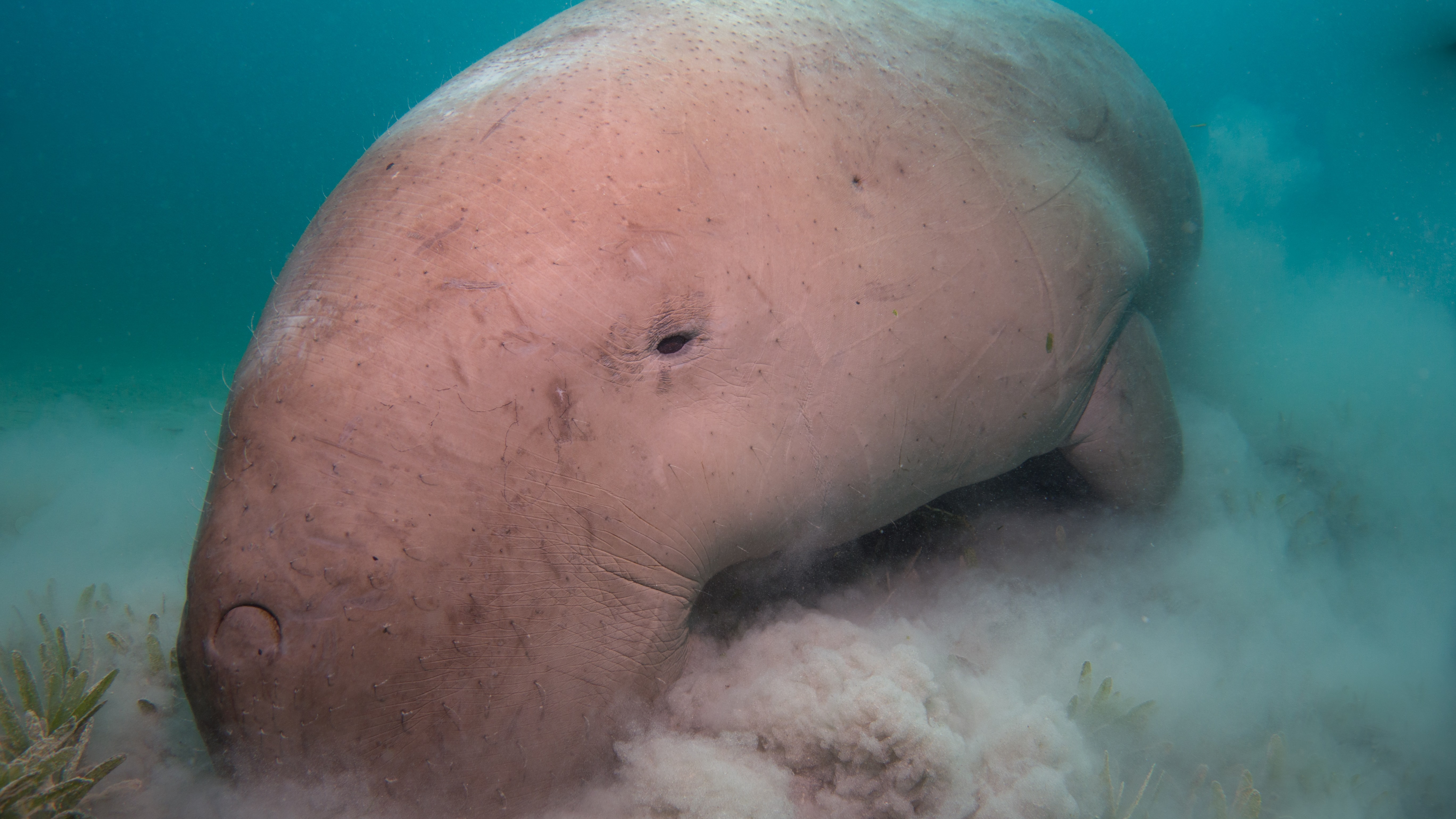
Dugong extinction – Dugongs are now likely to be functionally extinct in China, due to human-caused degradation of seagrass beds and historical hunting. Analysis of historical data and a large-scale interview survey in 66 fishing communities across four Chinese provinces around the South China Sea found the most recent dugong report dated from 2008. The finding highlights the need for effective evidence based conservation strategies for threatened marine mammals.
Journal/
conference:
Royal Society Open Science
Organisation/s:
Chinese Academy of Sciences, Zoological Society of London, Aristotle University
Funder:
This research was financially supported by the Biodiversity Investigation, Observation and Assessment
Programme (2019–2023) of the Chinese Ministry of Ecology and Environment, the incubating programme of the Institute of Deep-Sea Science and Engineering, Chinese Academy of Sciences (grant no. Y960041001), Ocean Park Conservation Foundation Hong Kong (grant no. AW02-1920), the National Natural Science Foundation of China (grant no. 41422604), ‘One Belt and One Road’ Science and Technology Cooperation Special Programme of the International Partnership Programme of the Chinese Academy of Sciences (grant no. 183446KYSB20200016), and the Key Deployment Project of the Centre for Ocean Mega-Science of the Chinese Academy of Sciences (grant no. COMS2020Q15).
 Sign In



 International