 Sign In



 International
News release
From:
How electric vehicles could back up our power system
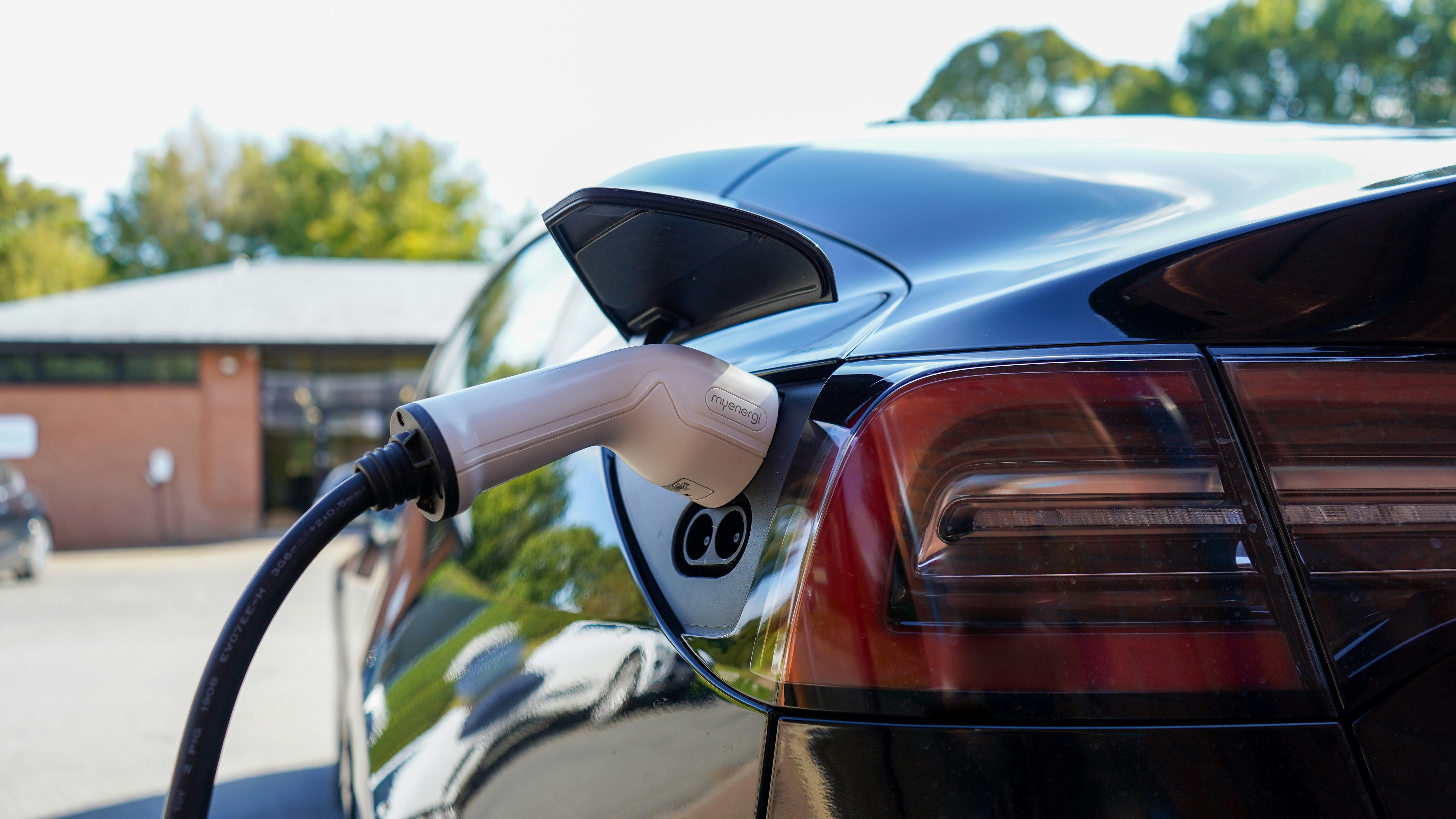
Electric vehicles (EVs) could do more for our environment than simply replace gasoline. Publishing in the Cell Press journal Joule on April 2, a new assessment of EV charging strategies suggests that EVs could serve as a vast network of mobile batteries, storing excess energy and feeding it back into the grid when demand surges. This approach could ease grid strain, cut emissions, and create revenue—but only if gradually paired with timely grid upgrades.
“People have debated whether electric vehicles are truly green and sustainable because much of our electricity still comes from fossil fuels,” says senior author and energy engineer Ziyou Song of the University of Michigan. “At the same time, the grid is struggling to absorb intermittent and unpredictable renewable energy sources like solar and wind.”
Vehicle-to-grid (V2G) technology—software that allows charging stations to communicate with the grid—bridges both challenges, allowing EVs to both draw power and send it back when needed. This two-way energy flow contrasts with current charging systems, where electricity flows only from the grid to the vehicle. However, critics question the feasibility of large-scale V2G deployment and the high upfront costs of the necessary infrastructure.
To assess the real-world potential of V2G, researchers examined the San Francisco Bay Area under different grid scenarios. They projected EV ownership and solar energy adoption, mapped when and where vehicles would charge, and evaluated the cost-effectiveness of upgrading the grid proactively versus in phases.
“I was surprised by the results,” says Song. “The optimal solution is to upgrade the power system as soon as possible.”
If the grid is updated proactively, each charger would need to generate just $0.12 to $0.18 per day to offset V2G costs, compared to $1.49 to $1.78 under phased updates. Under California’s proposed decarbonization policies, the model estimates that annual carbon emissions between 2030 and 2045 could be reduced by up to 59,200 metric tons of CO2 equivalent with V2G and proactive upgrades. The strategy could also yield up to $47.5 million in cumulative carbon rebate revenue, supporting the economic case for V2G adoption.
“First, we need to upgrade the power system to support incoming electric vehicles,” says Song. “Then we can scale V2G when needed. That’s really the key message.” Major grid assets, such as transformers, last for decades, while V2G chargers have a limited lifetime and can be scaled up as EV adoption grows.
The team notes that much of their work relies on forecasts, such as how many EVs will be on the road in 20 or 30 years, what policies will look like, and how quickly rooftop solar will spread. Political shifts, especially regarding EV incentives, could change the timeline.
“V2G is a promising technology to handle many issues in the power system, especially as we integrate more renewable energy,” says energy engineer and co-author Shunbo Lei of the Chinese University of Hong Kong, Shenzhen.
“As renewables grow, we face imbalances of different timescales. I envision that EVs could play an important role in energy storage coordination to build a reliable power system.”
Attachments
Note: Not all attachments are visible to the general public. Research URLs will go live after the embargo ends.


