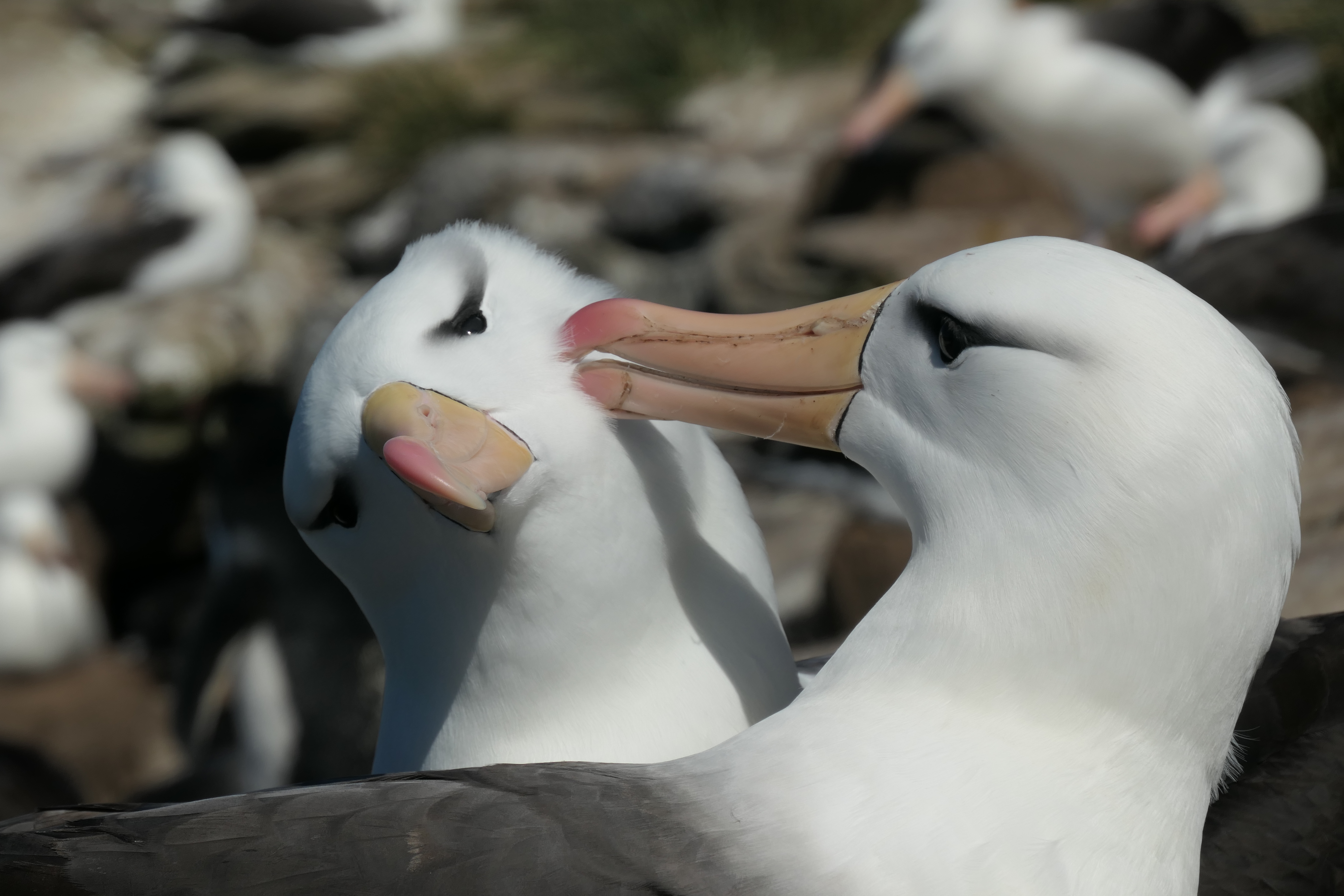
Climate change may push more albatrosses to get divorced

Publicly released:
International
PHOTO: ©Copyright: Francesco Ventura

Monogamous birds like the black-browed albatross will split up with their partners when things just aren’t working out, but new research suggests that warming waters may be creating extra pressure to divorce. International researchers studied a wild population in the Falkland Islands for 15 years, finding that failing to breed was the main trigger for a divorce. However, years with unusually warm sea surface temperatures also increased the likelihood of a breakup. The authors suggest that challenging environmental conditions may disrupt breeding processes, making certain couples split up when they should have otherwise stayed together.

Media release

From: The Royal Society

In many socially monogamous species, divorce is a strategy used to correct for sub-optimal partnerships. In this study of black-browed albatrosses, we found, for the first time in a wild bird population, that the environment had a direct impact on divorce. Divorce was more likely in unfavourable years, which are characterised by warm sea surface temperature. Such challenging environmental conditions might affect the mating processes, potentially by entailing higher costs of reproduction or via changes in the individual breeding phenology and physiological stress. Environmentally driven disruptions of pair bonds might therefore represent an overlooked consequence of global changes.

Attachments

Note: Not all attachments are visible to the general public. Research URLs will go live after the embargo ends.

Research The Royal Society, Web page URL after publication
Journal/
conference:
Proceedings of the Royal Society B
Research:Paper
Organisation/s: Universidade de Lisboa, Portugal; University of Montana, USA; South Atlantic Environmental Research Institute, Falkland Islands; University of Exeter, UK; Marine and Environmental Sciences Centre, Portugal
Funder: This research was funded by the Fundação para a Ciência e a Tecnologia (FCT, Portugal) through the projects: UIDB/50017/2020 and UIDP/50017/2020, granted to CESAM; UIDB/04292/2020 and UIDP/04292/2020, granted to MARE; and PD/BD/135537/2018, awarded to F.V. The Falkland Islands Government granted formal permits and provided funding through the Environmental Studies Budget.
Media Contact/s
Contact details are only visible to registered journalists.