 Sign In



 New Zealand
News release
From:
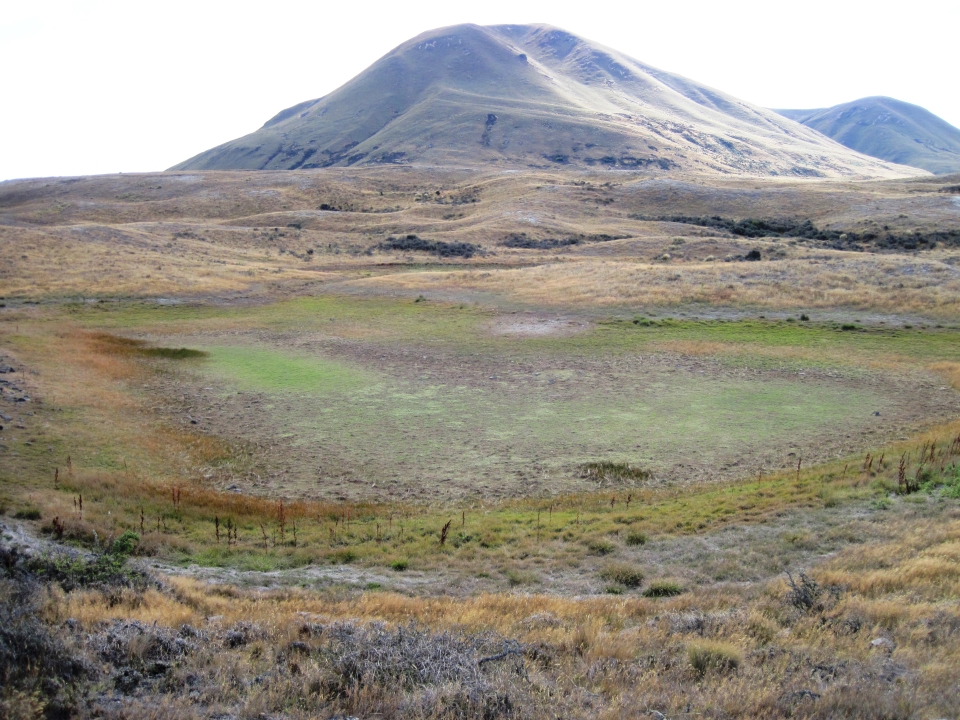
"Kettle holes (kettles) are formed by large blocks of ice being left behind as glaciers retreat; the ice blocks are covered with gravels and eventually melt, causing the gravels to collapse and form a depression shaped like an old-fashioned kettle. Most kettles in Aotearoa formed during the Pleistocene, over 11,000 years ago. Kettles often pond with water and in places with dry summers they fill and empty seasonally to form ephemeral wetlands.
"These kettles contain very high native plant diversity producing communities of plants that resemble the turf of a bowling green. Although our research focused on the plants of kettles, they are also home to threatened invertebrates like tadpole shrimp and birds like kakī.
"Typically, kettles are small – they occupy less than 0.01% of the South Island – therefore their size combined with regular drying means they can be easily overlooked as wetlands.
"We analysed where kettles occur, what protection status they have, and what plants they contain. We found over 400 species of plants and lichens in the kettles we surveyed. Of the native plants, 22% of the vascular plants and 15% of the mosses and lichens were Threatened or At Risk species.
"Most kettles were on private or pastoral lease land. Twenty-nine percent of kettles were on public conservation land. Of those kettles, most are on Stewardship Land. Only 0.9% of kettles are within National Parks. Threatened plants in kettles were equally likely to be found on any land type.
"Protecting kettles is an easy win for plant and wetland conservation given their high biodiversity values over a small physical area."

