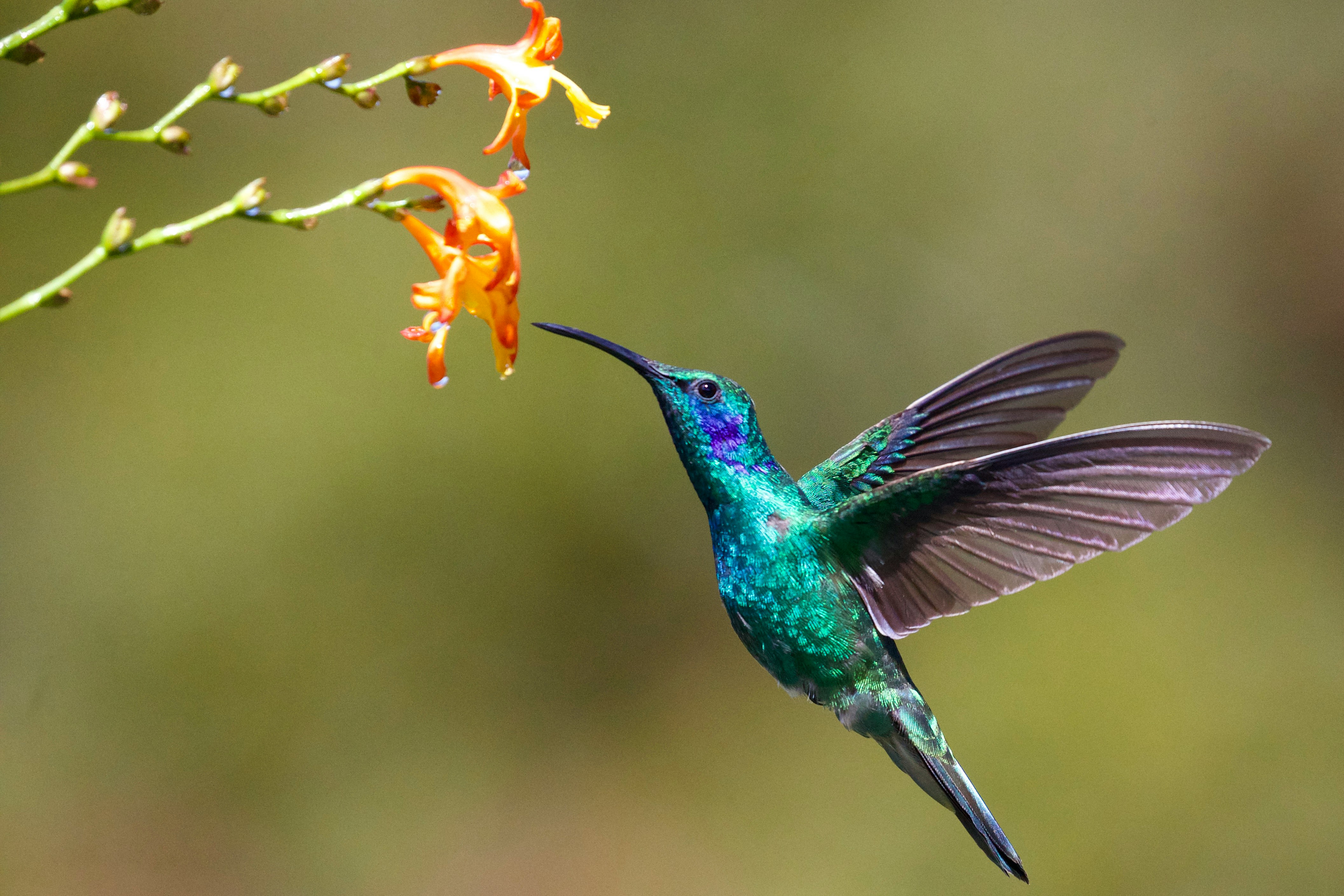
Birds are boozing on the human equivalent of 'a beer a day' from flowers

Publicly released:
International
Photo by James Wainscoat on Unsplash

Many flowers have nectar that contains tiny amounts of alcohol, which, when consumed by birds and bees, is the equivalent of us drinking a beer a day, according to US research. The researchers say they have measured for the first time the minute concentrations of alcohol that result from fermentation by yeasts living within the nectar. They found that 26 of the 29 species of flower they checked had alcohol in at least one sample, and for a single species, around half of all samples contained alcohol. When they looked at what the levels of alcohol might mean for birds and bees pollinating those flowers, they found that hummingbirds and sunbirds consume a daily dosage equivalent to 1.3–1.9 standard drinks in human terms, while honeybees are drinking around a quarter of this dosage.

News release

From: The Royal Society

Low-level ethanol is widespread within floral nectar

Royal Society Open Science

Many flowers contain special cells that produce nectar, which pools at the base of the flower. When nectar-loving birds and insects come to drink it they come into contact with pollen, spreading it from plant to plant, which facilitates reproduction. There is a microbial world inside the nectar that can affect the nectar’s properties and how it tastes to the pollinators. In this study we measured for the first time the minute concentrations of ethanol that result from fermentation by yeasts living within the nectar. Using the literature we estimate how much ethanol is consumed each day by various pollinators.

Attachments

Note: Not all attachments are visible to the general public. Research URLs will go live after the embargo ends.

Research The Royal Society, Web page Please link to the article in online versions of your report (the URL will go live after the embargo ends).
Journal/
conference:
Royal Society Open Science
Research:Paper
Organisation/s: University of California, USA
Funder: This work was supported by a NSF Dimensions of Biodiversity grant (NSF DEB-1831833).
Media Contact/s
Contact details are only visible to registered journalists.