 Sign In



 Australia; QLD
News release
From:
Eavesdropping on whale songs sparks new discoveries in whale ecology
Variation in detected whale songs is linked with shifting food sources
Eavesdropping on baleen whale songs in the Pacific Ocean reveals year-to-year variations that track changes in the availability of the species they forage on, reports a new study led by John Ryan, of the Monterey Bay Aquarium Research Institute (MBARI), U.S., published February 26, 2025 in the open-access journal PLOS One.
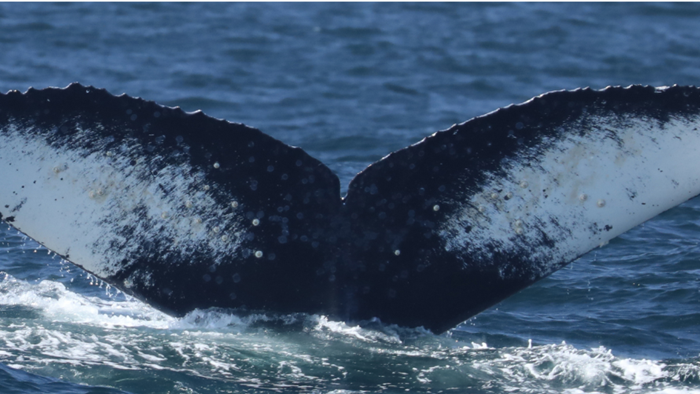
In the vast oceans, monitoring populations of large marine animals can be a major challenge for ecologists. Scientists deploy underwater microphones called hydrophones to study and track baleen whales, which communicate over long distances through sound. In the new paper, researchers monitored songs from blue, fin and humpback whales off the West Coast of the United States for six years, to see what the song data could reveal about the health of their ecosystem.
The researchers saw large year-to-year variations in whale song detection. The amount of humpback whale song continually increased, with their songs being detected on 34% of days at the beginning of the study and rising to 76% of days after six years. These increases consistently tracked improved foraging conditions for humpback whales across all study years, large increases in krill abundance, followed by large increases in anchovy abundance. In contrast, blue and fin whale song rose primarily during the years of increasing krill abundance. This distinction of humpback whales is consistent with their ability to switch between dominant prey. An analysis of skin biopsy samples confirmed that changes had occurred in the whales’ diets. Other factors, including the local abundance of whales, may have contributed to patterns in song detections observed in some years, but changes in foraging conditions were the most consistent factor.
Overall, the study indicates that seasonal and annual changes in the amount of baleen whale song detected may mirror shifts in the local food web. The results suggest that an understanding of the relationship between whale song detection and food availability may help researchers to interpret future hydrophone data, both for scientific research and whale management efforts.
John Ryan, a biological oceanographer at MBARI and the lead author of this study, adds: “Surprisingly, the acoustic behavior of baleen whales provides insights about which species can better adapt to changing ocean conditions. Our findings can help resource managers and policymakers better protect endangered whales.”
Multimedia

Attachments
Note: Not all attachments are visible to the general public. Research URLs will go live after the embargo ends.


