Ancient battleground reveals ongoing warfare between groups

Publicly released:
International
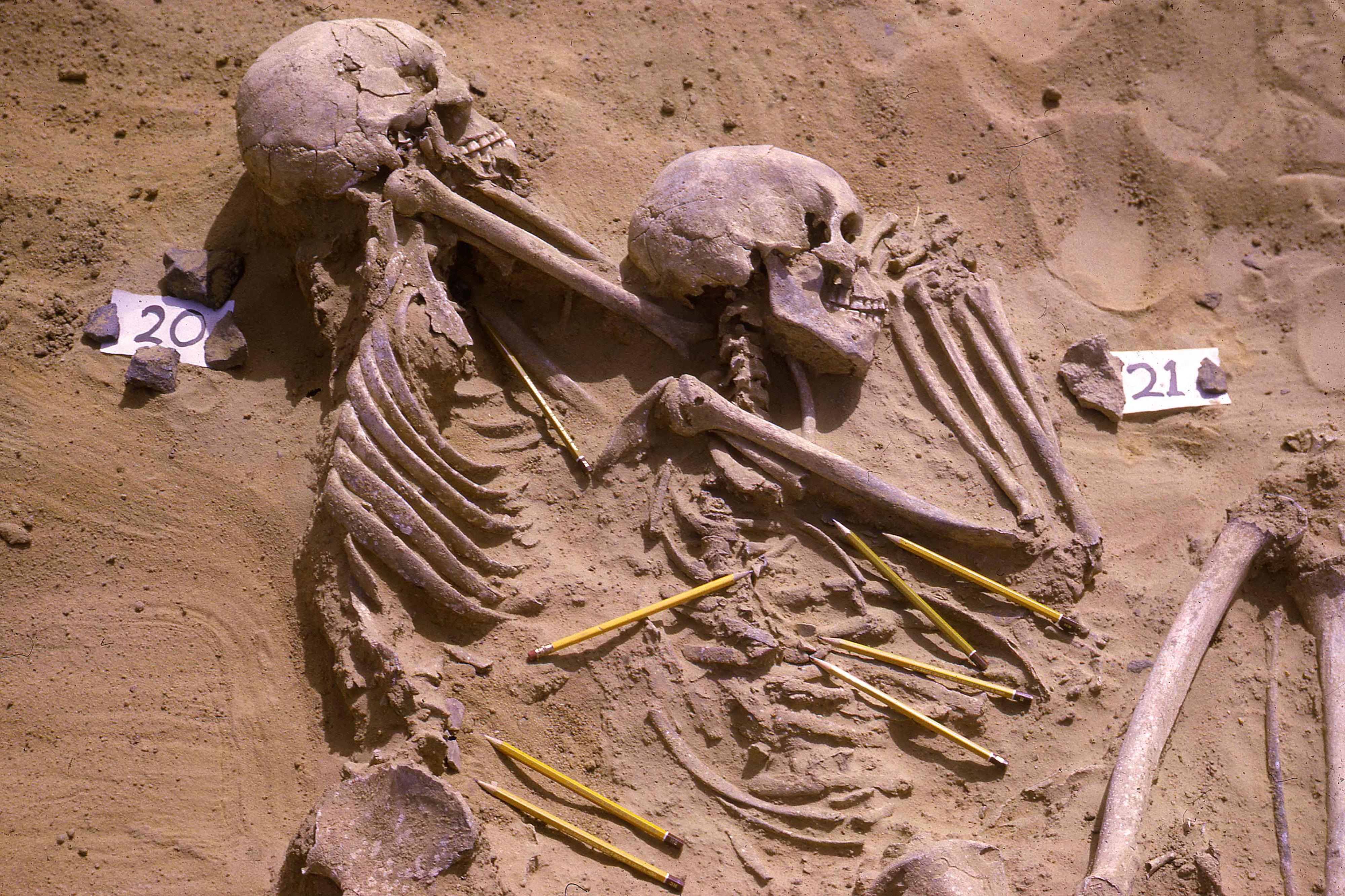
Archival photograph showing the double burial of individuals JS 20 and JS 21 with pencils marking the position of associated lithic artefacts. Image courtesy of the Wendorf Archives of the British Museum.

International researchers have re-analysed one of the earliest sites of human warfare, Jebel Sahaba in Sudan, and found the people engaged in repeated, small conflicts, rather than one huge fatal event as previously thought. The team analysed the remains of 61 people from the prehistoric cemetery using new techniques, and found 106 wounds and traumas that hadn’t been found when the remains were initially uncovered in the 1960s. Some wounds seemed to be from projectiles (such as arrows and spears), while some came from close combat, and others from natural decay. Forty-one individuals also had one type of healed or unhealed injury, most of which were from projectiles or close combat, suggesting they’d been in a fight. The researchers suggest the wounds at various stages of healing, combined with the style of injuries and number of people involved implies repeated organized warfare from groups attacking from a distance, implying repeated raids or skirmishes between different groups.

Media release

From: Springer Nature

Reanalysis of the prehistoric cemetery Jebel Sahaba, Sudan, one of the earliest sites showing human warfare (13,400 years ago), suggests that hunter-fisher-gatherers engaged in repeated, smaller conflicts. The findings are published in Scientific Reports. Healed trauma on the skeletons found in the cemetery indicates that individuals fought and survived several violent assaults, rather than fighting in one fatal event as previously thought.

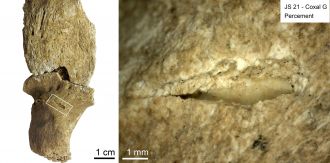
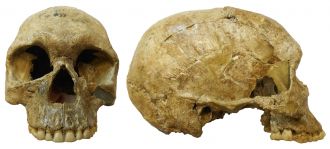
Isabelle Crevecoeur, Daniel Antoine and colleagues reanalysed the skeletal remains of 61 individuals, who were originally excavated in the 1960s, using newly available microscopy techniques. The authors identified 106 previously undocumented lesions and traumas, and were able to distinguish between projectile injuries (from arrows or spears), trauma (from close combat), and traces associated with natural decay. They found 41 individuals (67%) buried in Jebel Sahaba had at least one type of healed or unhealed injury. In the 41 individuals with injuries, 92% had evidence of these being caused by projectiles and close combat trauma, suggesting interpersonal acts of violence.

The authors suggest that the number of healed wounds matches sporadic and recurrent acts of violence, which were not always lethal, between Nile valley groups at the end of the Late Pleistocene (126,000 to 11,700 years ago). They speculate these may have been repeated skirmishes or raids between different groups. At least half of the injuries were identified as puncture wounds, caused by projectiles like spears and arrows, which supports the authors’ theory that these injuries happened when groups attacked from a distance, rather than during domestic conflicts.

Multimedia
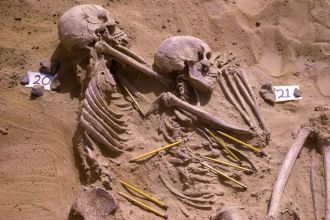
Image 1:
Image 1:
Image 2:
Image 2:
Image 3:
Image 3:
Image 4:
Image 4:

Attachments

Note: Not all attachments are visible to the general public. Research URLs will go live after the embargo ends.

Research Springer Nature, Web page The URL will go live after the embargo ends.
Journal/
conference:
Scientific Reports
Research:Paper
Organisation/s: Université de Bordeaux, France
Funder: This study was supported by the Maison des Sciences de l’Homme et de la Société in Toulouse (MSHS-T), the University Toulouse Jean Jaurès, the CNRS and the French Agence Nationale de la Recherche (ANR-14-CE31 BIG DRY). Images courtesy of the Trustees of the British Museum.
Media Contact/s
Contact details are only visible to registered journalists.