Sign In



 Australia; QLD; SA

News release
From:
Eye experts at Flinders University have released new global findings that reveal how a rare eye cancer first appears, offering vital insights that will help doctors diagnose the disease earlier and improve care for patients around the world.
The research draws on the International Vitreoretinal B‑Cell Lymphoma Registry, the world’s largest global project dedicated to understanding this aggressive eye cancer.
The study published in Clinical & Experimental Ophthalmology gives doctors essential clues to help them recognise vitreoretinal lymphoma sooner.
Vitreoretinal lymphoma is a rare cancer that begins inside the eye but often looks like a simple eye inflammation, which means many people can be treated for the wrong condition before the cancer is recognised.
The cancer can cause permanent vision loss and, in many cases, is linked with lymphoma, a type of blood cancer, in the brain. Earlier diagnosis helps protect sight, reduces distress for patients, and ensures urgent medical checks for possible brain involvement.
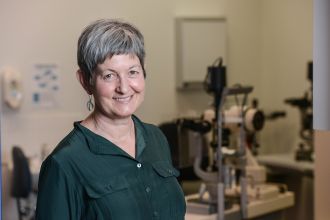
Corresponding author and internationally recognised ophthalmologist, Professor Justine Smith, from FHMRI Eye & Vision at Flinders University, says findings from the registry are filling a major knowledge gap.
“Our international registry creates an unprecedented opportunity to study this rare cancer in depth and across continents and provides hope for better understanding, better treatment and better quality of life for people affected,” says Professor Smith.
“Delayed diagnosis of this eye cancer can carry serious consequences, but our findings offer practical information that will help clinicians consider the disease earlier, which can protect vision and reveal cases linked to brain lymphoma.”
The study includes 138 newly diagnosed patients from Europe, the Americas, the Western Pacific and South‑East Asia. Most patients are in their sixties, although men often develop symptoms at a younger age than women. Close to two‑thirds of patients have the cancer in both eyes at the time they are diagnosed.
“This level of detail is only possible because the registry brings together data from many research centres that could not do this work alone,” says Professor Smith.
The research also shows that for about one in four patients, the cancer is already present in the brain or elsewhere in the body when the eye disease is first found.
“This connection highlights how important coordinated care is for people, because eye findings may be the first sign of a much broader illness,” she says.
Doctors typically identify early signs of the cancer through standard eye exams and imaging commonly used in everyday practice. These tests can reveal subtle changes that prompt specialists to investigate further.
“Our registry’s global data helps us understand the early warning signs that doctors should look for, especially when a patient’s symptoms don’t fit the usual pattern,” says Professor Smith.
The study also confirms that the vast majority of patients have the same type of lymphoma, a finding that has been difficult to establish until now.
“This finding shows how global data collection gives clarity that individual studies cannot provide,” she says.
Vision loss varies widely among patients. While many still have useful vision when the cancer is found, others are already experiencing serious sight impairment.
“Understanding these patterns helps clinicians explain what patients may experience and feeds into decisions about treatment,” says Professor Smith.
Professor Smith emphasises that the registry is central to improving outcomes for people affected by this rare disease.
“It collects real‑world clinical information from multiple countries using a shared protocol, enabling researchers to detect trends that would otherwise go unnoticed. In this way, patient experiences contribute to discoveries that can improve diagnosis and care,” says Professor Smith.
As more centres join the registry, researchers will be able to track how people’s vision changes over time, evaluate which treatments work best for long‑term survival. The next stages of research will focus on improving outcomes and supporting people living with this challenging cancer.
The paper, Presenting Clinical Features of Vitreoretinal Lymphoma, will be published in Clinical & Experimental Ophthalmology. DOI: 10.1111/ceo.70067. (link live after embargo lifts) Lead author is Professor Justine R Smith, with the full list of authors available in the published paper.
Acknowledgements: This work was supported by the Tour de Cure and the Queensland Eye Institute Foundation (RSP‑569‑2024), and the National Health and Medical Research Council (2025222).
Multimedia