 Sign In



 Australia; VIC; WA; ACT
News release
From:
Human penis size influences female attraction and male assessment of rivals
Males ranked computer-generated figures that were taller and had a larger penis as more intimidating
Men assess potential rivals that have a larger penis as more of a threat, both physically and sexually, according to a study by Upama Aich at the University of Western Australia and colleagues, publishing January 22nd in the open-access journal PLOS Biology.
Relative to body size, the human penis is larger than that of other primates, a fact that has puzzled evolutionary biologists. Before the invention of clothing, the penis would have been a prominent feature that might influence potential mates and competitors. Previous studies have found that penis size can influence reproductive success by affecting the likelihood of pregnancy. However, a larger penis could also increase a male’s attractiveness to females or reduce the likelihood of fights with other males, for example by signaling higher testosterone levels and therefore greater fighting ability.
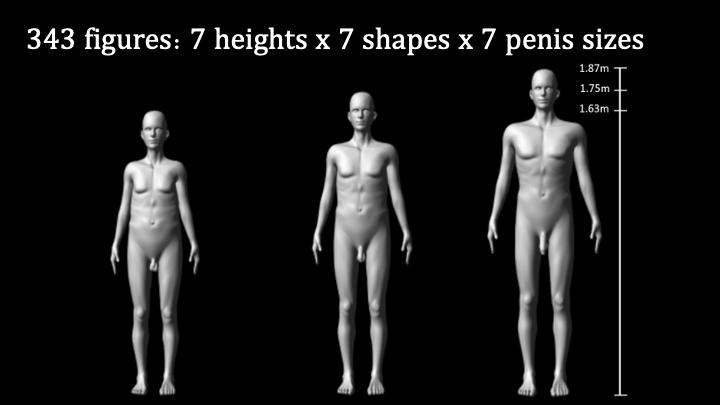
To investigate, researchers asked over 600 male and 200 female participants to rate computer-generated male figures that varied in height, body shape, and penis size. Women were asked to rate the figures’ sexual attractiveness, while men were asked to assess how threatening they found them, both in terms of fighting ability and as a sexual rival. Participants either viewed life-sized images of the figures in person or scaled images in an online survey.
Females rated male figures that were taller, had a higher shoulder-to-hip ratio (indicating a more V-shaped body) and a larger penis as being more attractive. However, beyond a certain point, further increases in penis size, height and shoulder breadth had diminishing benefits. Males also rated taller figures that had a more V-shaped body and a larger penis as being more intimidating as sexual rivals and fighting opponents. But, in contrast to female participants, they consistently ranked males with more exaggerated traits as more of a sexual threat, suggesting that males tend to overestimate the importance of these characteristics for attracting females.
The results suggest that both female preferences and competition with other males have favored increases in penis size, height and shoulder breadth in human males. The study provides the first experimental evidence that males consider penis size when assessing a rivals’ fighting ability and attractiveness. However, height and body shape had a greater influence on how males perceived rival males, suggesting that increased penis size has been more strongly favored by evolution for its role in attracting a mate, the authors say.
Dr Aich says, “Men rated rivals with larger penises as more physically threatening and sexually competitive.”
Co-author Michael D Jennions notes, “While the human penis functions primarily to transfer sperm, our result suggests its unusual large size evolved as a sexual ornament to attract females rather than purely as a badge of status to scare males, although it does both,” Jennions says.
Multimedia

Attachments
Note: Not all attachments are visible to the general public. Research URLs will go live after the embargo ends.


