Sign In



 Australia; NSW; VIC
News release
From:
Whole-genome study of koalas transforms how we understand genetic risk in endangered species
A new study published in Science is challenging long-held assumptions about how we measure genetic risk in endangered species. Researchers analysed whole genomes from hundreds of koalas, finding that populations previously considered most at risk are now showing early signs of genetic regeneration.
Conservation biologists have long assumed that when a population crashes, known as a bottleneck, genetic diversity declines and extinction risk increases through inbreeding and the build-up of harmful mutations. This study provides world-first evidence that the story is more complex.
A large-scale sequencing effort began after the 2019-20 Black Summer bushfires on the east coast of Australia intensified concern for the species’ future.
“Following the 2019-20 mega fires, there was an urgent need to establish a long-term genomic resource for koalas” said Dr Luke Silver, Researcher at the University of Sydney. “By sequencing 418 whole genomes, we created a critical baseline to understand how koala populations are evolving over time”.
Analysis of the genomes revealed that populations with higher genetic diversity, such as those in northern Australia, generally carried more harmful genetic mutations and showed declines in effective population size.
“Koalas are a really interesting case study. Populations across regions have been managed very differently, which means that their genetic signatures also significantly vary. This work uses those differences to highlight a wider lesson in conservation genomics,” said Dr Collin Ahrens, Principal Research Scientist at Cesar Australia.
“Surprisingly, it’s the populations that had passed through severe historical bottlenecks which are expanding, resulting in the accumulation of new mutations and greater genetic combinations. This growth, like we see in Victoria, comes with real genetic advantages: fewer harmful genetic mutations, increased adaptive capacity and early signs of genetic regeneration.”
Koalas present ongoing management challenges across Australia. Northern populations remain in serious decline, while southern populations are overabundant. Conservation managers are simultaneously managing populations in crisis and those that are overabundant. While translocation was widely used in the past, it is now considered high-risk, complex, and expensive.
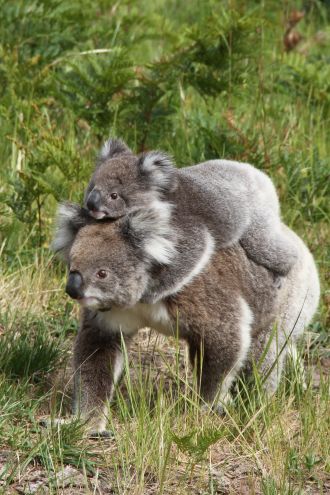
Victorian koala populations have long been viewed as genetically compromised because most stem from a severe historical bottleneck. While they retain the genetic signature of that event, the new research shows that many are now recovering. Through recombination, the natural reshuffling of genetic variation, and the accumulation of new variants, harmful mutations are being reduced and adaptive potential is increasing.
“Our findings tell a story of genetic recovery in these populations, not collapse,” Dr Ahrens said. “It’s world-first evidence that conservation decisions can’t rely on static measures of genetic diversity. We need to understand the direction populations are evolving.”
Dr. Andrew Weeks, Director of Cesar Australia, said the implications extend well beyond koalas.
“For decades, we’ve treated genetic diversity as a simple scorecard of extinction risk,” Dr. Weeks said. “But evolution is dynamic. Understanding whether a population is expanding, stabilising or declining over time may be just as important as measuring how much diversity it holds today.”
Beyond koalas, many threatened species have experienced bottlenecks, habitat loss and rapid environmental change. The research suggests that judging extinction risk based solely on static genetic measures risks misclassifying both danger and recovery, and highlights the importance of understanding processes unfolding across generations.
Multimedia