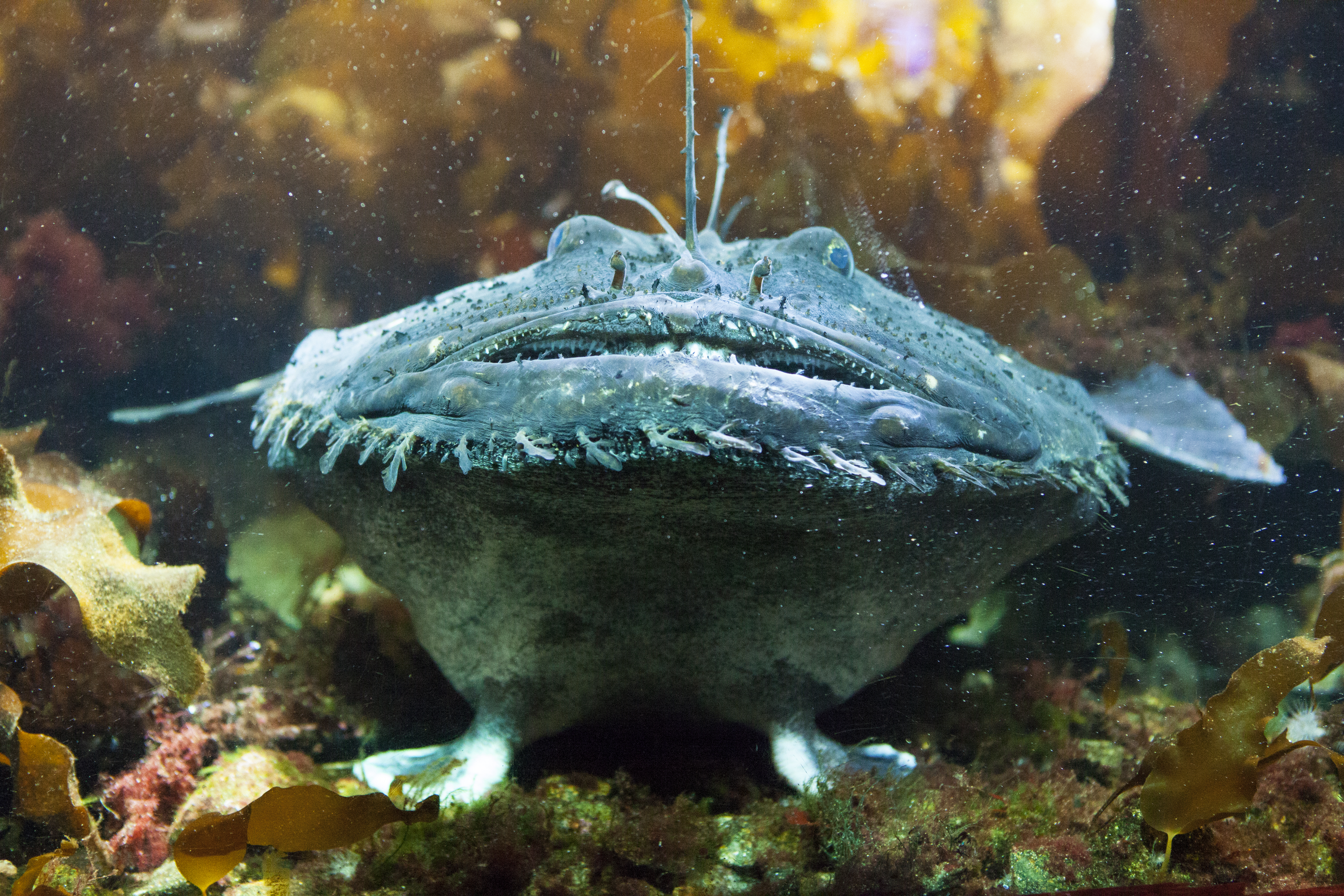
What makes a male anglerfish evolve into a tiny parasitic attachment on its mate?

Publicly released:
International
By Olga1969 - Own work, CC BY 4.0, https://commons.wikimedia.org/w/index.php?curid=64774768

They're well known for their weird looks, and some anglerfish species have pretty weird mating arrangements too, with the male shrinking down to a tiny size and becoming little more than a parasitic attachment on the larger female, but why has such an unusual reproductive system evolved in this group, and why is it only found in certain species? Japanese scientists investigated anglerfish using computer simulations, and found that parasitic males are favoured when females are in short supply, so encounters are rare, and the costs of being a parasitic appendage on the female's body are low. On the flipside, when mates are plentiful and the costs of being a parasitic male are high, the males remain free-living. The findings help explain why only some anglerfish species have evolved this odd mating system, the authors conclude.

News release

From: The Royal Society

Reproductive assurance drives the evolution of parasitic males in anglerfishes

Deep-sea anglerfishes are famous for their unusual mating system, in which tiny males permanently attach to much larger females and live as parasites. However, this extreme strategy occurs in only some species, and its evolutionary origin has remained unclear. Using a mathematical model, we investigated when parasitic males are favoured over free-living males. We found that parasitic males evolve when encounters between males and females are rare and the costs of attachment are low. These findings suggest that reproductive assurance—the benefit of securing a mate when mates are difficult to find—has played a key role in the evolution of this remarkable reproductive strategy.

Attachments

Note: Not all attachments are visible to the general public. Research URLs will go live after the embargo ends.

Research The Royal Society, Web page The URL will go live at some point after the embargo ends
Journal/
conference:
Proceedings of the Royal Society B
Research:Paper
Organisation/s: The University of Tokyo, Japan, OIST, Japan
Funder: This work was supported by JSPS KAKENHI Grant Numbers JP21K06330, JP24K03127.
Media Contact/s
Contact details are only visible to registered journalists.