 Sign In



 Australia; NSW
News release
From:
A study led by UNSW Sydney and published today analysed the chemical composition of 15 black and coloured tattoo inks from major, established international tattoo ink brands that were purchased from Australian suppliers. While every ink tested failed current European Union (EU) safety regulations for tattoo inks, the authors say their findings aren’t cause for panic.
Instead, they say, Australia needs to introduce routine sampling and testing across brands and batches of inks.
“When we benchmarked these products against EU standards, every ink we tested failed on at least one regulated substance,” says the study’s corresponding author UNSW Professor William Alex Donald.
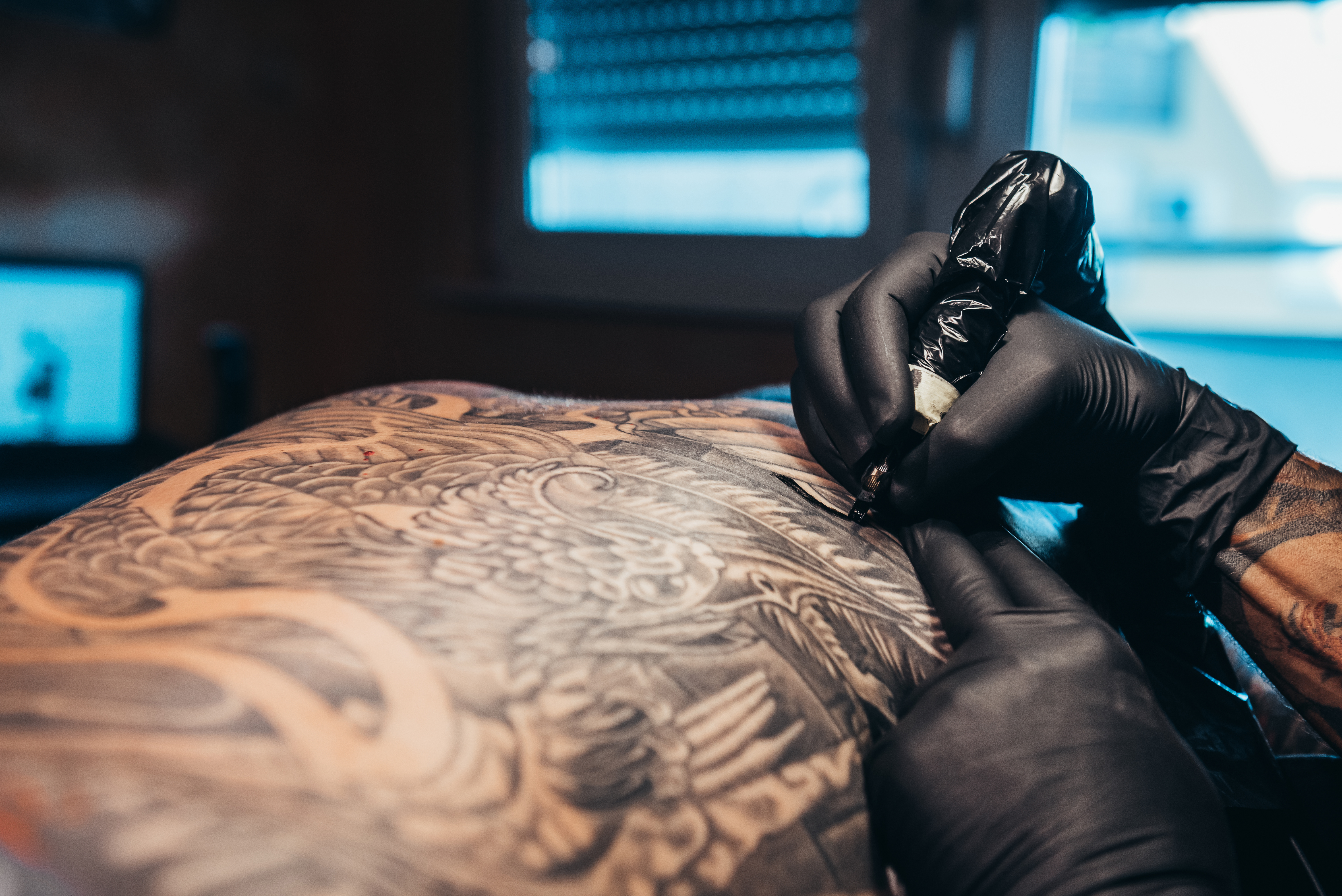
Tattoo ink is a complex mixture of pigments, solvents and additives. It is designed to remain in the body long term, injected into the thick layer of living tissue below the skin’s surface.
This method of ‘inking’ creates a permanent exposure pathway that bypasses many of the body’s natural protective barriers.
Since 2022, the EU has strictly enforced chemical limits for tattoo inks. Australia has no binding national regulatory framework that aligns with those standards and instead relies on voluntary compliance and the occasional government characterisation study.
Using advanced analytical techniques, the researchers detected multiple regulated toxic substances across the 15 samples, including eight metals restricted under EU law: antimony, arsenic, cadmium, chromium, copper, lead, selenium and tin. These metals were found in amounts that exceeded the limits set under EU Commission Regulation 2020/2081 and the Council of Europe Resolution ResAP (2008) in at least one ink.
A cause for alarm?
Surveys estimate more than 20% of Australian adults have at least one tattoo.
However, the researchers say their findings should not be interpreted as evidence that tattoos directly cause harm.
This is because the study measured the chemical composition of inks – not health outcomes. The study also did not assess how much of these substances are absorbed by the body or what effects they could have over time.
“We need further targeted studies to confirm the specific chemical forms of some regulated substances,” Prof. Donald says.
“This means examining how inks behave once injected into the skin,” he says.
“It also means understanding how factors such as ageing, sunlight exposure and tattoo removal might influence long-term exposure. So the results are best seen as a signal for closer scrutiny, rather than a verdict on the safety of tattooing itself.”
Lead author Dr Jake Violi, also from UNSW, says people with tattoos are not automatically at risk.
“We are not saying people should not get tattoos,” Dr Violi says.
“We are saying the chemical content of inks matters – and there is very little routine checking of what is actually sold in Australia.”
If you are thinking about getting a tattoo, the Cancer Council suggests asking if the inks used comply with the European standards (updated to EU Commission Regulation 2020/2081), which set the requirements and criteria for the safety of tattoos.
A curious start
The project began as a high school science question. Coauthor Bianca Tasevski initiated the work as part of a senior research project while completing her final year of school.
“Bianca asked a straightforward question of ’What is actually in the tattoo inks sold in Australia?’,” Dr Violi says. “And so we worked with her to test this.”
Dr Violi says the study combined two complementary standard chemical analysis techniques. One was inductively coupled plasma mass spectrometry, to show which metals were present at what concentrations.
The second was untargeted liquid chromatography tandem mass spectrometry, which screened for organic compounds. Toluidine, a carcinogenic aromatic amine, was found in three of the 15 inks. Sulphanilic acid – which is not typically suitable for human consumption or therapeutic use – was detected in nine inks. Both substances are banned under EU tattoo-ink regulations.
The researchers found bright coloured inks had additional toxic compounds not currently restricted under tattoo-ink legislation, including high levels of pigment-associated metals.
“Titanium was detected at concentrations of up to about 10,000 parts per million in a light-blue ink,” Dr Violi says. “Aluminium and zirconium were also present at very high levels. These metals are commonly associated with pigments that are used to improve colour and stability.”
While not currently restricted under EU tattoo-ink regulations, Dr Violi says their presence at such high concentrations raises important toxicological questions because tattoo pigments can persist in the skin and migrate to lymph nodes.
Inking the future
Australia’s only government survey of tattoo inks was conducted in 2016, with an update in 2018. The resulting report found most inks tested would not meet European guidelines. It also had limited methodological detail and predated the EU’s current, legally binding rules.
Across the world, investigations document widespread non-compliance with EU standards. This indicates tattoo inks remain a significant and under-regulated source of toxic metal exposure.
In the United States, only 11% of inks were labelled accurately. In Sweden, more than 90% of inks failed labelling requirements and concentrations of metals above regulatory thresholds were found across multiple samples. In Turkey, most inks breached the EU limits for metals, with several products demonstrating cytotoxic effects in the lab.
The researchers say European standards for tattoo inks were only introduced recently, so it would only be a matter of time before the rest of the world adopts safety regulations. This needs a lot more focused work to both identify and measure specific regulated chemicals, especially where safety rules depend on the type of chemical, not how much of it is present.
“Australia has limited publicly available testing data,” Prof. Donald says. “The chemical composition of inks currently sold here remains largely unknown.
“Because tattooing is now a mainstream form of body art, regular monitoring and aligning Australia’s standards with international best practice just makes sense.”
Multimedia

Attachments
Note: Not all attachments are visible to the general public. Research URLs will go live after the embargo ends.


