 Sign In



 Australia; QLD
News release
From:
Tomatoes get flavour boost from green bin compost
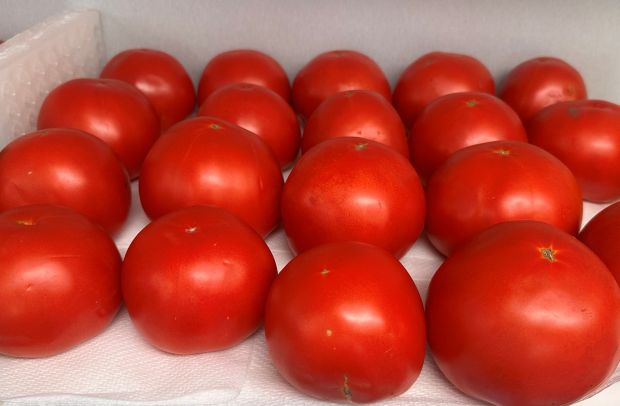
Commercially farmed tomatoes taste sweeter when food and garden waste compost is added to their soil, a University of Queensland study has found.
Researchers in the School of Agriculture and Food Sustainability grew tomatoes in South East Queensland with and without the compost and put the resulting crops through chemical and sensory analysis.
Dr Nicole Robinson said the results delivered scientific evidence that food organics and garden organics (FOGO) compost improved food quality.
“Previous studies looked at the impact of FOGO compost on crop yield but hadn’t considered consumer preferences in taste, visual appeal and smell,” Dr Robinson said.
“In our tests, tomatoes grown with FOGO were more closely associated with positive eating-quality descriptors while the others were more frequently associated with less desirable appearance or flavour attributes, particularly after storage.”
Groups of volunteers examined, smelt and tasted both groups of farm-grown tomatoes (Solanum lycopersicum cv. Ninja), firstly 5 days after picking and then after they’d been in storage for a further week.
Dr Robinson said the time gap mimics the supply chain a tomato travels along between farm, shop and dinner plate.
“The tomatoes achieved similar ratings at the first sensory analysis but by the second round the FOGO tomatoes were twice as likely to be identified as sweeter than the control tomatoes, which were described as bland,” she said.
“The FOGO tomatoes were also described as looking better with a more pleasant smell.
“The standard tomatoes were more often described as being pale and lacking in aroma which are common criticisms of commercial tomatoes when compared with historic or homegrown fruit.”
The chemical analysis confirmed a higher sugar-related content in the FOGO tomatoes and reduced malic acid which can contribute to sourness.
By the second round of testing after storage, the analysis showed the FOGO tomatoes had higher levels of the amino acids which contribute to savoury or umami tastes.
Dr Robinson said incorporating FOGO in food production aligns with Australia’s National Food Waste Strategy.
“Keeping organic waste out of landfill where it creates greenhouse gases and using it to grow better food is a win for the environment and us,” she said.
“We sourced the FOGO compost from a commercial supplier who makes it from green bin waste from homes and businesses.
“It was incorporated into the soil for half the crop, and both groups then grown under the same commercial production conditions in the ground, and handled the same way at picking, transport and storage.
“While there was no noticeable difference in yield or the size and look of the tomatoes at harvest, the chemical and sensory analysis shows FOGO can give a producer an edge through a better flavoured and looking product by the time it reaches consumers.”
Read the research in npj science of food.
Food chemist Dr Marlize Bekker led the chemical analysis, with UQ student Jia Wang also contributing.
This work has been supported by the End Food Waste Cooperative Research Centre whose activities are funded by the Australian Government’s Cooperative Research Centre Program.
Images available via Dropbox

