Sign In



 Australia; QLD
News release
From:
New research from Murdoch University reveals why a thriving edible garden in central Brisbane is attracting thousands of people daily and offers a blueprint for other local and state government to provide fresh food as a public service.
Our public spaces, parks and gardens are largely ornamental – but they could offer so much more if partly repurposed as a place to provide free food for all.
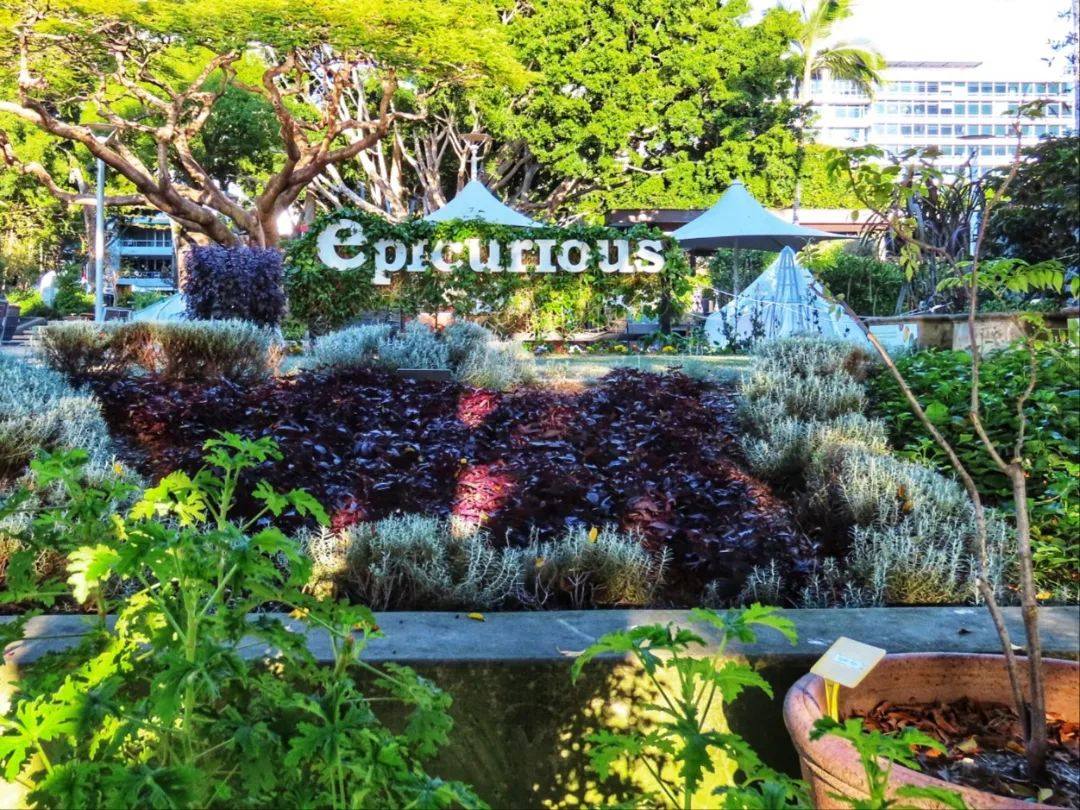
The Epicurious Garden, located in the South Bank Parklands in Brisbane, is an innovative public garden funded by the Queensland State Government. South Bank Corporation oversees the ongoing maintenance allowing visitors to take produce such as fresh herbs, fruit and vegetables for free, without being required to work on the land. The garden, which officially opened in 2014, has become a destination for tourists and locals alike and is now believed to be the second most popular part of the South Bank Parklands precinct, attracting around 4,000 people each day.
Dr Barbara Ribeiro, a Lecturer in Sustainable Development at Murdoch University, visited the Epicurious Garden while travelling in Brisbane to give talks at QUT’s Circular Food Economy Research Hub and Griffith's Creative Arts Research Institute, and was immediately taken with the space.
“I was struck by the beauty and abundance of this public space, and by the fact that it was entirely open for everyone to enjoy the foods grown there,” Dr Ribeiro said.
This experience inspired Dr Ribeiro’s research, which drew insights from 19 interviews and two weeks of on-site observations to understand how the Epicurious Garden took shape, how it was managed, and the perceived benefits of food as a public service.
“Most community gardens depend on volunteers for core gardening work; it is hard work, which tends to enable narratives of ownership around the produce,” she said.
“Epicurious, in contrast, is managed by a team of skilled gardeners and horticulturalists from the City Parklands and is funded by the State Government. This means everyone can enjoy the fruit of their labour as a service provided by government.”
“That structure makes it far more sustainable long‑term, as the City Parklands horticulturalists ensure consistent and high-quality maintenance with the support of trained volunteers. The City Parklands’ volunteers programme attracts applications regularly from locals who wish to give back to the community; if people’s circumstances change, they have a pool of candidates to draw from.”
While talking to visitors, Dr Ribeiro noted some of the key benefits which attracted people to the space, such as education and inspiration about food, the aesthetic value of beautiful manicured edible landscapes, connection to nature and sensory enjoyment, and the utilitarian value of free food and cost of living support.
One visitor from Sydney told Dr Ribeiro about the educational benefits of the garden.
“I was showing my children various plants that they ate for breakfast, lunch and dinner, such as blueberries… And especially, you know, we don’t have as much exposure to indigenous plants, so it’s nice to see what’s here and what’s not,” she said.
Another local said, “I come here because the people are nice and the veggies are free — there’s always something there for the public.”
Many people also visited the garden to connect with nature.
“It’s the sensory experience — the taste, the smells… that’s what I love about it. I reckon it’s relaxing too,” another local told her.
Dr Ribeiro said another key benefit of the garden, was that it boosted biodiversity in the area.
“From the beginning, the garden was planted with species that support biodiversity — flowers to attract bees, edible plants that draw pollinators, and varieties that bring in insects that naturally keep pests in check,” she said.
“It’s a living example of how food spaces and ecosystems can support each other.”
Dr Ribeiro described Epicurious Garden as a “win-win” for the environment and the community.
“While the Epicurious Garden’s scale might not suffice to alleviate hunger, the findings presented here signal that food as a public service can be upscaled and reproduced,” she said.
“Epicurious shows what’s possible when governments choose to treat fresh food as a public service. My hope is that councils and state governments across Australia and around the world see this as a template they can adopt.”
The full paper can be found in the Journal of Urbanism: International Research on Placemaking and Urban Sustainability.
Multimedia