 Sign In



 Australia; Pacific; NSW; VIC; WA
News release
From:
Study reveals why four in ten children in Papua New Guinea miss vaccinations
Four in ten children in Papua New Guinea’s East New Britain Province (ENBP) received no vaccinations in 2023, and new research has revealed why.
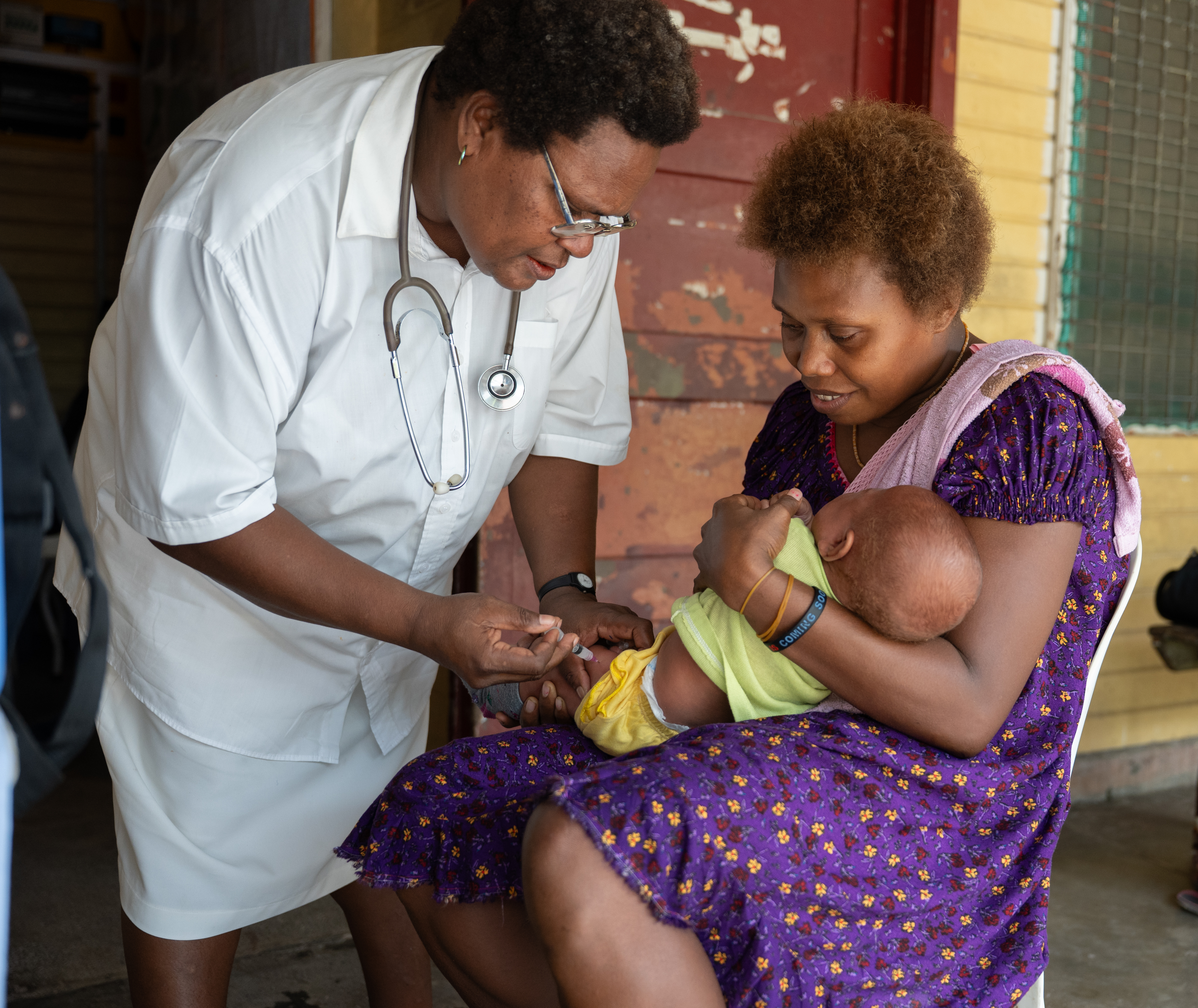
The study led by Burnet Institute found most caregivers strongly support vaccinating their children, but practical barriers – including travel costs, distance to clinics and vaccine supply challenges – are making it difficult for many families to access routine immunisation.
The research also highlights the critical role of trust, communication and community engagement in improving vaccination coverage.
The study interviewed 33 caregivers and 28 healthcare workers across the Gazelle and Kokopo districts of ENBP in 2023, capturing the experiences of both families and frontline health workers delivering routine childhood immunisation.
The research was conducted by Burnet Institute with partners including the East New Britain Provincial Health Authority, PNG National Department of Health, PNG Institute of Medical Research and Murdoch Children’s Research Institute.
Burnet Institute Head of Immunisation and Health Systems Strengthening Dr Milena Dalton said clear communication plays an important role in building trust and improving vaccination rates.
“When a health worker takes the time to explain why a vaccine matters, not just administer it and send the family home, caregivers leave feeling informed and confident to return. That conversation makes an enormous difference,” Dr Dalton said.
“We also saw how powerful community leaders can be when they are brought into the process early.”
The study found distance, travel costs and vaccine supply challenges were the most significant barriers preventing families from vaccinating their children. Some caregivers described travelling long distances to reach a clinic only to be turned away because vaccines were unavailable.
Women travelling alone or with multiple young children also raised concerns about safety on the road and the difficulty of arranging childcare for older children while bringing a baby to be vaccinated.
Healthcare workers reported facing similar challenges. Staff shortages, non-functioning aid posts, limited transport and restricted resources for outreach can make it difficult to reach children in remote communities. Some facilities reported needing to reschedule vaccination clinics when trained staff were unavailable.
“What they face are practical barriers: the cost of a bus fare, a health post that has run out of vaccines, a clinic too far to reach safely on foot,” Dr Dalton said.
“When we understand those barriers clearly, we can start to address them in ways that actually work for communities.”
The research identified strategies that are already helping improve vaccination coverage. Door-to-door outreach was one of the most effective approaches for reaching families who cannot afford to travel and identifying children who would otherwise be missed.
Engaging community and religious leaders before outreach visits increased the number of families ready to receive vaccines, while support from husbands and extended family helped caregivers complete the full immunisation schedule.
Globally, vaccines have saved an estimated 154 million lives over the past 50 years. But in PNG, about 44% of children received no vaccinations in 2023 – one of the highest rates in the world.

