 Sign In



 International

News release
From:
Dog behavioral traits are linked with salivary hormone cortisol and neurotransmitter serotonin
Well-behaved dogs generally had lower levels of cortisol, the “stress hormone” and higher level of serotonin, the “happiness neurotransmitter’
Dogs who scored well on the Wesen test, which is used to analyze a dog’s temperament, tended to have lower levels of cortisol, often called the “stress hormone,” and higher levels of serotonin, often called the “happiness hormone”, according to a study published February 4, 2026 in the open-access journal PLOS One by Minjung Yoon from Kyungpook National University, Republic of Korea, and colleagues.
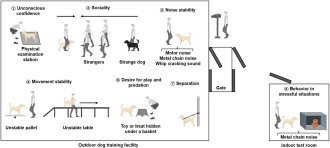
In the new research, twenty-four dogs (of various breeds) were analyzed with a version of the Wesen test, in which a human observer judges a dog’s temperament by watching their reaction to a series of situations and interactions. In one situation, for example, the observer focused on how anxious or relaxed the dog seemed while alone and then around a stranger. In another, the judge assessed the dog’s attention, fear, confidence, interest, and relaxation during the Wesen test.
The Wesen test is intended to help determine if a dog may be suitable as a pet or a working animal — but because it’s based on an observer’s opinion, there have been concerns that it might be subjective. In the new study, the researchers also took saliva samples to measure each dog’s cortisol and serotonin levels. Prior research has linked lower levels of cortisol, and higher levels of serotonin, with less aggressive behavior in dogs.
In these dogs, salivary cortisol levels from samples taken both before and after the Wesen test showed that dogs scoring higher for “good” behaviors tended to have lower cortisol levels. In addition, higher-scoring dogs tended to see a less marked spike in cortisol levels after being subjected to the tests. Sixteen of the dogs had their salivary serotonin levels assessed: while higher serotonin levels pre-test also trended toward being correlated with higher test scores, this result was not significant. Interestingly, dogs with higher test scores had significantly higher pre-test serotonin levels than dogs with lower scores.
This study was small, consisting of just 24 dogs, and cannot show any causative link between hormone levels and different dog behaviors. The authors note that their study provides potential evidence that assessment of salivary hormones and neurotransmitters could be an objective way to assess a dog’s temperament.
The authors add: “Our study shows that physiological concentrations of hormones and neurotransmitters can serve as biomarkers of canine temperament. These results could help identify dogs suited for specific working roles—such as military, police, guide, or therapy dogs—and assist in making better-informed companion dog adoption decisions.”
Multimedia


Attachments
Note: Not all attachments are visible to the general public. Research URLs will go live after the embargo ends.


