Spatial mapping lung tumours reveals unusual T‑cells linked to earlier relapse

Publicly released:
Australia; VIC
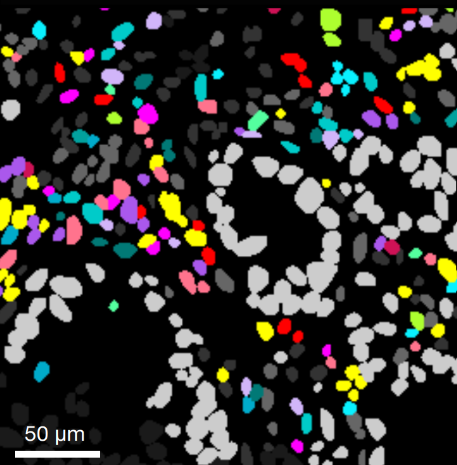
Spatial proteomic image of a lung tumour depicting the immune niche (blue, pink, purple cells) in which CD14+CD4+ T cells reside within the tumour. Tumour cells are coloured in grey. Credit: WEHI

WEHI researchers have used advanced spatial multi‑omics to map the immune ecosystem of non‑small cell lung cancer, uncovering an unusual T cell population linked to relapse and poorer outcomes. The new study revealed a CD14⁺CD4⁺ T cell type that has never been seen before in lung cancer. The research outlines a new immunosuppressive circuit that may help lung tumours progress. The WEHI team is now exploring ways to potentially block this cell type in lung cancer, to prevent relapse.

Journal/
conference:
Cell Reports Medicine
Research:Paper
Organisation/s: WEHI, The University of Melbourne
Funder: Australian Cancer Research Foundation, Kinghorn Foundation, National Health and Medical Research Council
Media Contact/s
Contact details are only visible to registered journalists.