 Sign In



 International
News release
From:
by University of Sharjah
Simple saliva testing could help doctors detect early signs of tooth decay for billions of people, long before cavities form, according to a new study published in the journal Archives of Orofacial Sciences.
Researchers from the University of Sharjah found that saliva can reveal early indicators of dental caries, enabling dentists to intervene sooner and prevent the decay from worsening.
“When saliva does not function well, the risk of decay increases,” explains lead author Dr. VK Gopinath, Professor of Pediatric Dentistry. “The key takeaway from this research is that by measuring simple salivary characteristics, dental professionals may be able to identify individuals who are more vulnerable to tooth decay before visible cavities appear.”
Although tooth decay is a noncommunicable disease, it remains one of the most prevalent health conditions worldwide. An estimated 2.3 billion people suffer from dental caries in permanent teeth, and a significant portion of them go untreated. This often leads to severe pain, tooth loss, and infection.
Treating tooth decay accounts for more than half of all global spending on oral healthcare, contributing an estimated $710 billion in costs globally.
Predicting tooth decay early
Saliva in the oral cavity acts as a natural defense system, and a better understanding of its properties can transform the way dentists strive to prevent the disease. “By using saliva as a diagnostic tool, dentistry can move from fixing problems to preventing them, making dental care smarter, earlier, and more personalized for everyone,” Prof. Gopinath adds.
The findings deliver a clear message: people with more cavities tend to have weaker salivary protection. Their saliva flows slowly, is more acidic and viscous, and is less effective at neutralizing acids that erode tooth enamel.
In most cases, dentists detect cavities only after irreversible damage has already begun. The study asks a simple, crucial question: Can saliva help identify who is at risk of developing tooth decay before serious damage occurs? The authors provide a clear answer: saliva testing has the potential to make dental care more predictive, help to prevent cavities, reduce treatment time, and lower costs.
“Incorporating saliva testing into routine dental checkups could allow for earlier intervention and more personalized preventive care,” says Prof. Gopinath. “For the public, this offers an encouraging possibility: a quick, painless saliva test could help protect teeth long before problems begin.”
Prof. Gopinath reiterates that the test matters “because saliva is not just moisture in the mouth, it is one of the body’s natural defense systems. It helps wash away food particles, maintain a healthy balance in the mouth, and repair early damage to teeth.”
Tooth decay and salivary markers
The researchers examined key salivary characteristics, including flow rate, viscosity, acidity, and the saliva’s ability to neutralize harmful acids. These factors were compared between individuals with healthy teeth and those exhibiting high levels of tooth decay.
The study employed a comparative cross-sectional design conducted at the dental clinic of Hospital Universiti Sains Malaysia (HUSM). The authors measured saliva flow rate in vivo among 40 participants: 20 with high caries and 20 with no caries.
Eligible respondents included healthy males and females aged 18 to 40 years who were not on medications known to affect salivary secretion. Pregnant women, smokers, or betel leaf chewers were excluded from participation.
Informed written consent was obtained from each of the participants, and the dental caries was assessed by using the DMFT index (Decayed, Missing, and Filled Teeth), a standardized tool that the WHO (World Health Organization) employs in epidemiological studies using WHO criteria 1987 (Oral Health Surveys, 1987).
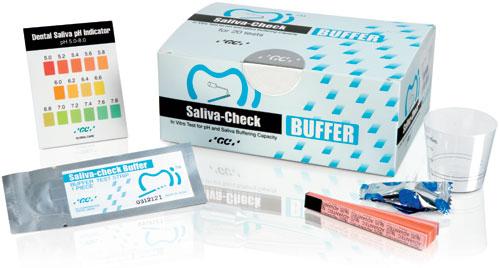
The authors write that their subjects “underwent five tests (hydration status in unstimulated saliva, salivary viscosity, unstimulated salivary pH, stimulated salivary flow rate, and buffering capacity in stimulated saliva) by using a saliva testing kit (GC Asia Dental Pte Ltd, Japan)."
The study’s most significant finding was that subjects “showed that salivary parameters such as salivary flow rate, salivary viscosity, salivary pH and salivary buffering capacity were lower in subjects with high dental caries.”
“Hence, we recommend salivary testing to be part of routine diagnosis when treating patients with dental caries risk,” the authors note.
Saliva testing matters
The authors state that the study successfully achieved its objective of evaluating the role of salivary testing in dental caries assessment.
They emphasize that their findings offer significant benefits for both patients and the dental profession by “introducing saliva testing as part of practice philosophy.”
They highlight that adopting salivary testing can enhance diagnostic accuracy, enable earlier detection of oral health problems, improve communication between patients and dentists, and, more importantly, enhance dental awareness within the community.

