Sign In



 Australia; New Zealand; SA; WA
News release
From:
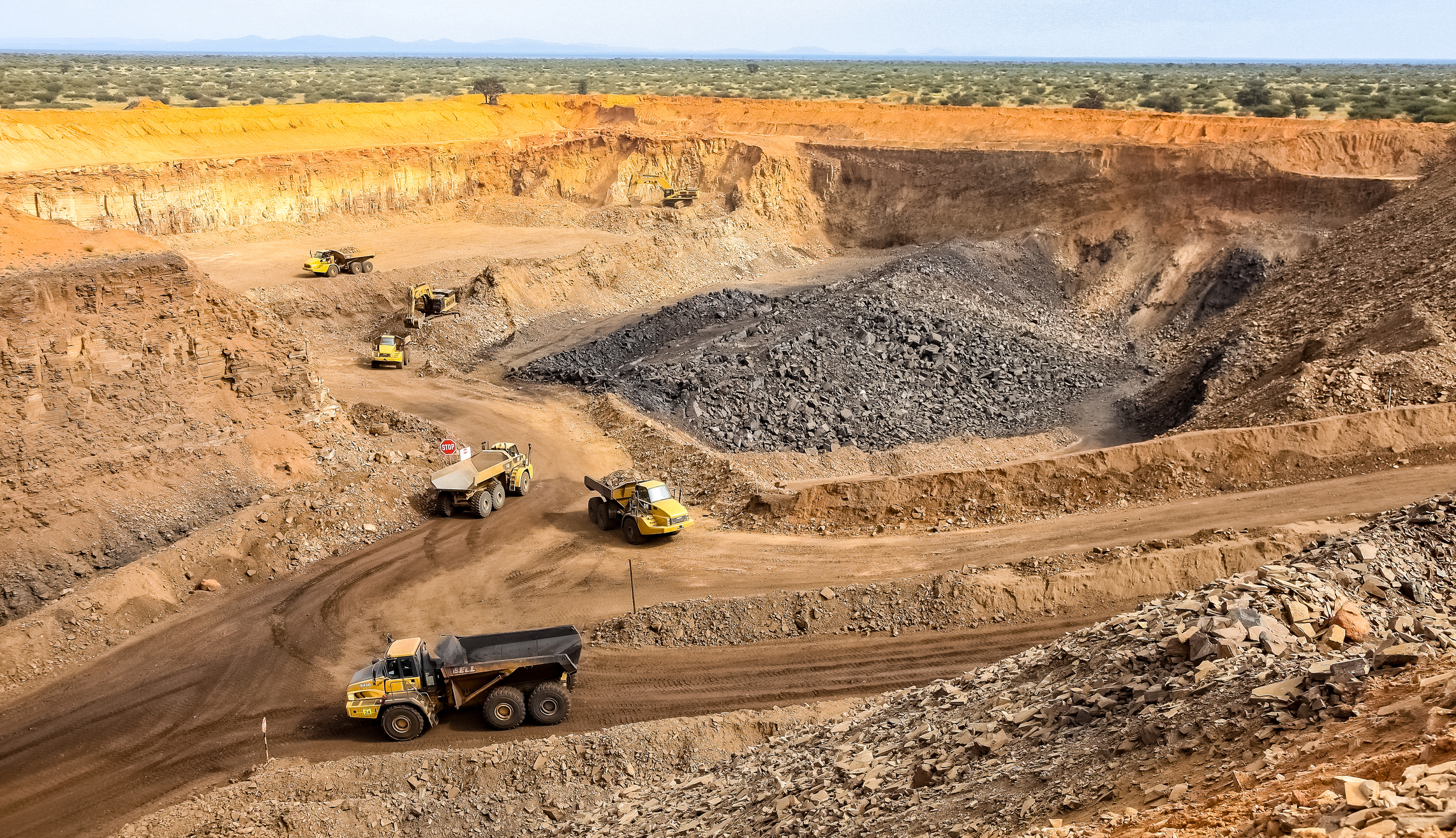
Thousands of open cut mines lie abandoned worldwide, while more stringent mine site rehabilitation laws in Australia are paving the way for improved long-term restoration efforts.
Starting from the ground-up, Flinders University experts are analysing waste materials, or tailings, from multiple mines to develop innovative, sustainable systems that can address the major challenge of mine drainage, which can cause environmental damage if left unchecked.
Predicting and preventing acid and metalliferous drainage (AMD) is one of mining’s most persistent environmental challenges, says Professor Sarah Harmer, from the College of Science and Engineering at Flinders University.
“By combining geochemistry, mineralogy, and microbiology, our teams are uncovering how chemical and biological processes interact to accelerate, or in some cases, slow sulfide oxidation in mine waste,” says Professor Harmer, who recently published a new article in the journal ofEnvironmental Geochemistry and Health with industry colleagues and scientists from the Flinders Accelerator for Microbiome Exploration.
“These studies are vital for mine closure and land reclamation, providing key insights to microbial interactions and adaption in both operating and legacy mine sites,” researchers say.
“One overlooked trigger for acid and metalliferous drainage is bacteria that grow in the mine waste,” says Flinders lead author Dr Nick Falk. “These literally eat away at the rock, releasing more acid and metals as by- products of their diet, and this can make the problem much worse over time.
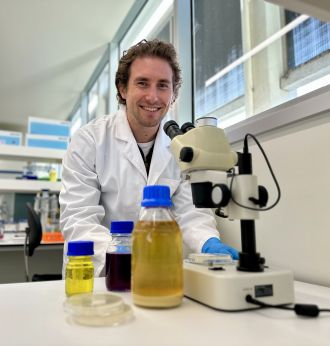
“Like a sick patient, we are trying to diagnose this bacterial infection of the mine waste, and since it is hard to see these microorganisms, we are applying DNA-based surveys to find out which bugs are there and what they are doing in the waste.
“By analysing many different mine waste samples provided by our industry partners, we can begin to put together a bigger picture of the role that microorganisms play in enhancing acid and metalliferous drainage, and also offer remediation solutions centred around combatting or manipulating the microbiology.”
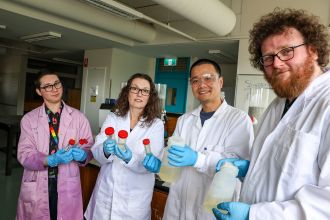
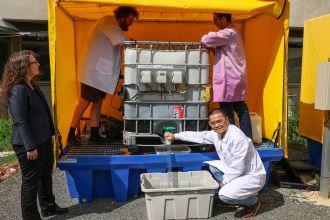
The five-year national Cooperative Research Centre for Transformations in Mining Economics (TiME) ‘Project 3.10’ at Flinders has so far conducted detailed leaching experiments of up to two tonnes of mine site samples sourced from 12 mine sites ranging from Australia’s Pilbara to the Arctic Circle and Gobi Desert of Mongolia.
“This has given us unprecedented insights into how AMD forms under real-world conditions,” adds Professor of Chemistry Sarah Harmer. “Early findings are already reshaping how researchers think about the relationship between microbial activity, mineralogy, and acid generation over time, paving the way for smarter, more sustainable mine closure and rehabilitation strategies.
“We now plan to trial new remediation strategies ahead of scaling up these experiments in field conditions to deal with mine waste.”
The research is led by Professor of Physics Sarah Harmer with Flinders colleague Professor Elizabeth Dinsdale, Professor Andrea Geron from Blue Minerals Consultancy, Professor Mansour Edraki, from University of Queensland, with support from CRC TiME program leaders, board members, and environmental professionals.
Progress was discussed recently with six major mining companies – Newmont, BHP, Rio Tinto, MMG, Teck and FMG – specialist environmental consultancies and government agencies, and colleagues from the University of Queensland at meetings in Brisbane.
The latest article from the research, ‘Metagenomics reveals water, biofilm, and sediment microbial communities exhibit distinct responses and functions in neutral and metalliferous drainage (NMD)’ 2025 by Nicholas W Falk, Haylee Smith, Bhavya Papudeshi, Belinda Martin, Gujie Qian, Andrea R Gerson, Aneil Prasad, Sarah L Harmer and Elizabeth A Dinsdale has been published in Environmental Geochemistry and Health DOI: 10.1007/s10653-025-02840-y.
Published: 04 November 2025 https://link.springer.com/article/10.1007/s10653-025-02840-y
Acknowledgements: This work is supported by CRC TiME, Flinders University, University of Queensland, University of Windsor, Blue Minerals Consultancy, Okane Consultants, the Commonwealth Government, SA Government, MRIWA and Australian Genome Research Facility.
Multimedia