Sign In



 Australia; QLD; SA
News release
From:
An international team of researchers has mapped a new way forward to monitor the health of the planet by listening to the soil beneath our feet.
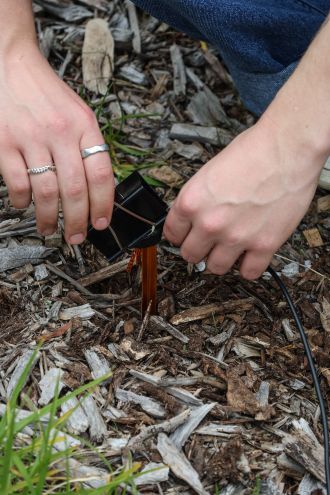
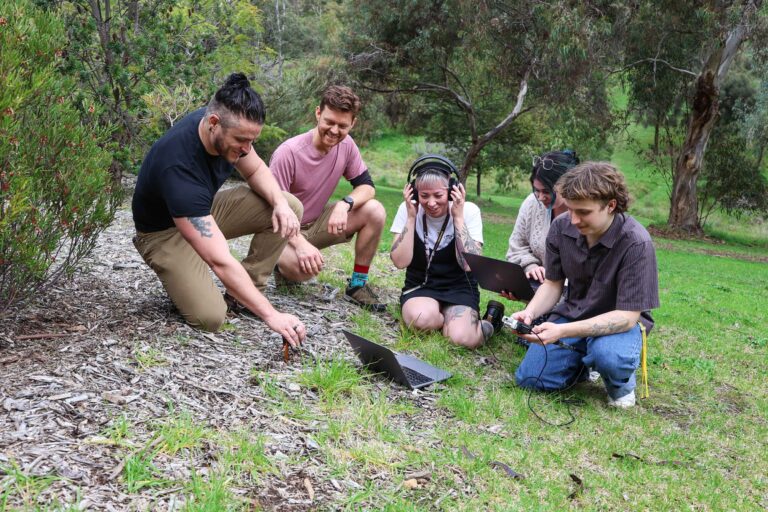
A review published in the journal Trends in Ecology and Evolution introduces soil ecoacoustics, a new branch of research that applies existing knowledge about sound in nature to what's happening underground. Sound and ground-borne vibrations are captured to detect life below the surface and ecological processes with minimal disturbance.
The study, led by researchers at Flinders University, is part of a National Environmental Science Program (NESP) Resilient Landscapes Hub project. Co-author Dr Jake Robinson said sound-based monitoring could revolutionise the way we monitor the ecosystem health of the planet.
“Healthy soils underpin food security, carbon storage and climate resilience, yet below ground biodiversity is notoriously difficult to monitor,” Dr Robinson said. “With up to 75 per cent of the world’s soils already degraded we believe sound-based monitoring can help land managers and communities track ecosystem change more effectively. Studies have already proven that soil ecoacoustics works across tropical forests, woodlands, agricultural fields and arid systems.”
The review explores the opportunities and challenges of soil ecoacoustics, calling for global standards and an open research network.
“There are still major technical challenges to solve, like how sound moves through different types of soil, how to tell living sounds from non-living ones, and having more reliable reference data,” Dr Robinson said. “A global soil ecoacoustics research network and open-source standard operating procedures are needed to encourage consistency in the methodologies used that will enable scientists to compare data across different sites.”
Drawing on bioacoustics, biotremology, soil physics and ecology, soil ecoacoustics records the tiny vibrations and sounds produced by organisms such as earthworms, beetle larvae, ants and termites as they move, feed or communicate – alongside abiotic signals like water movement and cracking soils.
These ‘soil soundscapes’ can reveal what is active below ground and how ecosystems respond to disturbance, recovery and restoration, using a method to measure soil health that is minimally invasive and scalable.
The review concludes that bridging ecology, soil science and acoustics will contribute significantly to biodiversity monitoring and global efforts to track ecosystem change by offering low-impact, scalable tools to check soil life and health, supporting restoration and sustainability efforts.
Multimedia