Sign In



 Australia; SA

News release
From:
Reading app boosts kids' literacy
A new Flinders University study of primary school children shows a science‑based digital phonics reading app can accelerate early reading while helping teachers quickly identify students needing extra support.
The study, involving nearly 400 children, found students who used ReadingDoctor® Online alongside regular classroom teaching improved their early reading skills. The more the app was used, the greater the gains, with the biggest improvements among children who started behind.
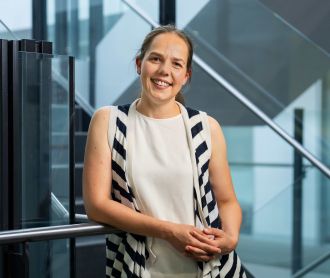
“We know reading difficulties can have lasting impacts, but early, targeted support can change a child’s path, and this study helps show what effective digital support looks like in the early years,” says lead researcher and qualified speech pathologist, Dr Emma Grace.
“Many children across Australia are not meeting expected reading levels in the early years, which has led to a stronger focus on identifying challenges sooner and using teaching methods backed by evidence.”
A second part of the research analysed more than 350,000 responses from 897 Australian children aged four to seven as they practised linking speech sounds to letters. This foundational skill is critical to learning how to read.
Unlike traditional assessments, the app captures detailed response data—revealing consistent error patterns rather than random mistakes.
“We found children’s reading mistakes follow predictable patterns –particularly with visually or phonetically similar letters and sounds,” says Dr Grace from the College of Human Sciences and Culture.
“They often confuse sounds that are similar to say, or letters that look alike and this insight can be used to effectively inform teaching approaches in the future.”
For example, children struggled more with letters like b and d, and combinations such as ph, th and ng. They were also more likely to confuse letter-sound combinations that are similar in both appearance and pronunciation, like er and ar.
“These patterns give teachers and parents practical clues and if we know what children find tricky, we can target support at the right time, before small issues become bigger problems,” says Dr Grace.
The project, fully funded by the Firefly Children’s Foundation (formerly the Channel 7 Children's Research Foundation), is part of a broader research program which involved children across 19 schools and 45 classrooms, examining how digital phonics tools can work across both school and home settings.
Dr Grace says the goal is to scale up early identification and intervention to help more children access the right support sooner.
“When we use good data to guide teaching, we can step in earlier and make a real difference,” she says.
With reading underpinning learning across all subjects, the findings offer reassurance that evidence-based digital tools—used alongside classroom teaching—can help build strong literacy foundations from the start.
The research, Phoneme–grapheme correspondence confusion patterns and accuracy in 4–7-year-old Australian children, was presented at the Speech Pathology Australia 2026 Conference (25–27 June 2026).
Acknowledgements: We acknowledge the contributions of Dr Megan Gath, Dr Lisa Furlong, Dr Karyn Carson to this research. We also thank the research assistants, schools, teachers, families, and children who contributed to this project. This work was fully funded by a Firefly Children’s Foundation Early Career Grant, formerly the Channel 7 Children’s Research Foundation. ReadingDoctor® provided free access for participants, they did not provide any financial support to the research team, and were not involved in initiating the project, data collection, or statistical analysis. Ethics approval: Flinders University HREC #7442
Multimedia