News release
From:
Australian Science Media Centre
Global Carbon Budget suggests limiting warming to 1.5C is now 'beyond reach'
By Dr Joe Milton, the Australian Science Media Centre
But it's not all "doom and gloom", according to CSIRO scientist and Executive Director of the Global Carbon Project, Dr Pep Canadell.
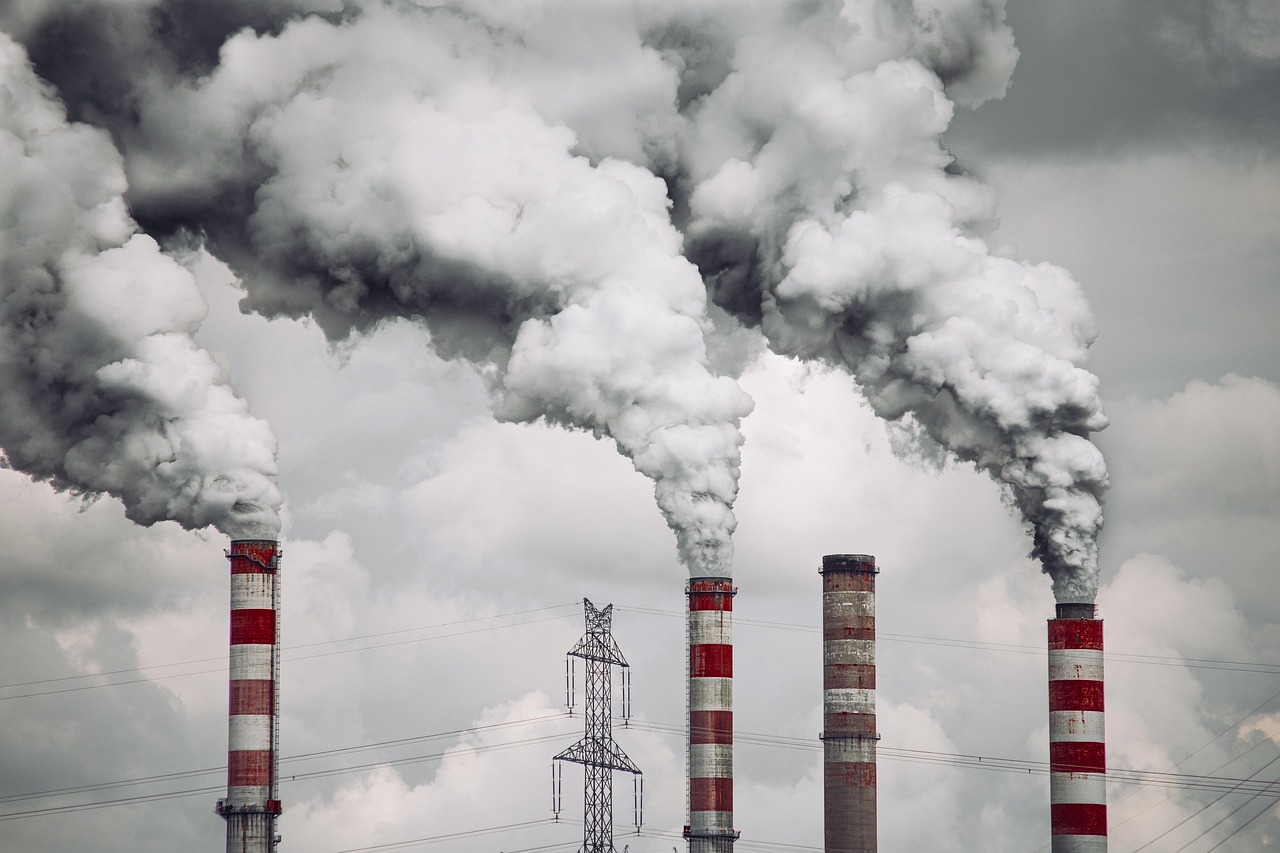
The annual stocktake of global carbon dioxide (CO2) levels suggests fossil fuel emissions will hit a new record high of 38.1 billion tonnes in 2025, Dr Canadell told journalists at an AusSMC Briefing this week.
That's an increase of 1.1% since 2024, which has been driven by increasing demand for energy, including the vast new datacentres required to power artificial inteligence (AI) chatbots, coupled with a continued reliance on fossil fuels.
“Global fossil fuel CO2 emissions have been persistently hovering around [a] 1% [increase] per year for the last few years,” said Dr Canadell.
The report found the carbon budget needed to keep warming below 1.5°C has been "virtually exhausted", and that if emissions are not cut drastically and immediately, we'll have blown past that barrier in just four more years.
“The breaching of the 1.5°C stabilisation target is no longer a risk. It is now unavoidable and coming at full speed,” said Dr Canadell.
"There's now a very urgent requirement of a peak and decline [in emissions] to really start the climate stabilisation path."
However, there is some good news in the report, said Dr Canadell. Emissions from fossil fuels may be on the rise, but total human-caused emissions are expected to drop slightly by the end of 2025, thanks to a decrease in deforestation and other land use changes, allowing the planet to soak up more CO2.
Dr Canadell stressed that, while CO2 emissions are increasing globally, some major countries' growth in emissions is slowing down.
“The most significant positive news of this year’s carbon budget is the slower emissions growth in China and India, given their first and third positions in the ranking of top global emitters,” he said. "This is not a small thing, this is a humungous thing."
The report also recognised Australia, long considered a climate laggard internationally, as one of 35 countries leading the decarbonisation charge, without the economy suffering.
Another ray of hope comes in the form of the rapid growth of renewables, driving their costs down to below those of fossil fuels.
Professor Frank Jotzo, Director of the Centre for Climate Economics and Policy at The Australian National University, who was not an author of the report, told journalists at the briefing that China was driving this growth.
"The amount of wind turbine and solar transmission investment in China is staggering," he said.
He said Australia should "deploy, deploy, deploy" while the cost of renewables is low to meet its national emissions reduction targets.
"Solar panels are now so cheap, you might as well use it as fencing," he said.
This article originally appeared in Science Deadline, a weekly news alert from the AusSMC. You are free to republish this story, in full, with appropriate credit.
NEWS BRIEFING: Wednesday 12 Nov 2025 at 10:30 AEDT ONLINE
Speakers:
- Dr Pep Canadell, Executive Director of the Global Carbon Project, and Chief Research Scientist at CSIRO
- Professor Frank Jotzo, Head of Energy, Institute for Climate, Energy and Disaster Solutions; Director, Centre for Climate and Energy Policy at The Australian National University
Date: Wed 12 Nov 2025
Start Time: 10:30am AEDT
Duration: Approx 45 min
Venue: Online - Zoom
Briefings are free to attend, but if you like what we do, you can donate to the Australian Science Media Centre here
Journal/
conference:
Global Carbon Budget 2025
Organisation/s:
CSIRO
Funder:
This research was supported by the following sources of funding: Instituto Nacional de Investrigación y
2285 Desarrollo Pesquero (INIDEP) (Argentina); Joint Technical Commission of the Maritime Front
2286 (CTMFM, Argentina-Uruguay) (Argentina); Integrated Marine Observing System (IMOS) (Australia);
2287 National Environmental Science Program (NESP) (Australia); Research Foundation Flanders (grant no.
2288 I001821N) (Belgium); ICOS (Integrated Carbon Observing System) Belgium (Belgium); Tula
2289 Foundation (Canada); National Key Research and Development Program of China (grant no.
2290 2023YFF0805400) (China); Horizon Europe (NextGenCarbon: grant no. 101184989) (EC); Horizon
2291 Europe (RESCUE: grant no. 101056939) (EC); Horizon 2020 (ESM2025: grant no. 101003536) (EC);
2292 Horizon Europe (TRICUSO: grant no. 101199028) (EC); Horizon Europe (GreenFeedBack: grant no.
2293 101056921) (EC); H2020 (JERICO-S3: grant no. 871153) (EC); Horizon Europe (GEORGE: grant no.
2294 101094716) (EC); Copernicus Atmosphere Monitoring Service, implemented by ECMWF on behalf of
2295 the European Commission (Grant no. CAMS2 55 bis) (EC); MOB TAC project of the European
2296 Copernicus Marine Environment Monitoring Service (EC); Horizon Europe (TipESM: grant no.
2297 101137673) (EC); Horizon Europe (OceanICU: grant no. 101083922) (EC); Climate Space RECCAP-2
2298 (grant no. 4000144908/24/1-LR) (European Space Agency); EO-LINCS (European Space Agency);
2299 Ocean Carbon for Climate (grant no. 3-18399/24/I-NB) (European Space Agency); Satellite-based
2300 observations of Carbon in the Ocean: Pools, Fluxes and Exchanges (grant no. 4000142532/23/I-DT)
2301 (European Space Agency); THRAC3E (grant no. 4000149569/25/I-AG) (European Space Agency); ;
2302 ICOS Germany (Germany); Federal Ministry of Education and Research (BMBF) (STEPSEC: grant no.
2303 01LS2102A) (Germany); Marine Institute (Ireland); Japan Meteorological Agency (Japan); Global
2304 Environmental Research Coordination System, Ministry of the Environment (grant nos. E2152 and
69
E2252) (Japan); NIES GOSAT Project (Japan); the Environment Research 2305 and Technology
2306 Development Fund (JPMEERF24S12200) of the Environmental Restoration and Conservation Agency
2307 provided by Ministry of the Environment of Japan (Japan); Environment Research and Technology
2308 Development Fund (grant no. JPMEERF24S12205, Co-PI: P. K. Patra) of the Environmental Restoration
2309 and Conservation Agency of Japan, and the Arctic Challenge for Sustainability phase III project (ArCS-
2310 3; grant no. JPMXD1720251001; Co-PI: P. K. Patra) (Japan); Environment Research and Technology
2311 Development Fund (grant no. JPMEERF24S12206) of the Environmental Restoration and Conservation
2312 Agency of Japan (Japan); Ministry of Business, Innovation and Employment (Strategic Science
2313 Investment Fund via the NIWA Ocean-Climate Interaction programme) (New Zealand); Research
2314 Council of Norway (ICOS-3, grant no. 350341) (Norway); Research Council of Norway (grant no.
2315 352474) (Norway); Research Council of Norway (grant no. 352204) (Norway); South African
2316 Department of Science, Technology and Innovation (grant no. DSI/CON C3184/2023) (South Africa);
2317 UK Research and Innovation (Horizon Europe GreenFeedBack: grant no. 10040851) (UK); NCAS at the
2318 University of Reading (UK); NERC NE/V011103/1 “Frontiers of instability in marine ecosystems and
2319 carbon export”UK Natural Environment Research Council (NE/V01417X/1) (UK); Department of
2320 Energy, Office of Science, Office of Biological and Environmental Research (USA); NOAA (Global
2321 Ocean Monitoring and Observing Program: Open Funder Registry no. 100018302) (USA); NOAA
2322 (Ocean Acidification Program: Open Funder Registry no. 100018228) (USA); NOAA (Cooperative
2323 Agreement NA20OAR4320472) (USA); NOAA (Cooperative Agreement NA-03-AR4320179) (USA);
2324 Alaska Ocean Observing System (USA); NASA Carbon Monitoring System (grant no.
2325 80NSSC25K7221) (USA); NASA Early Career Investigator Program in Earth Science (grant no.
2326 80NSSC24K1632) (USA); NASA Land Cover and Land Use Change Program (Grants:
2327 80NSSC24K0920 and 80NSSC25K7497) (USA); NSF (Cooperative Agreement No. 1852977) (USA);
2328 NASA Orbiting Carbon Observatory Science Team Program (grant no. NNH23ZDA001N-OCOST)
2329 (USA); NASA Carbon Monitoring System (grant no.NNH22ZDA001N-CMS ) (USA); Work of J.L. and
2330 S.P. was conducted at the Jet Propulsion Laboratory, California Institute of Technology, under a contract
2331 with the National Aeronautics and Space Administration (80NM0018D0004) (USA); NOAA
2332 (Cooperative Institute for Marine, Earth and Atmospheric Systems, Award No. NA25NMFX432C0003-
2333 T1-01) (USA); NSF (OPP-2329254) (USA); ORNL is managed by UT-Battelle, LLC, for the DOE (grant
2334 no. DE-AC05-1008 00OR22725) (USA); Schmidt Sciences (VESRI CALIPSO) (USA); Schmidt
2335 Sciences (OBVI InMOS) (USA); NSF (OPP-1922922) (USA); NOAA grant NA24NESX432C0001
2336 (Cooperative Institute for Satellite Earth System Studies - CISESS) (USA); NOAA cooperative
2337 agreement NA22OAR4320151 (CIRES: Andrew Jacobson and Xin Lan) (USA); Schmidt Sciences
2338 (CLARiTy project, part of the Virtual Institute for the Carbon Cycle) (USA ); Schmidt Sciences (COCO2
2339 project, part of the Virtual Institute for the Carbon Cycle) (USA ); NSF (LEAP STC Award no 2019625)
2340 (USA ); NASA (grant no. 80NSSC22K0150) (USA); NOAA (GOMO, grant no. NA24OARX431G0151-
2341 T1-01) (USA).
70
The US National Science Foundation (grant nos. OPP-2342 1922922, OPP-2329254), a NOAA cooperative
2343 agreement, the Cooperative Institute for Marine, Earth and Atmospheric Systems (CIMEAS, grant nos.
2344 NA20OAR4320278-T1-01 and NA25NMFX432C0003-T3-01S022); although NSF grants 1922922 and
2345 2329254 and NOAA grants NA20OAR4320278-T1-01 and NA25NMFX432C0003-T3-01S022 have
2346 been identified for conflict of interest management based on the overall scope of the project and its
2347 potential benefit to the Keeling Curve Foundation, the research findings included in this particular
2348 publication may not necessarily relate to the interests of Keeling Curve Foundation. The terms of this
2349 arrangement have been reviewed and approved by the University of California, San Diego in accordance
2350 with its conflict of interest policies.
2351 We also acknowledge support from the following computing facilities: Australian Community Climate
2352 and Earth System Simulator – National Research Infrastructure (ACCESS-NRI) (Australia); National
2353 Computational Infrastructure (NCI) (Australia); High-Performance Computing Center (HPCC) of
2354 Nanjing University for doing the inversions on its blade cluster system (China); HPC computing and
2355 storage resources by GENCI at IDRIS and TGCC thanks to the grant 2024-2201 on the supercomputers
2356 Jean Zay's V100 and Joliot Curie's SKL and V100 partitions. (France); The ORCHIDEE simulations
2357 were performed using HPC resources from GENCi-TGCC on grant 2024-00006328 (France); IPSL
2358 Climate Modelling Centre (https://mesocentre.ipsl.fr) (France); HPC resources from GENCI - TGCC
2359 (Grant A005-017403) (France); Deutsches Klimarechenzentrum (DKRZ) (Projects: bm0891, bm1124
2360 and bg1446) (Germany); NIES Supercomputer system, GOSAT Supercomputing Facility (GOCF)
2361 (Japan); NEC SX-Aurora TSUBASA at NIES (Japan);Fugaku provided by the RIKEN Center for
2362 Computational Science (Project ID: hp250024) (Japan); JAMSTEC's ES4 Super Computer system
2363 (Japan); Sigma2 - the National Infrastructure for High-Performance Computing and Data Storage in
2364 Norway (Norway); NICIS Centre for High-Performance Computing (South Africa); UK CEDA JASMIN
2365 supercomputer (UK); Compute and Data Environment for Science (CADES) at the Oak Ridge National
2366 Laboratory (USA ); LEAP Pangeo cloud platform (USA);NASA Ames Supercomputers (USA).
 Sign In



 Australia; International; ACT