 Sign In



 Australia; SA
News release
From:
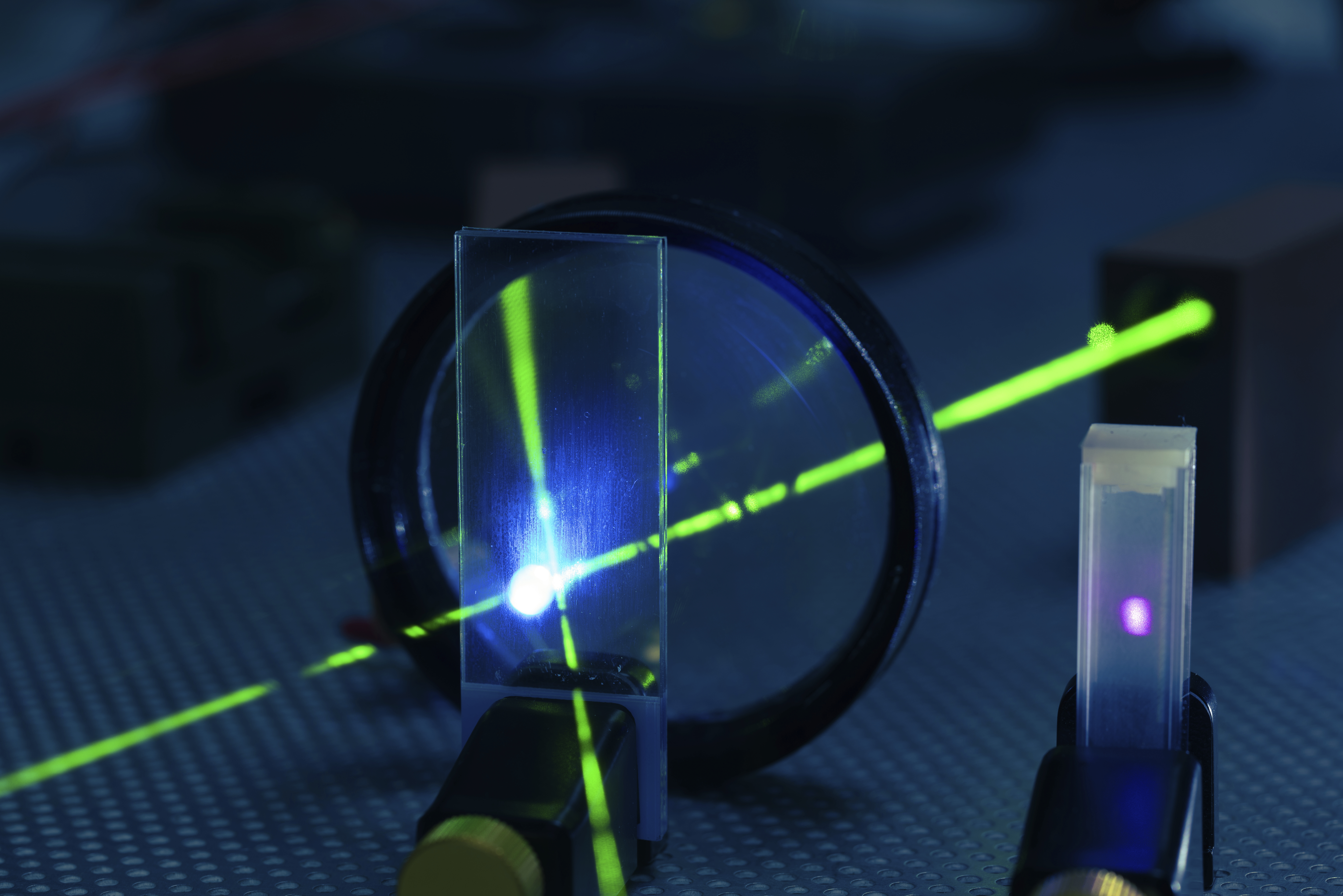
A laser-based technology being developed at Adelaide University could soon help authorities detect deadly counterfeit alcohol, expose wine fraud and even identify dangerous chemicals inside sealed bottles – all without opening them.
The breakthrough builds on newly published research conducted at the University of St Andrews in Scotland in collaboration with Adelaide University, demonstrating that a specially designed laser system can detect toxic methanol hidden inside unopened spirit bottles, even through coloured glass.
While the latest study focused on identifying dangerous methanol contamination in whisky and other spirits, Adelaide University researchers are already expanding the technology into new areas with the potential to protect consumers and support Australian industries.
Methanol poisoning remains a serious global health problem, causing hundreds of deaths each year and leaving many more people blind or permanently injured. Counterfeit alcohol is often impossible to detect without opening the bottle and conducting expensive laboratory tests.
The new optical technique changes that.
Using a sophisticated form of sensing known as Raman spectroscopy, researchers can read the unique chemical "fingerprint" of a liquid through its packaging.
By combining two advanced optical techniques – carefully shaping the laser beam and subtly changing its wavelength during measurement – the team dramatically improved the system's ability to detect tiny amounts of methanol while filtering out interference from the bottle itself.
The technology can detect methanol at concentrations around 10 times lower than internationally recognised safety limits, offering a fast, non-destructive alternative to conventional laboratory testing.
Adelaide University physicist Dr Ralf Mouthaan from the Centre of Light for Life said the research was opening the door to a much broader range of applications beyond alcohol safety.
"Being able to identify the contents of a sealed bottle without opening it has enormous potential," Dr Mouthaan said.
"At Adelaide University we're now adapting this technology to tackle problems that directly affect Australian industries, including wine authentication, food quality and product safety."
Researchers have already demonstrated they can capture a unique optical fingerprint of wine through the bottle, creating a potential new weapon against wine fraud, a problem estimated to cost the global wine industry billions of dollars each year.
The team is also investigating whether the technology could detect trace pesticide contamination in olive oil, identify counterfeit perfumes, and allow law enforcement agencies to determine whether bottles contain hazardous chemicals without opening them.
The research also has significant potential for Australia's agricultural sector. Adelaide University is preparing to begin a research program worth more than $10 million with collaborators at the University of Technology Sydney and Murdoch University, applying related laser sensing technologies to support Australia's grain industry.
Ané Kritzinger, a joint PhD candidate with Adelaide University and the University of St Andrews, led the methanol research that was recently published in the Journal of Physics: Photonics
Kritzinger said the versatility of the technology was one of its greatest strengths.
"Once you can accurately identify the molecular fingerprint of a liquid through its packaging, there are countless possibilities," she said.
"We're interested in applying the same principles wherever industries need a rapid, reliable and non-invasive way to verify what's inside a sealed container."
Dr Mouthaan said the newly published research represents an important milestone towards practical, real-world devices.
"Our goal is to develop technology that can move out of the laboratory and into places where it can make a real difference – whether that's customs checkpoints, distilleries, food manufacturers or quality assurance facilities," Dr Mouthaan said.
The research, Non-invasive Raman spectroscopy with wavefront shaping and wavelength modulation to quantify methanol in bottled spirits, has been published in the Journal of Physics: Photonics. DOI: 10.1088/2515-7647/ae6c78

