Sign In



 Australia; International; SA

News release
From:
Flinders University researchers have uncovered a biological process that could explain some stillbirths and pave the way for early detection and prevention.
The study, published in the American Journal of Obstetrics and Gynecology, reveals that the placenta, the vital lifeline between mother and baby, can age too quickly during pregnancy, compromising its ability to nourish the baby and increasing the risk of stillbirth.
The research team discovered that molecules called circular RNAs, which normally accumulate in ageing tissue, build up in the placenta far earlier than expected in cases of stillbirth.
These molecules bind to DNA, causing breaks and triggering cellular ageing. This premature ageing reduces the placenta’s capacity to support the growing baby.
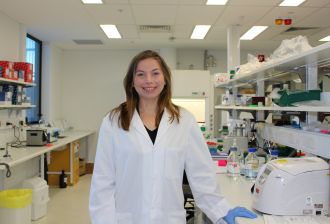
“Our findings show that the placenta in stillbirth cases looks biologically much older than it should for its gestational age,” said lead author, Dr Anya Arthurs from the Flinders Health and Medical Research Institute.
“We saw clear signs that the placenta was ageing too soon, including damaged DNA and worn-down cell structures, along with high levels of circular RNAs.
“When we reduced one of these molecules in placental cells, the damage slowed and ageing was delayed, showing these molecules aren’t just bystanders, but active drivers of the process.
“Perhaps most exciting is the potential for early detection. We found that some of these circular RNAs can be measured in maternal blood as early as 15 to 16 weeks into pregnancy.
“Imagine a simple blood test that flags pregnancies at risk of stillbirth months before any warning signs appear. That could be life changing.”
Stillbirth remains a devastating outcome, affecting around two million pregnancies globally each year. In Australia, rates have barely shifted in decades, and many cases remain unexplained even after detailed autopsy. Traditional pathology looks for visible changes in the placenta, but molecular ageing is invisible under a microscope.
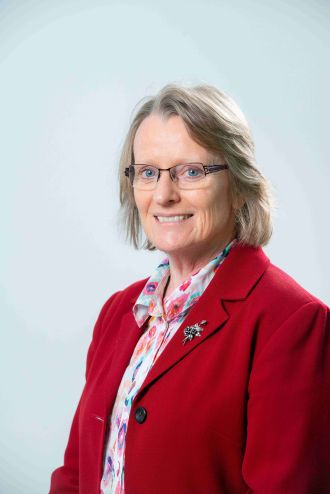
Senior author and expert in pregnancy research, Professor Claire Roberts also contributed to an international study that examined the genetic underpinnings of stillbirth.
Using family-based genomic analysis, the study identified DNA associated with stillbirth risk, including sections of DNA linked to fetal development, placental function, and pregnancy loss.
“The findings suggest that genes passed down through families might combine with the placenta ageing too early, making stillbirth more likely,” says Professor Roberts, Discipline Lead for Women's and Children's Health at Flinders University.
“By combining molecular markers with genetic insights, we can build more precise tools to identify at-risk pregnancies and intervene earlier.
“Importantly, the implications go beyond stillbirth. Circular RNAs have been linked to ageing in other tissues and diseases, including Alzheimer’s. Understanding their role in pregnancy could unlock broader insights into how ageing affects health.
“Every stillbirth is devastating, but if we can identify risk early and intervene, we have the potential to save lives and spare families unimaginable grief,” says Professor Roberts.
The research team is now working to validate these findings in larger, more diverse populations and develop practical screening tools.
“Our ultimate goal is prevention. By understanding the biology of placental ageing, we can move closer to predicting and preventing stillbirth, giving babies the best chance at life,” concludes Dr Arthurs.
The paper, ‘Circular RNAs accumulate in aging human placental tissue and in stillbirth, leading to DNA damage and cellular senescence’, by Anya L. Arthurs, Matilda R. Jackson, Dylan McCullough, Hamish S. Scott, Christopher P. Barnett, Stuart T. Webb, Melanie D. Smith, Tanja Jankovic-Karasoulos, Gustaaf A. Dekker and Claire T. Roberts was published in American Journal of Obstetrics and Gynecology in August 2025. DOI 10.1016/j.ajog.2025.08.030
Also see the article, ‘Inherited genetic risk in stillbirth: A shared genomic segments analysis of high-risk pedigrees’ by Tsegaselassie Workalemahu (University of Utah Health, USA) Michael J. Madsen (University of Utah Health, USA) Sarah Lopez (University of Utah Health, USA) Jessica M. Page (University of Utah Health, USA) Nathan R. Blue (University of Utah Health, USA) Cecile Avery (University of Utah Health, USA) Rob Sargent (University of Utah Health, USA) Zhe Yu (University of Utah Health, USA) Emily Guinto (University of Utah Health, USA) D. Ware Branch (University of Utah Health, USA) Susannah Leisher (University of Utah Health, USA) Lynn B. Jorde (University of Utah Health, USA) Aaron Quinlan (University of Utah Health, USA) Hilary Coon (University of Utah Health, USA) Michael W. Varner (University of Utah Health, USA) Claire T. Roberts, Deborah W. Neklason (University of Utah Health, USA) Nicola J. Camp (University of Utah Health, USA) and Robert M. Silver (University of Utah Health, USA) was published in HGG Advances. DOI: 10.1016/j.xhgg.2025.100546
Multimedia