 Sign In



 Australia; NSW; QLD
News release
From:
Moving turtle nests to save the eggs can have hidden consequences
Moving threatened sea turtle nests to cooler, safer parts of the beach can save entire clutches from rising tides and extreme heat, but new research suggests it may have hidden consequences for the hatchlings that emerge.
UNSW researchers studied 48 green turtle clutches over two nesting seasons on Heron Island on the southern Great Barrier Reef, comparing natural nests with those relocated under shade cloth and relocated nests left unshaded.
Incubation temperature is known to determine hatchling sex, and the unshaded relocated nests were hotter and produced overwhelmingly female hatchlings, with just 8% of those sampled in one season estimated to be male.
Shading reduced temperatures and produced a more balanced sampled sex ratio.
But even when shaded relocated nests reached similar temperatures to natural nests, they had lower hatching success and produced hatchlings that were smaller and less able to right themselves when flipped over.
“The difference shows up even when the shaded and natural nests are the same temperature,” says UNSW sea turtle ecologist Davey Dor, lead author of the study published in Marine Biology.
Only one in a thousand turtle hatchlings will survive until breeding age of 30 years old, and small differences in physical performance can be the difference between life and death.
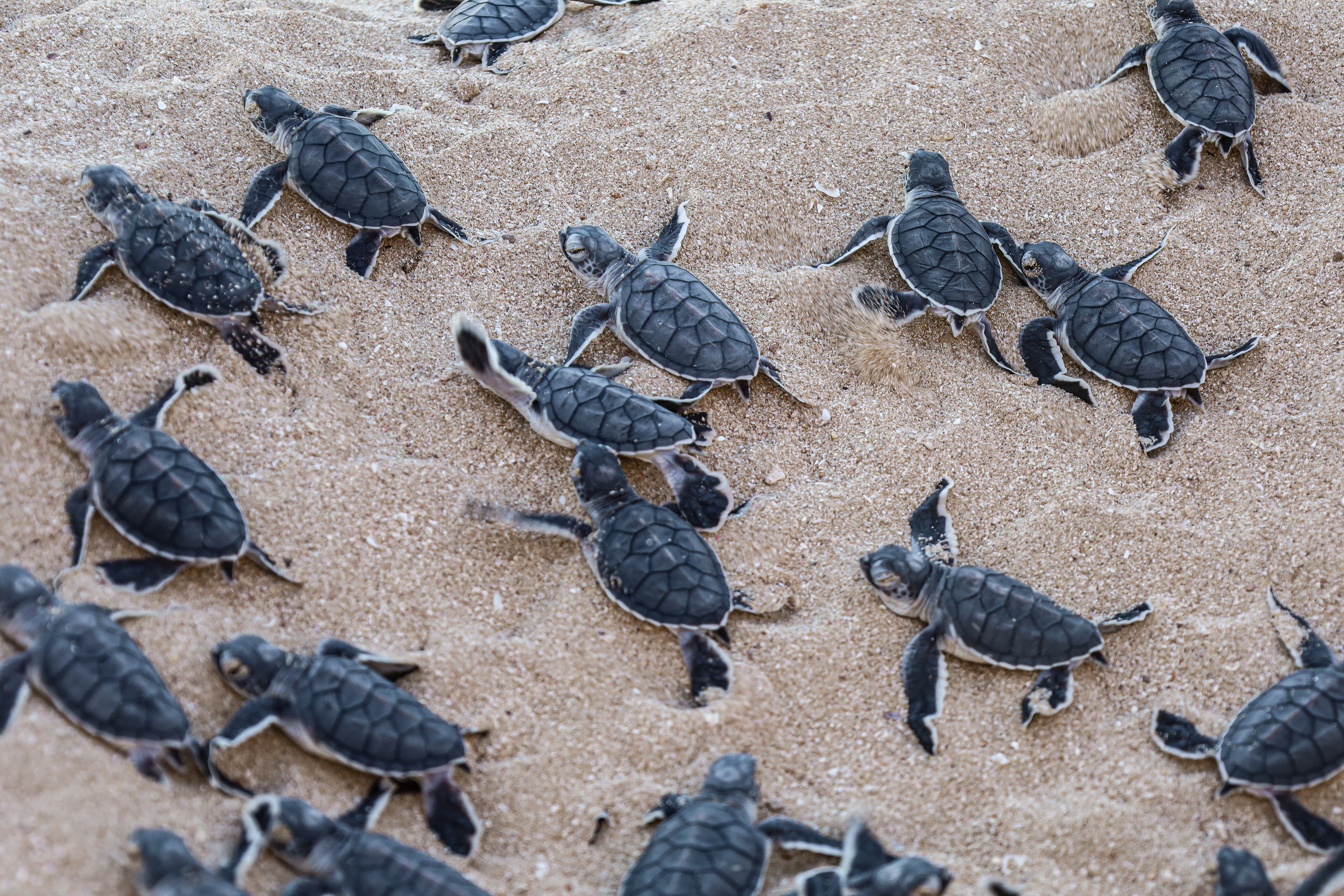
Hatchlings on Heron Island face a 50-metre scramble across the beach while avoiding birds and ghost crabs before reaching the water.
Mr Dor says they don’t fully understand why relocation impacts hatchlings like this, but suggests that moisture, sand conditions, gas exchange, microbes and nest depth could all play a role.
Researchers now want to understand which factors are affecting hatchling development.
“We can't pin it to a single factor,” Mr Dor says.
Mr Dor says the findings don't mean conservationists should stop relocating nests that would otherwise be lost.
“Nest relocation as a conservation strategy has been used all over the world for a long time now.”
“We need to understand these factors so we can give the turtles we're trying to save the best possible chance of survival.”

