 Sign In



 International
Media release
From:
Mini lung organoids made in bulk could help test personalized cancer treatments
Scientists find a simple, automated way of making lung organoids, which could help find new lung disease drugs and personalize patients’ treatments
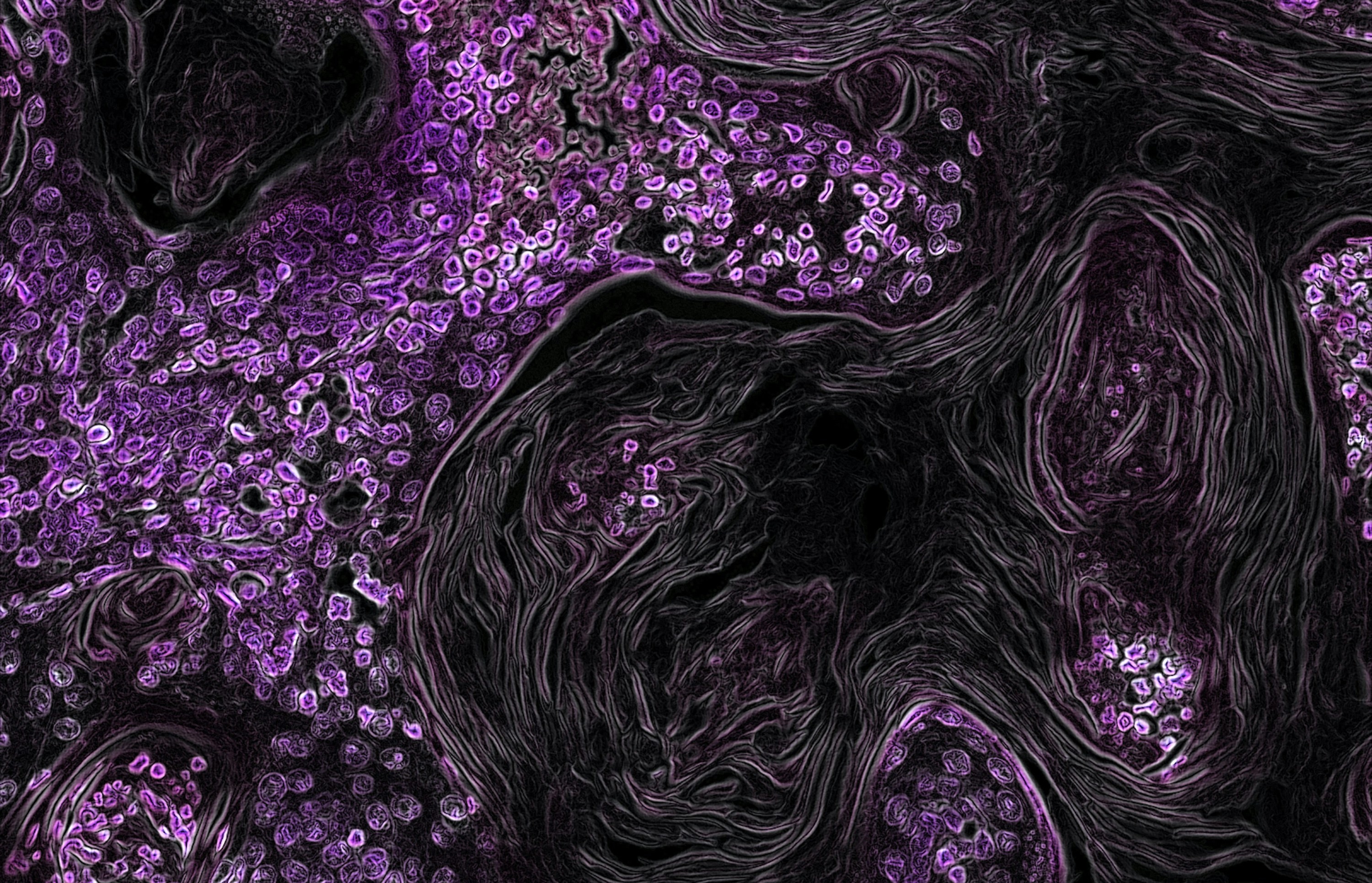
Organoids, clusters of cells which contain the same cell types as full-sized organs, offer huge promise for medical research — but making them usually takes a lot of complicated manual work. Now scientists have found a simple, automated way of producing lots of organoids at once, using a tank full of oxygen-infused growth medium which is continuously stirred. These organoids, as a better model for real lungs than cell lines, could provide a more effective way of testing new lung disease treatments. If made from a patient’s own cells, they could even test treatments before someone tries them for real.
A team of scientists have developed a simple method for automated manufacturing of lung organoids which could revolutionize the development of treatments for lung disease. These organoids, miniature structures containing the cells that real lungs do, could be used to test early-stage experimental drugs more effectively, without needing to use animal material. In the future, patients could even have personalized organoids grown from their own tissue to try out potential treatments in advance.
“The best result for now — quite simply — is that it works,” said Professor Diana Klein of the University of Duisburg-Essen, first author of the article in Frontiers in Bioengineering and Biotechnology. “This means that, in principle, lung organoids can be produced using an automated process. These complex structures represent the in vivo situation better than conventional cell lines and thus serve as an excellent disease model.”
“In the next step, the organoids could also be used to test potential therapeutics using high-throughput methods,” said Klein. “Which ones are effective and at what concentration? This could accelerate the development of specific medications for patients. Furthermore, the organoids could also be used to predict patient-specific reactions to radiotherapy or other potential treatments.”
Stem cells step up
Finding better treatments for lung diseases would save millions of lives worldwide. But lungs are a complex structure, difficult to model in the lab so that treatments can be tested quickly and effectively. Lung organoids are a promising option for research, but until now, they required too much painstaking manual work for them to be used in preclinical medical testing.
“You take a starting cell, in our case the stem cell, and multiply it — the cells grow in a suitable plastic dish,” explained Klein. “Once the cells have grown sufficiently, you then detach them from the plastic dish and 'animate' the cells to form small cellular aggregates. We do this by placing a certain number of cells in an anti-adhesive dish. The cells then float together and form embryoid bodies. These structures are then treated with various growth factors, substances that are typically found in the lungs or during lung development. In the presence of these substances, the cells transform into various cell types that are found in the lungs.”
The scientists put their embryoid bodies into a special tank with a continuously stirring membrane, which contained a suitable medium for growing the organoids. They also manually cultured a control set of organoids on a conventional growth plate. The organoids spent four weeks in the tank, and were then analyzed using microscopy, immunofluorescence, immunohistochemistry, and RNA sequencing to see how the organoids had developed, what cells had formed, and how comparable they were to conventionally-grown organoids.
Analysis confirmed that both sets of organoids had developed the lung-like structures representing airways and alveoli that scientists were looking for, and RNA sequencing showed that they had developed characteristic epithelial and mesodermal lung cells. Both sets developed the same types of cells, although in slightly different proportions — for instance, manually generated lung organoids contained more alveolar cells. The organoids developed in the bioreactor seemed to be larger, with fewer alveolar spheres.
Mini lungs to maximize research?
The fact that the bioreactor can produce more organoids at a time, with less manual work, could be a gamechanger for lung disease research. However, more testing will be needed to establish the best conditions for organoid development, and the organoids themselves will need to be improved to mimic real-life conditions within the body better.
“Organoids can’t yet fully recapitulate the lung cellular composition,” said Klein. “Some cells are still missing for the 'big picture', such as infiltrating immune cells and blood vessels. But the organoids themselves show very good bronchiolar and alveolar structures! We obviously don't have blood flow, meaning the conditions are rather static. But for a patient-oriented screening platform, this may not be necessary, if important insights into the cells’ fate during a certain treatment can be obtained. These systems may not yet be as complex as an entire organism, but they are human-based — we have the cells that we also find in patients.”
“There is still a lot of room for optimization,” added Klein. “We need robust and scalable protocols for large-scale organoid production. This requires careful consideration of the bioreactor design, the cell types to be used, and the conditions under which the organoids are cultivated. But we're working on it!”
Attachments
Note: Not all attachments are visible to the general public. Research URLs will go live after the embargo ends.


