HPV jab may help prevent precancerous growths on female genitalia

Publicly released:
International
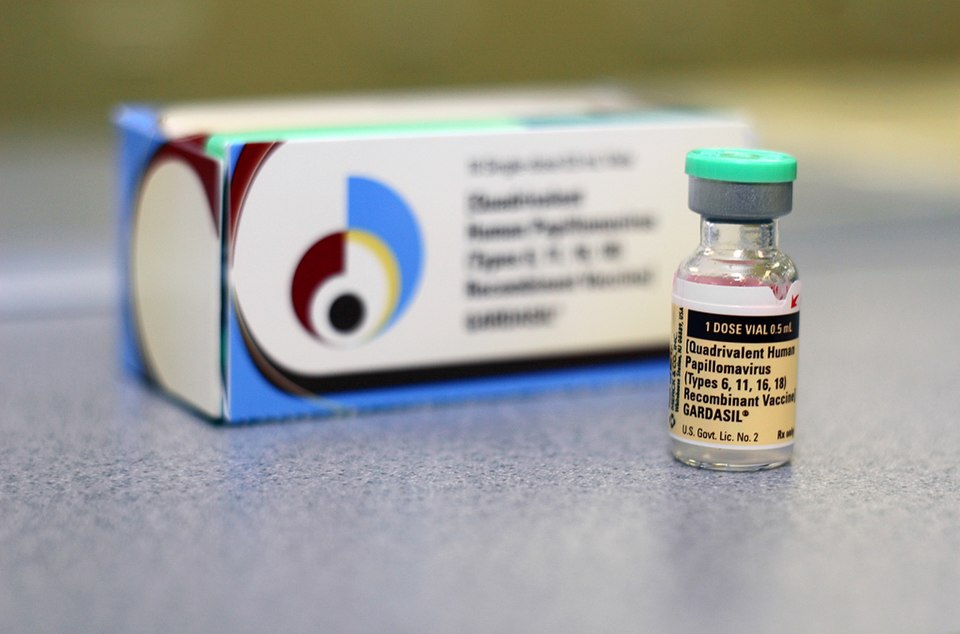
By Jan Christian @ www.ambrotosphotography.com - Gardasil vaccine and box, CC BY-SA 2.0, https://commons.wikimedia.org/w/index.php?curid=6497417. Story by Dr Joe Milton, Australian Science Media Centre

Women who have had the HPV jab are less likely to encounter high-grade vulvovaginal lesions - precancerous growths on the vulva and vagina - according to Swedish scientists. They looked at the health records of 778,943 Swedish women, around a third of whom (256,353) had been vaccinated with the quadrivalent HPV vaccine, and followed up for between 9.3 and 17 years. During that time, 98 vaccinated women developed high-grade vulvovaginal lesions, compared with 547 unvaccinated women. So, vaccinated women were around a third less likely (37%) to develop lesions than the unvaccinated. They found the HPV jab was most effective in preventing these precancerous growths when it was administered before the age of 17.

News release

From: JAMA

Quadrivalent Human Papillomavirus Vaccine and High-Grade Vulvovaginal Lesions

About The Study: In this study, quadrivalent human papillomavirus (HPV) vaccination was associated with reduced risk of high-grade vulvovaginal lesions, suggesting that expanding vaccination, especially at younger ages, could help prevent high-grade vulvovaginal lesions.

Attachments

Note: Not all attachments are visible to the general public. Research URLs will go live after the embargo ends.

Research JAMA, Web page The URL will go live after the embargo ends
Journal/
conference:
JAMA Oncology
Research:Paper
Organisation/s: Karolinska Institutet, Sweden
Funder: This work was funded by the Swedish Cancer Society (24 3862 Pj), Swedish Research Council (2023-01809), Swedish Research Council for Health,Working Life andWelfare (2023-01221), Karolinska Institutet Strategic Research Area in Epidemiology and Biostatistics, and European Union’s Horizon 2020 research and innovation programme (874662).
Media Contact/s
Contact details are only visible to registered journalists.