 Sign In



 Australia; QLD; TAS
News release
From:
How the Tassie tiger outfoxed its prey: biomechanics research
The Tasmanian tiger hunted more like a fox than its fearsome namesake, according to a new UniSC biomechanics study of predatory animals across the globe.
The University of the Sunshine Coast-led research, published in an international journal, featured the thylacine in a comparison of 48 living and extinct predatory mammal species, from domestic dogs to African wildcats.
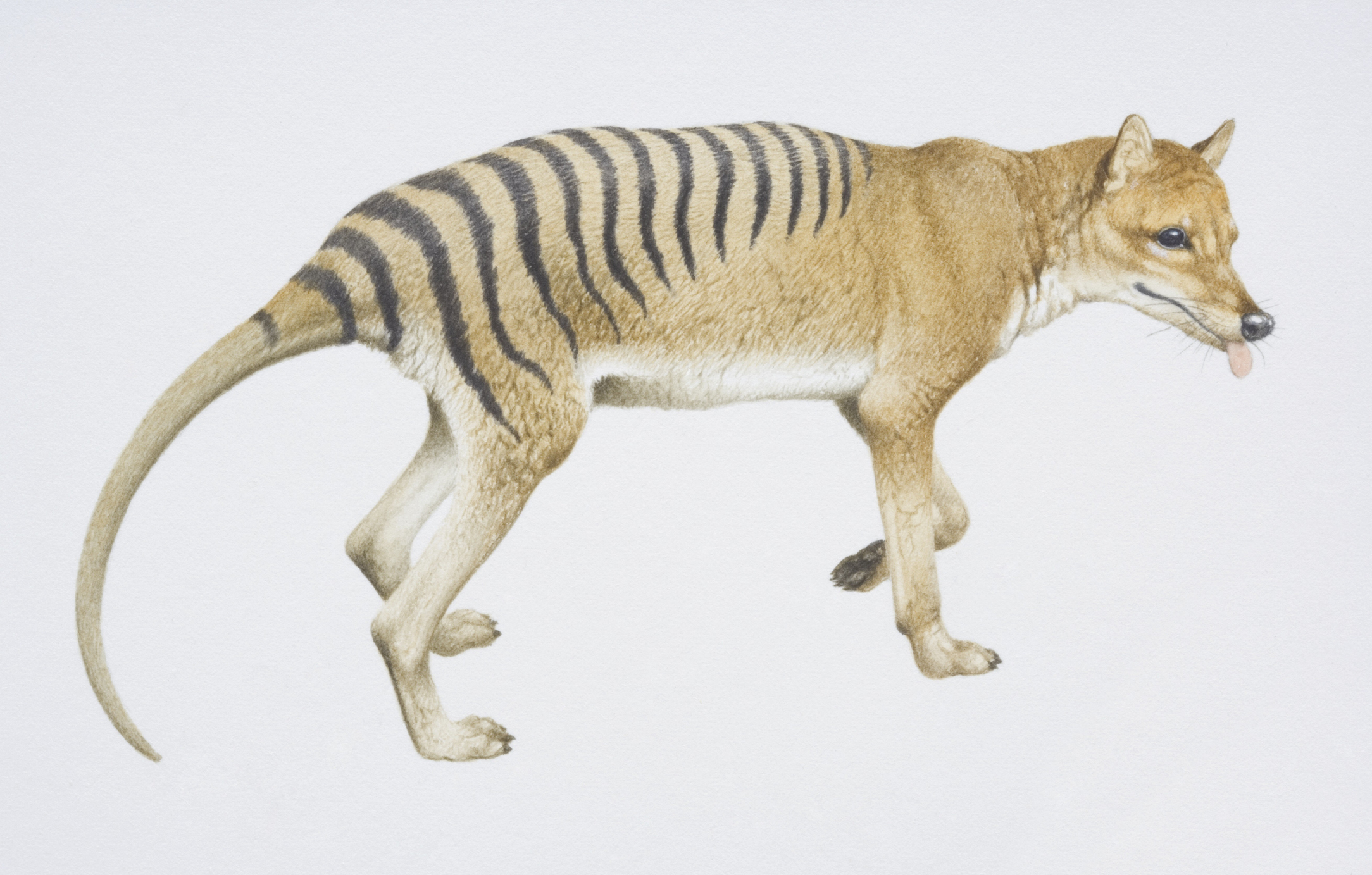
Commonly known as a Tasmanian tiger, the thylacine was a meat-eating marsupial that resembled a striped dog with a pouch and preyed on animals such as wallabies, possums and rodents. It became globally extinct in Tasmania in the 1930s.
“We used archival footage and modern biomechanical analysis to examine how posture, movement and locomotion affected animals’ hunting styles,” said UniSC Associate Professor Christofer Clemente.
“We then grouped the animals into five clusters, ranging from social pursuit hunters to predators that grappled with or pounced on their prey.
“It was fascinating to find the Tasmanian tiger was more likely an opportunistic pouncer, similar to a fox, jackal or coyote, rather than a grappler like a tiger or a wolf. “
Dr Clemente and UniSC PhD graduate Joshua Gashk led the research with co-authors from UniSC, Yale University and the University of Tasmania.
Dr Gaschk, lead author on the paper published in Springer journal BMC Ecology and Evolution, has also created videos that show how anatomical markers were tracked throughout an animal’s stride and used to compare gaits across species.
“What made this technique so powerful was that we were able to track animal movement in 4D, through both space and time,” said Dr Gaschk.
“Previous to these methods, animal locomotion was rarely examined with respect to whole-body, continuous timing within gaits, or in broad cross-species comparison.
“Our approach allows us to track how an individual's forelimbs, hind limbs, spine and head change shape and posture throughout natural locomotion.
“We then used this to draw broad-scale comparisons across carnivorous species worldwide, testing whether gait patterns reflect hunting strategy.”
Dr Clemente, an expert in animal ecophysiology, said the methods used to gain insights into the behaviour of extinct animals could also help inform conservation efforts to protect endangered species into the future.
“The results showed that hunting ecology was reflected in the way predators moved, particularly during faster, high-performance gaits associated with acceleration, manoeuvring and prey capture,” he said.
“Walking patterns were more strongly influenced by evolutionary history, but still retained information about hunting behaviour.
“The Tassie tiger’s walking movement was most consistently associated with opportunistic pouncers – predators that use short bursts of movement and take advantage of available prey – rather than highly specialised pursuit hunters or grapplers.”
Attachments
Note: Not all attachments are visible to the general public. Research URLs will go live after the embargo ends.


