Sign In



 Australia; QLD
News release
From:
Historic coral specimens unlock new species, new family, and major rethink of soft coral diversity
Queensland Museum Tropics research reshapes coral classification across the Indo-Pacific
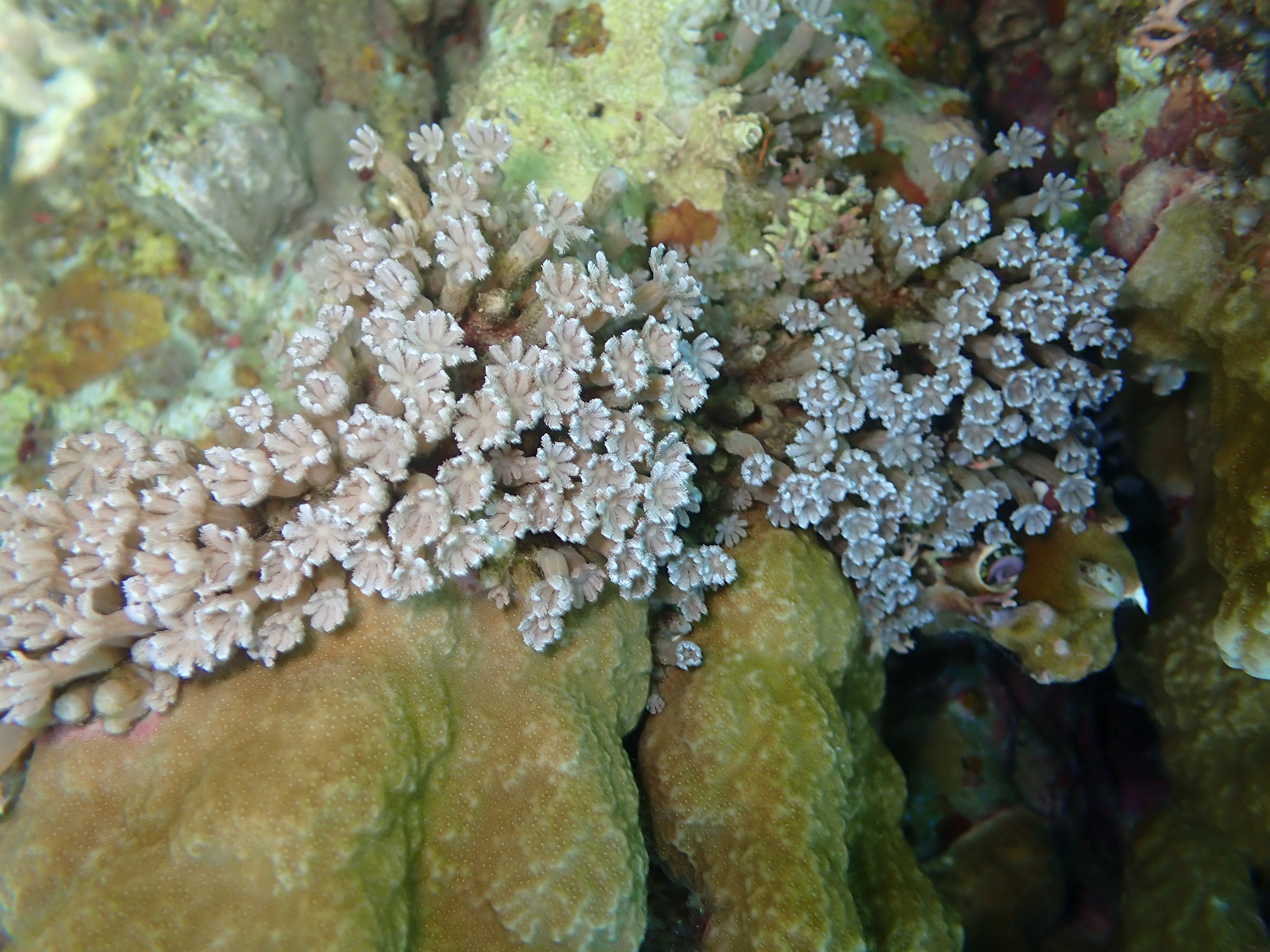
Scientists from Queensland Museum Tropics and James Cook University (Townsville) and international colleagues have resolved a 200-year-old mystery surrounding a group of soft corals, leading to the description of a new species, a new genus, and even a completely new coral family.
Soft corals are a highly diverse group found in oceans globally. Unlike their ‘hard coral’ counterparts they do not produce a rigid calcium skeleton. While they are abundant on reefs - including the Great Barrier Reef - they are far less studied than hard corals, and their family tree has long been a source of scientific confusion.
The study, published in Invertebrate Systematics, revisits the soft coral genus Clavularia, first described in 1830. To solve the puzzle of where these corals fit in the tree of life, the team combined modern DNA techniques with a detailed re-examination of historic museum specimens held in Europe and Australia.
The study did not just look at new corals collected off the reef; it went back to the source. The team analysed the original ‘holotype’ specimen – the exact physical coral used to officially name and define the species in the 19th and early 20th centuries. These historic specimens act as the biological “gold standard” against which all others are measured.
One of the most significant outcomes is the discovery of a new-to-science species, Clavularia brunafolia, found exclusively on the Great Barrier Reef (GBR). This is currently the only Clavularia species described and known to occur solely in this region.
In a rare breakthrough for coral research, the team also identified a new genus and species from Japan (Bairdium iriomotejimaensis), as well as an entirely new coral family (Hicksoniidae), which includes a new species found in Western Australia and Japan.
Queensland Museum Tropics Collection Manager and Lead researcher Stefano Borghi, said the work was critical to accurately understanding coral biodiversity. This discovery forms part of Mr Borghi’s PhD research at JCU.
“For nearly two centuries, scientists have been using the name Clavularia without actually knowing what the original species was. It was a 200-year-old cold case,” Mr Borghi said.
“By tracking down the original specimens in Europe and using modern genetics on historical jars, we’ve finally corrected the soft coral family tree.”
“We found that species we thought were widespread are actually quite unique. With the description of new species, a new genus, and a new family, we now realize how much diversity we’ve been overlooking.”
The research team examined type specimens preserved in Paris, Frankfurt, and Leiden. The oldest specimen examined was the type material of Clavularia viridis, collected in 1829 and preserved in Paris.
However, the most significant technical feat involved the type specimen of Clavularia koellikeri. The team successfully extracted and sequenced DNA from this specimen, which was collected in Indonesia in 1899 - more than 125 years ago.
Project co-author and Principal Scientist of Marine Biodiversity at Queensland Museum Tropics, Dr Peter Cowman, said obtaining genetic information from such old material was a game-changer.
“Getting genetic data from a wet specimen that has been sitting in a jar since the Victorian era is incredibly rare,” Dr Cowman said.
“It allows us to travel back in time and confirm exactly what those early scientists were seeing, linking 19th-century discovery with 21st-century technology.”
FAST FACTS
- A new species found only on the Great Barrier Reef, Clavularia brunafolia, the only Clavularia species described and known to occur only on the Great Barrier Reef
- A new genus and species from Japan (Bairdium iriomotejimaensis)
- A completely new family, genus and species from Western Australia and Japan (Hicksonia thorui)
- DNA was extracted and sequenced from specimens collected as far back as 1899.
- Genetic Time Travel: In a rare scientific feat, researchers get DNA from a specimen collected in 1899, comparing modern corals against a genetic "blueprint" from over 125 years ago.
- A 200-Year Cold Case Solved: Combining ancient DNA with the study of 19th century specimens, researchers finally resolved the identity of the Clavularia genus, which had been misclassified for nearly two centuries
- Exclusive to the Reef: The team discovered Clavularia brunafolia, a new-to-science species found only on the Great Barrier Reef—the only known species of its kind unique to this region
- Major Family Tree Rewrite: Redefining the biological map, the study identified a new genus from Japan (Bairdium) and an entirely new soft coral family found in Western Australia and Japan (Hicksoniidae)
Multimedia