 Sign In



 Australia; SA
News release
From:
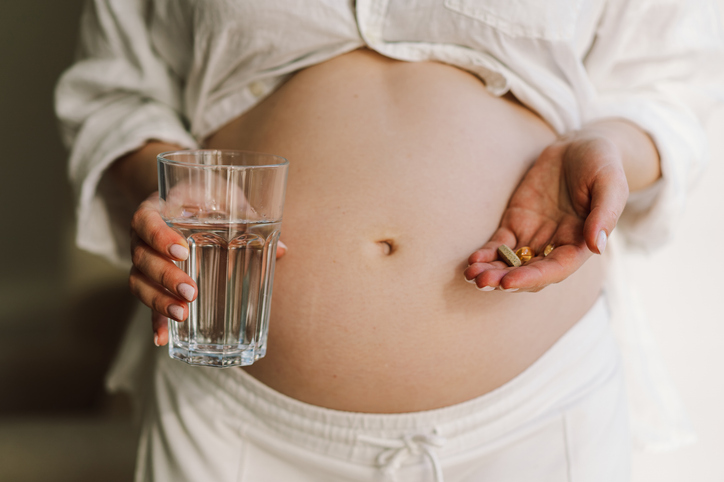
Women taking high-dose folic acid supplements during early pregnancy may face an increased risk of vaginal bleeding, according to new research from Flinders University and collaborating institutions that raises important questions about supplementation levels in countries with mandatory folic acid food fortification.
The study analysed data from more than 2,400 first-time mothers in South Australia and found that women taking 800 micrograms or more of folic acid per day were more likely to experience vaginal bleeding in early pregnancy, particularly when carrying a baby boy.
Researchers say the findings do not challenge the well-established benefits of folic acid (a form of the B vitamin folate) in preventing serious birth defects, but suggest that more may not always be better.
Lead author Dr Hongyan Wang says folic acid remains a critical nutrient before and during early pregnancy, but the study highlights the need to better understand the effects of higher doses.
“Folic acid is essential for preventing neural tube defects and women should continue to follow medical advice and current recommendations,” says Dr Wang who is now based at Qilu Hospital of Shandong University in China.
“Our research suggests that taking 800 micrograms or more per day may be associated with a higher likelihood of vaginal bleeding in early pregnancy, particularly in pregnancies with a male fetus.”
Vaginal bleeding affects around one in five pregnancies and can be a distressing experience for expectant parents. While it does not always signal a serious problem, it has previously been linked with an increased risk of pregnancy complications.
The research compared two Adelaide pregnancy cohorts recruited before and after Australia introduced mandatory folic acid fortification of bread-making flour in September 2009. Women recruited after fortification were much more likely to be taking high-dose supplements and had higher folate levels overall.
The team found that women taking at least 800 micrograms of folic acid daily were more likely to report spotting and mild bleeding during the first 16 weeks of pregnancy. In pregnancies carrying a boy, the risk of vaginal bleeding was more than double compared with women who did not take folic acid supplements.
Senior author and expert in pregnancy research Professor Claire Roberts, says the findings point to a previously unrecognised interaction between folic acid intake, the sex of the baby and pregnancy health.
“This is the first study to show that the relationship between folic acid supplementation and vaginal bleeding appears to differ depending on whether a woman is carrying a boy or girl,” says Professor Roberts.
“We also found that vaginal bleeding in early pregnancy is associated with later complications including spontaneous preterm birth, placental abruption and shorter gestation.”
The study found that male-bearing pregnancies appeared particularly vulnerable. Among women who experienced vaginal bleeding, those carrying boys were more likely to give birth earlier than women who did not experience bleeding.
Researchers stress that the results should not cause alarm for women currently taking folic acid supplements, nor should women stop supplementation without consulting their healthcare provider.
Instead, the findings highlight the importance of ensuring supplementation levels are appropriate in an era when most women also receive folic acid through fortified foods.
Professor Roberts says the study underscores the need for more research into what constitutes the safest and most effective upper limit of folic acid intake during pregnancy.
“Our findings suggest that the recommended daily dose of around 400 micrograms may be sufficient for most women in countries where food is already fortified with folic acid,” she says.
“We need further research to understand the biological mechanisms behind these associations and to determine whether supplementation guidelines should be refined.”
The researchers say early pregnancy bleeding should never be ignored and encourage women who experience any bleeding to seek medical advice.
The paper, High folic acid supplementation is associated with vaginal bleeding in early pregnancy in a fetal sex-specific manner: findings from two prospective cohort studies,by Hongyan Wang, Shalem Leemaqz, Melanie D. Smith, Dylan McCullough, Anya L. Arthurs, Tanja Jankovic-Karasoulos, Gustaaf A. Dekker and Claire T. Roberts published in Reproductive Health. DOI: 10.1186/s12978-026-02344-7
Acknowledgements: This study was supported by funding from a National Health and Medical Research Council of Australia (NHMRC) Investigator Grant (GNT1174971) awarded to CTR; a Flinders University Matthew Flinders Fellowship awarded to CTR; a NHMRC Project grant (GNT1161079) awarded to CTR, GAD and SL; a Flinders Foundation Health Seed Grant awarded to TJ-K, CTR, SL and AA; a Natural Science Foundation General Project of Shandong Province (ZR2020MH230) and a China Scholarship Council scholarship (202006225018) awarded to HW.
Multimedia

Attachments
Note: Not all attachments are visible to the general public. Research URLs will go live after the embargo ends.


