 Sign In



 Australia; International
News release
From:
Research of the Year: Editor’s Picks for JAMA’s Top Science
Peer-reviewed research advances science, informs policy, and improves patient care worldwide.
This fall, the JAMA Medical News team asked top editors at JAMA to nominate their favorite studies published between October 2024 and September of this year. JAMA and JAMA Network Editor in Chief Kirsten Bibbins-Domingo, PhD, MD, MAS, and JAMA Executive Editor Gregory Curfman, MD, handpicked a final nine selections for this year’s Research of the Year.
From weight loss medication to dementia to artificial intelligence (AI), many of the top studies received news coverage this past year.
“They speak to really hot areas in research right now and to clinical conditions that are of great importance to patients, to clinicians, and to the public health community,” Dr. Bibbins-Domingo said. “They also speak to the range of methods that investigators are using to answer important questions.”
A JAMA Medical News article delves into each of the picks, highlighting study methods, trial design, key findings, and limitations, and including context with from top JAMA editors.
JAMA Media Relations summarized the Research of the Year selections:
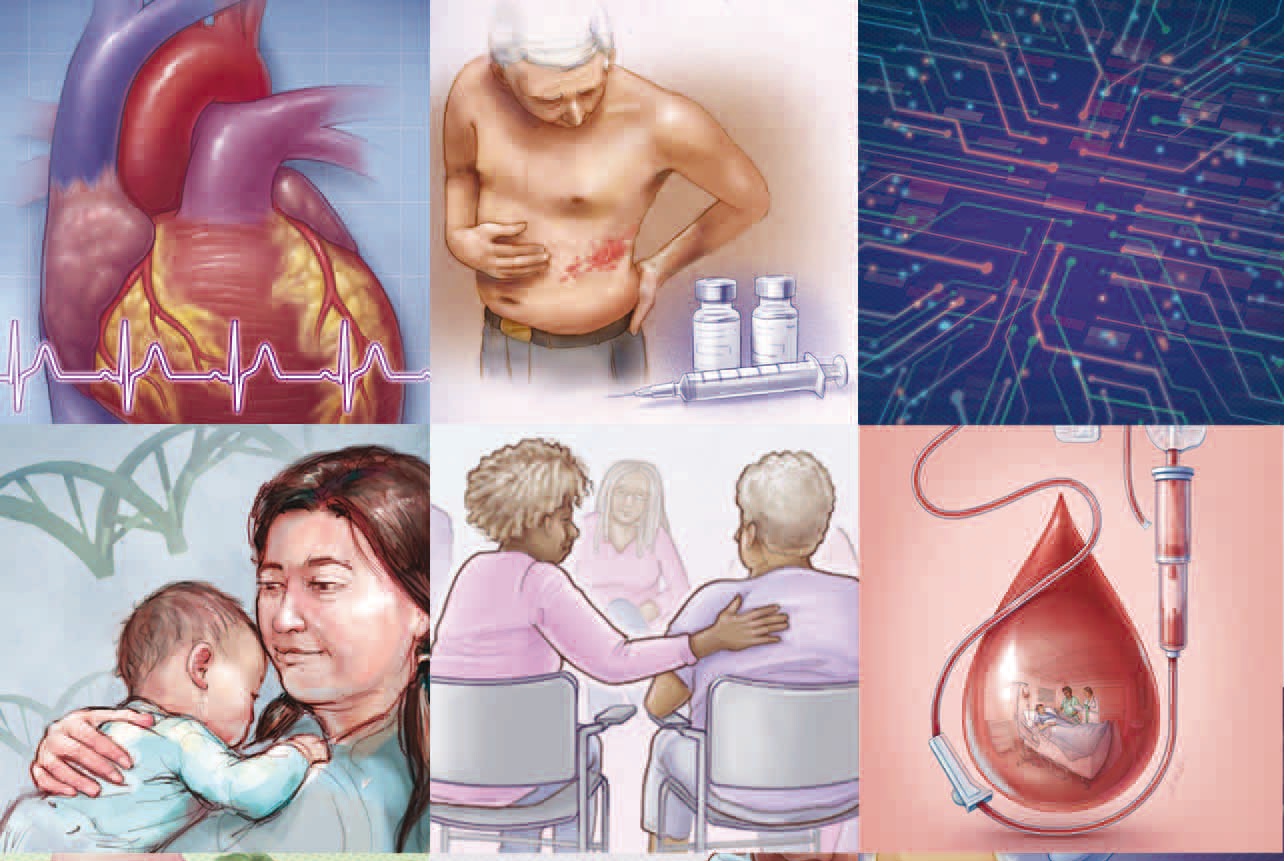
GLP-1 Drugs & Heart Failure: Real-world data showed semaglutide and tirzepatide reduce hospitalization and mortality by more than 40% in patients with obesity-related heart failure with preserved ejection fraction (HFpEF) and type 2 diabetes. With more than 58,000 participants, the study’s design (an analysis of several cohort studies) allowed for a larger and more diverse group of patients than a clinical trial might allow. GLP-1 drugs are “dramatically influencing medical practice and public health,” said JAMA Deputy Editor Mary McDermott, MD.
Shingles Vaccine & Dementia Risk: An observational study involving 100,000 people in Australia suggested shingles vaccination may lower dementia risk. JAMA Deputy Editor and infectious diseases physician Preeti Malani, MD, said the study “raises all kinds of questions about the role of viral infection.”
AI in Health Care: A systematic review of more than 500 studies published from 2022-2024 revealed gaps in evaluating large language models (LLMs) in health care settings. The authors called for consensus-based frameworks, highlighting six shortcomings of existing studies. JAMA Deputy Editor Linda Brubaker, MD, called the analysis a “very timely assessment,” adding that future research should prioritize real patient care data.
Genome Sequencing for Newborns: Early results from a prospective study demonstrated that a targeted genome sequencing analysis that looks for variants in a predefined set of genes is not only feasible but can identify treatable conditions missed by standard newborn screening. Such an approach could help children get earlier access to life-saving treatments, Dr. Brubaker said.
Lifestyle Interventions for Dementia: The POINTER trial randomly assigned around 2,100 adults with dementia risk to one of two groups that were both encouraged to increase physical and cognitive activity, social engagement, and cardiovascular health monitoring and to eat a more healthful diet. While Group 1 was asked to self-direct lifestyle changes, Group 2 received a structured intervention and saw significantly greater benefits on cognition. The trial was presented at the 2025 Alzheimer’s Association International Conference.
Pinpointing a Blood Transfusion Threshold in Brain Injuries: Findings from the TRAIN randomized clinical trial support a more liberal transfusion threshold for patients with acute brain injury. Initiating transfusion at hemoglobin levels below 9 g/dL (rather than 7 g/dL) was associated with better neurological outcomes and fewer cerebral ischemic events. JAMA Senior Editor Philip Greenland, MD, said the results may “actually change practice.”
Active Monitoring for Low-Risk DCIS: Considering the adverse effects of unnecessary cancer treatment, researchers behind the COMET trial compared guideline-concordant care against active monitoring for women with low-risk ductal carcinoma in situ (DCIS.) After two years, invasive cancer rates were similar between groups, suggesting that monitoring may be a safe alternative to surgery for select patients. The trial data suggest that, for some women, active monitoring could help avoid “more extensive surgical and medical treatments,” JAMA Deputy Editor and JAMA Oncology Editor in Chief Mary L. Disis, MD, said.
Improved Hepatitis B Vaccine for People with HIV: The BEe-HIVe trial found that a hepatitis B vaccine using a novel adjuvant provided superior seroprotection compared with the conventional vaccine in people with HIV who had not responded to previous vaccination. Two doses of the new vaccine achieved a 93% response rate, offering a promising option for immunocompromised patients and other groups that may not have an adequate response to the convention hepatitis B vaccine.
New Hope for Treatment-Resistant Hypertension: The international Launch-HTN trial tested lorundrostat, a first-in-class aldosterone synthase inhibitor, in patients with uncontrolled hypertension despite multiple medications. The drug reduced systolic blood pressure by an average of 16.9 mm Hg compared with 7.9 mm Hg for placebo. Curfman said the study “opens a new approach” for patients with few remaining options.
Attachments
Note: Not all attachments are visible to the general public. Research URLs will go live after the embargo ends.


