 Sign In



 Australia; NSW; VIC; QLD; WA; TAS
Expert Reaction
These comments have been collated by the Science Media Centre to provide a variety of expert perspectives on this issue. Feel free to use these quotes in your stories. Views expressed are the personal opinions of the experts named. They do not represent the views of the SMC or any other organisation unless specifically stated.
Dr Michelle Wille is an ARC Future Fellow and Outreach Coordinator at the WHO Collaborating Centre for Reference and Research on Influenza at the Doherty Institute, and the University of Melbourne
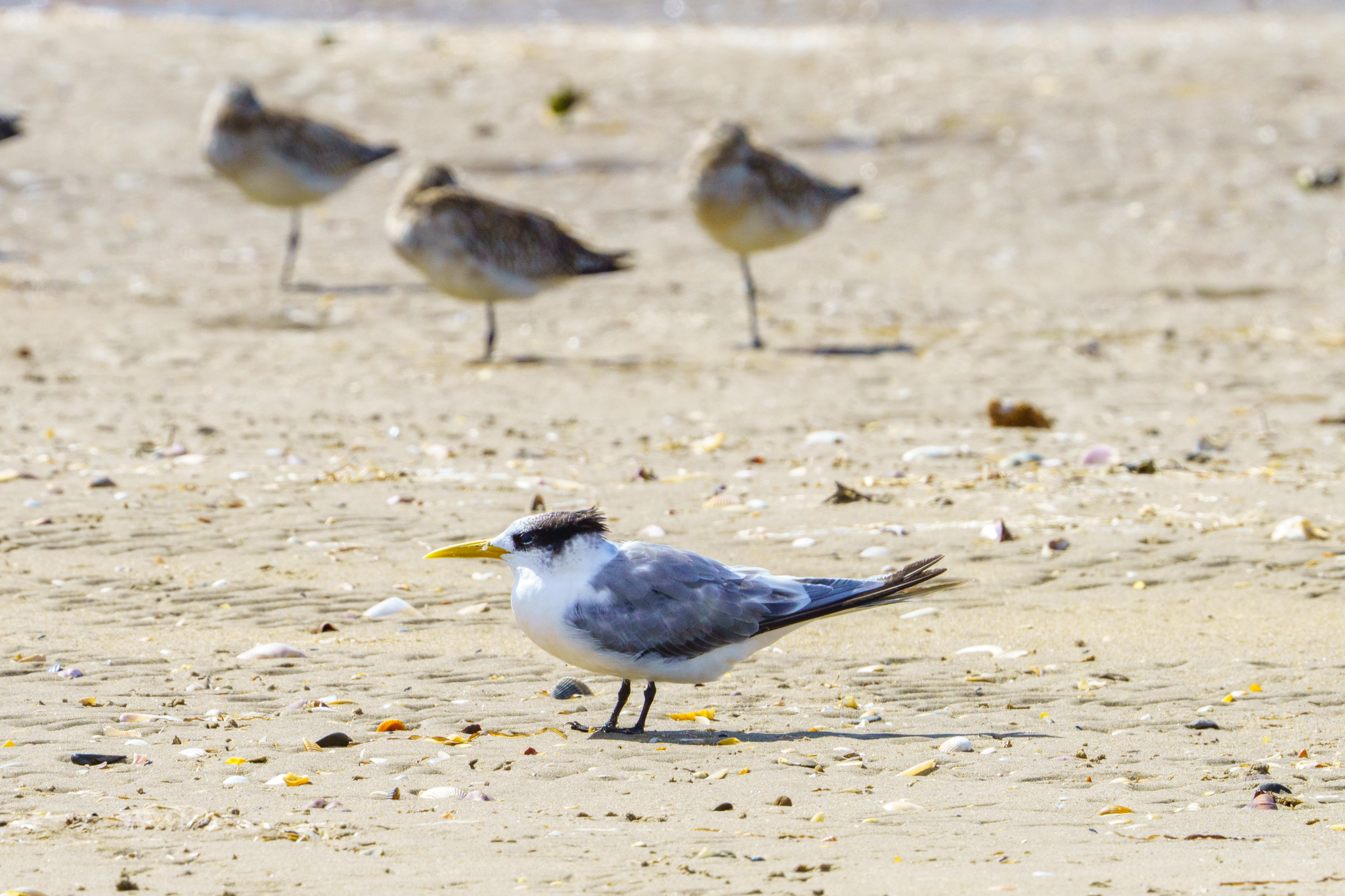
"Since the announcement of the first suspected case of HPAI [highly pathogenic avian influenza] H5N1 in WA on 19 June, there have been s small number of further cases in WA, SA and NSW, bringing the total to 12 confirmed or presumed cases nationally. These cases were consistently in southern ocean seabirds, including Brown Skuas and Giant Petrels. Unfortunately, today, SA announced a confirmed case in a Crested Tern, an Australian resident seabird.
Over the last three weeks, we have been at a precipice. First, perhaps we would be lucky, and cases (if they continued) would be in these southern ocean seabirds, and go no further. Second, there would be a jump from these southern ocean seabirds in our resident wildlife species. The detection of HPAI H5N1 in a tern is the first bit of evidence moving the needle from the first scenario to the second. But, more data, through surveillance and comparison of the viral genome from this case to the others, is needed to be certain whether HPAI H5N1 has entered our wildlife populations to become established.
That the detection is in a tern is concerning. From overseas, we know that terns are susceptible and there have been a number of examples of population level consequences if HPAI H5N1 enters these populations. For example, in Europe, ~17% of all adult breeding Sandwich Terns around the Baltic died in 2022 due to HPAI H5N1, as did 95% of the chicks that year.
https://www.cambridge.org/core/journals/bird-conservation-international/article/highly-pathogenic-avian-influenza-causes-mass-mortality-in-sandwich-tern-thalasseus-sandvicensis-breeding-colonies-across-northwestern-europe/CDFEDFF688841054D1820E30D0CF1BB9
The response coordination has been really amazing, with collaboration and contributions by national and jurisdictional governments (agriculture and environment), non-government agencies and universities. The on-the-ground coordination is being led by the jurisdictions, and South Australia has undertaken considerable observational surveillance activities and will undertake enhanced surveillance. While most of the spotlight has been on WA, SA and NSW, other jurisdictions are also part of the national response and are actively undertaking surveillance and testing of reported sick and dead birds.
The contribution of the public to the response to HPAI H5N1 has been incredible, with thousands of calls having been made to the EAD hotline in the last weeks. If you see any sick or dead wild birds or marine mammals, it’s critical to report this via the EAD hotline 1800 675 888."

Professor Raina MacIntyre is Head of the Biosecurity Program at the Kirby Institute at the University of NSW. She is an expert in influenza and emerging infectious diseases.
"We have seen an increasing number of independent incursions of H5N1 into Australia from subantarctic seabirds since June, mainly into WA, followed by SA and NSW.
Now, we have confirmed infection of a greater crested tern in South Australia, which is a native seabird.
There is also a suspected infected fur seal in New South Wales.
SA has conducted aerial surveillance with aircraft and drones and, encouragingly, did not observe mass mortality along the coast.
However, introduction of infection into a native bird species means the risk of spread within our native wildlife has increased. The greater crested tern can fly long distances.
The risk to our poultry farming industry is also increased. This doesn't mean we will see poultry outbreaks in the immediate future, but they will remain a possibility as long as the infection is within our native birds. The risk to our native wildlife is also there."
Professor Adrian Esterman is Chair of Biostatistics at Adelaide University
"A greater crested tern, a native seabird, found at Robe, South Australia, has tested positive for highly pathogenic H5N1 avian influenza. This is the first detection of H5N1 in a native Australian seabird. All the previous infected birds found in Australia were migratory seabirds that rarely come ashore unless sick or stranded.
A greater crested tern is a resident breeder that nests in dense island colonies off the South Australian coast, forages inshore, and shares beaches and roosts with gulls. Gulls move between coast, landfill and agricultural land.
The potential to cross-over from terns to gulls means that we should now look out for infected gulls. A single detection does not prove local transmission, but it changes where we look.
The risk to humans is still considered low. Over 70 human cases have been confirmed in the USA since 2024, nearly all in people with close contact with infected poultry or dairy cattle. Importantly, there has been no sustained human-to-human transmission so far. Although the case fatality rate since 2003 is high (nearly 50%), it is mainly in severe hospitalised cases.
The Federal government has committed $22.1 million to expand the National Medical Stockpile with pandemic influenza vaccines. An H5N1 pre-pandemic vaccine is already licensed in Australia from CSL Seqirus.
Finally, if you do come across any sick or dead birds, do not handle them, and report them to the Emergency Animal Disease Hotline, 1800 675 888."
Simon Gorta is a PhD candidate and ecologist in the Centre for Ecosystem Science at UNSW Sydney
"H5N1 has been detected in a Greater Crested Tern – a species that breeds locally in Australia and does not migrate from, or occupy, subantarctic regions. This is strong evidence that transmission of the virus has now occurred within Australia or its territorial waters. This has not been confirmed before, although it cannot be ruled out with the previous cases in subantarctic seabirds, where some at-sea transmission may have played a role.
Greater Crested Terns in South Australia breed in summer, forage locally near their coastal breeding sites, and then disperse hundreds of kilometres along the coastline after breeding, with some young birds reaching NSW and southeast Queensland.
They feed in coastal waters and harbours, as well as further offshore in deeper waters. They feed singly as well as in mixed seabird aggregations around schooling fish and commercial fishing vessels, and can roost in dense flocks year-round, and breed in the summer in dense aggregations. These behaviours create multiple opportunities for virus transmission, and outbreaks have been recorded in this species elsewhere around the world.
To date, there have been no mass mortality events or broad-scale spread within Australia. This may soon change, and we must remain alert to this. We need to follow the reporting advice to AVOID, REPORT, RECORD sick or dead wildlife to the Emergency Animal Disease Hotline (1800 675 888) when they are encountered. We also need to prioritise and support conservation actions that support wildlife populations that are at risk from H5N1."
Professor Michael Ward is the Sesquicentennial Chair of Veterinary Public Health & Food Safety at the University of Sydney
"Detection of the H5 avian influenza strain in an Australian seabird is a concerning development. It means that this new, deadly virus strain might have established itself on the Australian mainland.
Although this case is now being investigated, it is likely that it represents a spillover event from migratory birds to local bird populations. This presents a risk of bird die-off events, and onward spillover to domestic poultry.
It is even more important now to strengthen biosecurity and surveillance.”
Dr Lauren Roman is a Seabird researcher from the Institute for Marine and Antarctic Studies at the University of Tasmania
"This is alarming but not unexpected news that H5N1 has now been detected in a local species.
The greater crested tern, Thalasseus bergi, is widespread across Australia and other parts of the world, occurring along coastlines as well as some inland waterways. Terns have been hit hard by the H5N1 virus in other parts of the world, and this is a concerning finding ahead of the coming spring and summer breeding season where terns breed in dense aggregations, sometimes nesting alongside other species.
Breeding aggregations create conditions that have been observed to facilitate rapid spread of this virus.
Due to the crested terns foraging ecology – they rarely scavenge and instead hunt fish at the sea surface - I think it’s unlikely (though not impossible) that this bird interacted directly with an infected giant petrel or other subantarctic seabird.
I would be concerned that this is a sign that H5N1 has already infiltrated the local ecosystem, perhaps with a third species as a vector.
Gulls, including silver gulls, 'sea gulls' and kelp gulls, are likely to interact with both, by scavenging alongside giant petrels, or on their carcasses. Gulls interact with crested terns through kleptoparasites (stealing their food) and by sharing roost locations.
It would be worth turning attention to testing environmental and bird faecal samples for H5N1, especially at locations where gulls and terns interact or congregate together, to monitor this outbreak."
Professor Hamish McCallum is from the School of Environment and Science at Griffith University. His core area of research interest is in disease ecology, with a particular interest in infectious diseases in free ranging wildlife populations.
"The discovery of H5N1 avian influenza in a local Australian seabird for the first time is very bad news. This particular strain of high pathogenicity avian influenza has killed millions of seabirds worldwide, has caused mass mortalities in seals, and has affected both the poultry industry and the dairy industry in other countries.
When the first few cases appeared on the Australian coast in migratory and vagrant subantarctic seabirds, I was optimistic that it might not spread any further. It seemed that unusual weather patterns had brought these birds onto the Australian coast.
However, now that it has spread to a local seabird, it's likely that this will be the beginning of many more cases.
Once more than a dozen or so individuals are infected with a highly transmissible virus, the chance of the disease 'fading out' becomes very low – cases increase exponentially, and there is a full-blown epizootic.
It's likely that transmission to local seabirds has occurred by them scavenging on dead subantarctic birds stranded on the beach. It is critical that stranded birds are located quickly and removed for testing. There is still a chance we may be able to nip the epizootic in the bud by removing sick birds, but this becomes less likely as more cases occur.
Once there is a major outbreak, then it may be possible to protect captive populations of endangered native birds with a vaccine, which is available. However, mass vaccination of poultry is not being considered at the moment – there have been other cases of high pathogenicity avian influenza in Australia, and they have always been handled by culling entire flocks."
Dr Patrick Finnerty is a Postdoctoral Research Fellow in the Global Ecology Lab, School of Life and Environmental Sciences at The University of Sydney
“This detection is important because H5 bird flu has now been confirmed in an Australian seabird, rather than only in migratory birds arriving from the sub-Antarctic. From a scavenging perspective, what happens after an infected animal dies is critical. A carcass can remain a concentrated source of virus and attract multiple scavenger species, including gulls, ravens, raptors, reptiles, foxes and native mammals. These animals may consume the carcass, carry pieces away, contaminate other areas or potentially become infected themselves.
Australia has no specialised scavengers like vultures or hyenas, so carcasses are removed by a diverse and opportunistic scavenger community. Despite the important role these animals play in cleaning up the environment, we still know surprisingly little about which species scavenge seabirds, how quickly they locate carcasses, how much they consume and where they move afterwards. That is a major gap in Australia’s bird flu preparedness.
A single detection does not mean H5 bird flu is now widespread in Australian wildlife, but it does show why surveillance cannot focus only on live or visibly sick birds. Dead animals are not the end point of transmission – they can become hubs that bring multiple species into contact with the virus. Rapid carcass reporting, testing and safe removal, alongside targeted monitoring of scavengers around affected sites, will be essential.”
Dr Eric Woehler OAM is with the Australasian Seabird Group and the Australasian Wader Studies Group, both Special Interest Groups of BirdLife Australia.
"The detection of H5N1 HPAI [highly pathogenic avian influenza] in a Greater Crested Tern in South Australia is the second chapter of the H5N1 global pandemic on Australia's shores.
Most Australians who live close to the coast will be familiar with Greater Crested Terns - they are a widespread coastal bird found around much of Australia's coasts.
At present, the birds are away from their breeding colonies, potentially reducing the risk of the virus spreading. Their breeding season starts shortly, and the risk of spreading increases as a result.
The H5N1 virus has had devastating impacts on other tern species elsewhere. We will have to wait to see the extent of the virus on this Australian seabird species."
Associate Professor Bill Bateman is from the Behaviour and Ecology Research Group in the School of Molecular and Life Sciences at Curtin University
"Bird flu has occurred in Australia before, but what we are seeing now is the arrival of a new strain; a high pathogenicity strain that has already caused havoc in every other continent, devastating wildlife worldwide.
We call it Bird Flu H5N1 but it affects more than birds – seals and sealions are highly susceptible, and it can infect cattle as well as poultry.
There are at least seven recorded cases of H5N1 flu from southern Australia now, and while this may seem very few, we know from experience with COVID that such respiratory diseases can spread fast.
Brought here by sea-going migratory birds, the H5N1 strain has now been recorded in a tern - a coastal sea bird. The last thing we want is for it to spread to freshwater ducks and geese, or make the leap to our bush birds, or our unique mammal species.
While the chance of it infecting people is relatively low, we do run the risk of being a spreading vector – if you see dead birds on the shore, or birds that look sick and disoriented, keep away and keep your dogs away from them and report it to the Emergency Animal Disease hotline on 1800 675 888"
Dr Jane Younger is a Lecturer of Southern Ocean Vertebrate Ecology at University of Tasmania
"The detection of H5N1 in local Australian seabirds is a concerning development, but unfortunately not an unexpected one. Until now, Australia’s H5 bird flu detections have been in migratory seabirds arriving from the Southern Ocean. A detection in a greater crested tern suggests the virus has now crossed into local Australian wildlife, which is the step we have been watching for.
Greater crested terns are colonial seabirds, and they roost and forage alongside gulls and other coastal birds. This means there is potential for it to spread quickly. One infected bird does not mean we have an outbreak, but it does mean surveillance needs to intensify around tern colonies, gull roosts, wetlands, seal colonies and poultry interfaces.
I have seen the devastation this virus can cause in wildlife colonies in the Southern Ocean firsthand. Overseas, H5N1 has caused mass mortality in seabirds and marine mammals, including seals. Australia is putting into action the plans developed over the past two years, including surveillance, rapid testing, biosecurity, and clear public reporting. This is essential so we can understand whether this case is an isolated spillover or the beginning of an outbreak.
The public should not touch sick or dead birds or marine mammals. Report them immediately to the Emergency Animal Disease Hotline on 1800 675 888."
Dominique Potvin is a lecturer in Animal Ecology at the University of the Sunshine Coast.
"Bird flu is terrible, and it has the potential to be devastating to populations of native species in Australia.
We have been quite lucky to have escaped it for so long. It was never 'if', it was always going to be 'when'. We always knew it would be shorebirds or seabirds that would bring it in through migration.
However, sea and shorebirds are not necessarily the most vulnerable taxa. What's really going to be devastating is when it hits penguins, or ducks, geese, chickens, and other fowl. If ducks and geese get it, they are very easy prey for dingoes, crows and raptors, who can then also become infected, which is why we have seen predators such as Elephant seal populations being devastated offshore on Heard Island.
It's important for people to be vigilant and report anything odd that they find. This includes dead birds, particularly if they are in groups, or birds that are clearly sick. Don't just pick them up and take them to a wildlife carer because that could spread any infection further. What you should do is call the National Emergency Animal Disease Hotline on 1800 675 888 and take advice from there.
We need to be really careful in how we are not catastrophising but still being quite vigilant with where it goes next."
Dr Emma Grant is a LIMS Stone Research Fellow and Group Leader within the La Trobe Institute for Molecular Science (LIMS) at La Trobe University.
"The Australian Government has reported a case of H5 avian influenza in a seabird in SA on Friday. This is the first instance of the H5 bird flu strain being seen in a non-migratory bird, following detection in several migratory birds across Australia in the last couple of weeks.
Although this finding is concerning, it is not surprising. H5N1, commonly known as 'bird flu', is a highly pathogenic avian influenza virus that has spread widely across the globe. This bird flu is highly contagious in animals and can spread rapidly through animal populations. However, as yet, there is no evidence of widespread infection or mass mortality in Australian wildlife.
Symptoms of H5 bird flu in wildlife can vary, and include looking generally unwell, lethargy, being clumsy and signs of respiratory distress such as coughing, sneezing or laboured breathing. If you encounter a sick bird, it is important that you do not touch it, but report it to the Emergency Animal Disease Hotline.
Bird flu typically spreads in wildlife through the faecal-oral route. It is often ingested and expelled in faeces, which can then contaminate water, which is then ingested by other birds, causing spread. There is also some evidence that wildlife eating infected animals can cause infection. As such, keeping farm animals, domestic birds, and poultry and pets away from wild birds wherever possible, and making sure they have access to clean drinking water should be a priority. The Dept of Agriculture, Fisheries and Forestry lists some other steps individuals can take to protect domestic animals. Farmers will need to remain vigilant and report anything of concern to the Emergency Animal Disease Hotline.
It remains to be seen what effect this strain of bird flu will have on our wildlife populations. However, due to the way avian flu transmits, the risk to human health is very low. While there have been some animal-to-human transmission of avian flu in the past, this has occurred when humans are in close proximity to very sick animals for a prolonged period of time. There is no evidence of human-to-human transmission of this virus, and you cannot catch bird flu from eating properly cooked eggs or chicken."
